20,000 Travelers Prep Users Embrace Innovation 2.0 as Claims Call Centers Transform

Days after announcing a deal to equip 10,000 engineers and data scientists at Travelers with AI assistants, the insurance company’s leader detailed “differentiating domain expertise” around data and technology, which fuels long-term profit growth for the insurer.
Travelers Chief Executive Officer Alan Schnitzer shared insights with investment analysts during a fourth-quarter 2025 earnings conference call, revealing that over 20,000 Travelers professionals already “use AI tools on a regular basis.” He noted that the company’s claims call centers are becoming more efficient, thanks to automation tools.
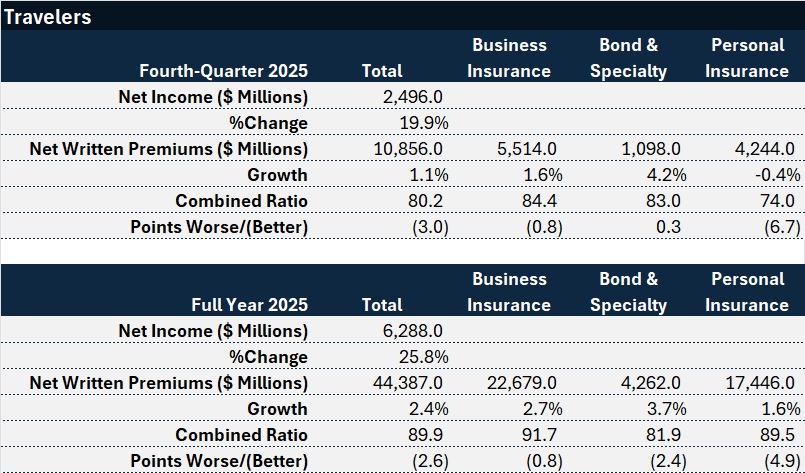
In his overview, Schnitzer highlighted a remarkable 20% growth in fourth-quarter net income and a 26% increase for the full year. He also referenced a new partnership with Anthropic, aimed at integrating 10,000 personalized AI agents to enhance the carrier’s AI-enabled engineering and analytics capabilities. This partnership is part of a decade-long strategy focused on technology and innovation to drive profit gains.
Schnitzer reported that net written premiums grew nearly 7% annually from 2016 to 2025, while the underlying combined ratio (excluding catastrophe losses and prior-year development) improved by nearly 8 points, reaching 83.9. He emphasized that despite significant technology investments, the underlying profitability improved, including a 3-point or 10% enhancement in the expense ratio. The actual investment in AI and tech initiatives totaled $1.5 billion, leading to a drop in the expense ratio from 31.5 in 2016 to 28.5 in 2025.
“As a consequence of all that, compared to 10 years ago, our underlying underwriting income is more than four times what it had been,” Schnitzer stated.
“Over the decade, we developed the competitive advantage of an innovation skill set. Now we’re bringing all that Part 1 know-how to Innovation 2.0 at Travelers, powered by AI—and not too far off quantum computing.”
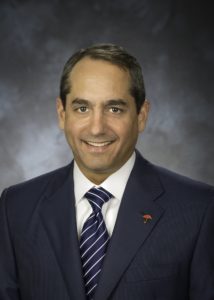
Alan Schnitzer
Offering a specific example of efficiencies gained through automation, Schnitzer noted that Travelers’ claim call center workforce has decreased by a third. The company plans to consolidate four claim call centers into two this year.
“The efficiency gains in our claim organization come through loss adjustment expense, benefiting the loss ratio,” he explained. Investments in automation and analytics have refined indemnity payouts and driven operational efficiencies, with over half of all claims now eligible for straight-through processing.
“Another 15% of all claims are processed with advanced digital tools, and these percentages are growing,” he added. However, Schnitzer acknowledged that some customers still prefer to call to report claims. To accommodate this, Travelers recently launched a natural language generative AI voice agent for first notice of loss by phone, with early customer adoption exceeding expectations.
In 2025, Travelers handled 1.5 million claims—approximately one every 20 seconds—paying out over $23 billion while achieving a goal of closing 90% of catastrophe claims within 30 days.
Schnitzer emphasized that the benefits of automation and AI extend beyond claims call centers, enhancing underwriting decision quality and improving experiences for customers, agents, brokers, and employees. Individual presidents of Travelers’ various segments shared insights on how AI is being utilized in their areas, further illustrating the company’s commitment to innovation.
In personal insurance, for instance, AI is used to make renewal underwriting more effective and efficient. “We start with a proprietary AI-enabled predictive model that scores every account in the property portfolio,” Klein explained. This model helps underwriters focus on accounts with the highest probable risk of loss, resulting in a 30% reduction in average handle time.
For specialty insurance, Klenk highlighted AI investments that have automated new business intake, reducing submission processing time from hours to minutes. “Commercial underwriters’ execution excellence is complemented by decision-support tools,” Toczydlowski noted, enhancing risk selection and pricing.
During the Q&A session, Schnitzer was asked about potential workforce changes due to AI initiatives. He mentioned that while they won’t project headcount changes, premium per employee is increasing due to productivity and efficiency initiatives.
Travelers’ decade-long profit strides are attributed to an “Innovation 1.0” strategy, which Schnitzer summarized as effectively identifying and executing initiatives that matter while capturing the value of what they built. He believes the P/C industry as a whole stands to benefit from AI, particularly as Travelers is well-positioned to leverage its differentiating domain expertise and high-quality data.
“We have thousands of engineers, data scientists, and analysts building AI and other sophisticated technology solutions,” Schnitzer stated, emphasizing that agentic AI is already embedded in their operations.
Property Drags Down Growth
The call also focused on Travelers’ performance in the fourth quarter and the entire year, highlighting increased underwriting income and favorable prior-year reserve development. After-tax underwriting income surged 22% in the fourth quarter to $1.7 billion, with personal insurance contributing significantly.
- Favorable prior-year development across all segments totaled $815 million for the year.
- Catastrophe losses were lower in the fourth quarter compared to the previous year.
- Net investment income grew 10% for both the last quarter and the full year.
Despite some challenges, Schnitzer noted that personal insurance net written premiums reflected strong renewal premium changes in homeowners and higher new business in auto. The personal auto combined ratio improved significantly, showcasing the benefits of a diversified book of business and disciplined pricing strategies.
As Travelers looks ahead, they plan to wind down many prior restrictive homeowners actions and focus on maintaining progress made to date. Schnitzer emphasized the importance of managing the business over time, ensuring that they earn a fair return while addressing affordability issues in the market.
Days after announcing a deal to equip 10,000 engineers and data scientists at Travelers with AI assistants, the insurance company’s leader detailed “differentiating domain expertise” around data and technology, which fuels long-term profit growth for the insurer.
Travelers Chief Executive Officer Alan Schnitzer shared insights with investment analysts during a fourth-quarter 2025 earnings conference call, revealing that over 20,000 Travelers professionals already “use AI tools on a regular basis.” He noted that the company’s claims call centers are becoming more efficient, thanks to automation tools.
In his overview, Schnitzer highlighted a remarkable 20% growth in fourth-quarter net income and a 26% increase for the full year. He also referenced a new partnership with Anthropic, aimed at integrating 10,000 personalized AI agents to enhance the carrier’s AI-enabled engineering and analytics capabilities. This partnership is part of a decade-long strategy focused on technology and innovation to drive profit gains.
Schnitzer reported that net written premiums grew nearly 7% annually from 2016 to 2025, while the underlying combined ratio (excluding catastrophe losses and prior-year development) improved by nearly 8 points, reaching 83.9. He emphasized that despite significant technology investments, the underlying profitability improved, including a 3-point or 10% enhancement in the expense ratio. The actual investment in AI and tech initiatives totaled $1.5 billion, leading to a drop in the expense ratio from 31.5 in 2016 to 28.5 in 2025.
“As a consequence of all that, compared to 10 years ago, our underlying underwriting income is more than four times what it had been,” Schnitzer stated.
“Over the decade, we developed the competitive advantage of an innovation skill set. Now we’re bringing all that Part 1 know-how to Innovation 2.0 at Travelers, powered by AI—and not too far off quantum computing.”
Alan Schnitzer
Offering a specific example of efficiencies gained through automation, Schnitzer noted that Travelers’ claim call center workforce has decreased by a third. The company plans to consolidate four claim call centers into two this year.
“The efficiency gains in our claim organization come through loss adjustment expense, benefiting the loss ratio,” he explained. Investments in automation and analytics have refined indemnity payouts and driven operational efficiencies, with over half of all claims now eligible for straight-through processing.
“Another 15% of all claims are processed with advanced digital tools, and these percentages are growing,” he added. However, Schnitzer acknowledged that some customers still prefer to call to report claims. To accommodate this, Travelers recently launched a natural language generative AI voice agent for first notice of loss by phone, with early customer adoption exceeding expectations.
In 2025, Travelers handled 1.5 million claims—approximately one every 20 seconds—paying out over $23 billion while achieving a goal of closing 90% of catastrophe claims within 30 days.
Schnitzer emphasized that the benefits of automation and AI extend beyond claims call centers, enhancing underwriting decision quality and improving experiences for customers, agents, brokers, and employees. Individual presidents of Travelers’ various segments shared insights on how AI is being utilized in their areas, further illustrating the company’s commitment to innovation.
In personal insurance, for instance, AI is used to make renewal underwriting more effective and efficient. “We start with a proprietary AI-enabled predictive model that scores every account in the property portfolio,” Klein explained. This model helps underwriters focus on accounts with the highest probable risk of loss, resulting in a 30% reduction in average handle time.
For specialty insurance, Klenk highlighted AI investments that have automated new business intake, reducing submission processing time from hours to minutes. “Commercial underwriters’ execution excellence is complemented by decision-support tools,” Toczydlowski noted, enhancing risk selection and pricing.
During the Q&A session, Schnitzer was asked about potential workforce changes due to AI initiatives. He mentioned that while they won’t project headcount changes, premium per employee is increasing due to productivity and efficiency initiatives.
Travelers’ decade-long profit strides are attributed to an “Innovation 1.0” strategy, which Schnitzer summarized as effectively identifying and executing initiatives that matter while capturing the value of what they built. He believes the P/C industry as a whole stands to benefit from AI, particularly as Travelers is well-positioned to leverage its differentiating domain expertise and high-quality data.
“We have thousands of engineers, data scientists, and analysts building AI and other sophisticated technology solutions,” Schnitzer stated, emphasizing that agentic AI is already embedded in their operations.
Property Drags Down Growth
The call also focused on Travelers’ performance in the fourth quarter and the entire year, highlighting increased underwriting income and favorable prior-year reserve development. After-tax underwriting income surged 22% in the fourth quarter to $1.7 billion, with personal insurance contributing significantly.
- Favorable prior-year development across all segments totaled $815 million for the year.
- Catastrophe losses were lower in the fourth quarter compared to the previous year.
- Net investment income grew 10% for both the last quarter and the full year.
Despite some challenges, Schnitzer noted that personal insurance net written premiums reflected strong renewal premium changes in homeowners and higher new business in auto. The personal auto combined ratio improved significantly, showcasing the benefits of a diversified book of business and disciplined pricing strategies.
As Travelers looks ahead, they plan to wind down many prior restrictive homeowners actions and focus on maintaining progress made to date. Schnitzer emphasized the importance of managing the business over time, ensuring that they earn a fair return while addressing affordability issues in the market.