5 signs you’ve taken too much

Vitamin D toxicity occurs when your body accumulates excessive amounts of vitamin D, primarily due to high-dose supplements. While it’s uncommon to experience toxicity from sunlight or dietary sources alone, prolonged use of high-dose supplements—especially during the darker winter months—can increase your risk of developing a deficiency and subsequent toxicity1.
Excessive vitamin D leads to elevated calcium levels in the bloodstream, which can manifest as symptoms such as nausea, fatigue, frequent urination, kidney complications, and, in severe cases, heart issues.
For adults, the recommended daily intake is 10 micrograms (400 international units), with a safe upper limit set at 100 micrograms (4,000 international units)2. While vitamin D is crucial for maintaining bone and immune health, exceeding this limit without medical supervision can result in toxicity.
Recognizing the early warning signs is essential to ensure that vitamin D continues to benefit your health rather than harm it.
Signs of Vitamin D Toxicity
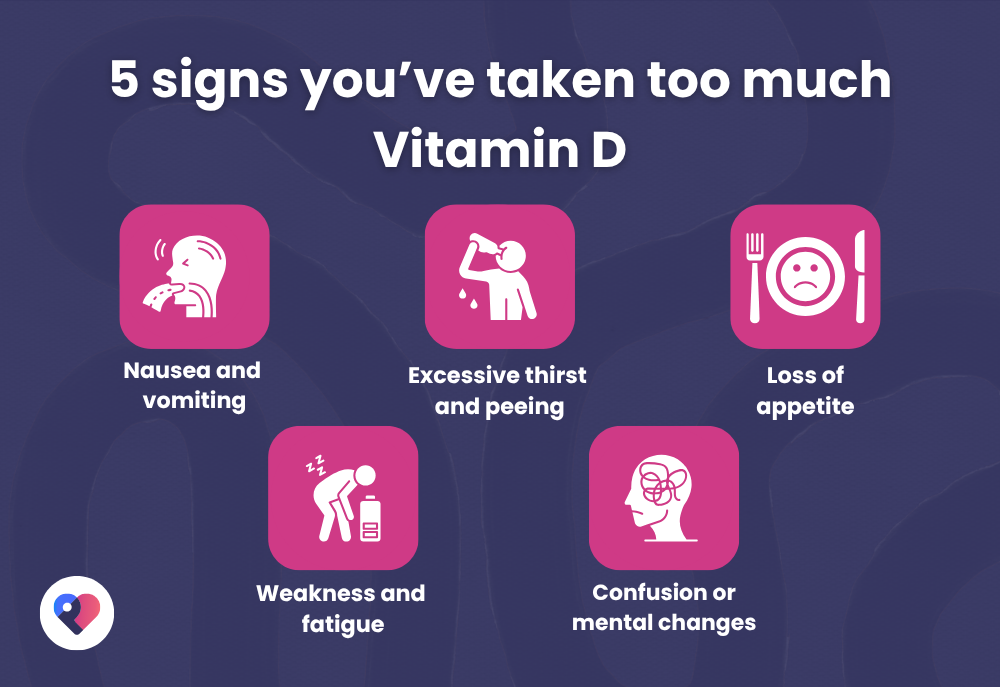
1. Nausea and Vomiting
One of the initial indicators of vitamin D toxicity is nausea or vomiting. Excess vitamin D increases calcium absorption in the gut, which can lead to stomach upset3.
If you find yourself feeling queasy after meals or losing your appetite, and you’ve been taking high-dose supplements, it may be wise to check your vitamin D and calcium levels.
2. Loss of Appetite
A diminished appetite can be another subtle yet significant sign of elevated vitamin D levels. This occurs because excess vitamin D raises blood calcium levels, affecting your body’s food processing and energy utilization1.
You might notice a decrease in your food intake without any effort, or that meals no longer excite you as they once did. Over time, this could lead to unintended weight loss or nutritional deficiencies.
3. Frequent Urination and Excessive Thirst
Feeling unusually thirsty or needing to urinate more frequently? This could indicate your body is trying to eliminate excess calcium due to high vitamin D levels. This combination of symptoms can resemble those of other conditions, such as diabetes, making it crucial not to overlook them.
If your thirst has increased dramatically but you still feel dehydrated, consult your doctor regarding a potential vitamin D overload.
4. Weakness, Fatigue, or Muscle Pain
While vitamin D is known for supporting muscle and bone health, excessive amounts can lead to muscle pain and fatigue1. Elevated calcium levels can disrupt normal muscle function, leaving you feeling weak or sore.
If you wake up tired despite adequate sleep or experience unexplained muscle aches, it may not just be stress or overexertion—it could be a sign that your vitamin D supplement is causing harm.
5. Confusion or Mental Changes
In severe cases of vitamin D toxicity, high calcium levels can impact brain function, resulting in confusion, irritability, or difficulty concentrating2. Some individuals describe these symptoms as ‘brain fog’ or a sense of mental disarray.
These neurological changes can be concerning and often indicate dangerously high calcium levels. If you experience sudden shifts in mood, memory, or focus—especially alongside other symptoms—seek medical attention promptly.
What to Do If You’ve Taken Too Much Vitamin D
-
Stop Taking Vitamin D Immediately – Discontinue any supplements until you’ve consulted a healthcare provider.
-
Contact a Healthcare Professional – Reach out to your doctor or call 111 for guidance.
-
Monitor for Symptoms of Toxicity – Keep an eye out for nausea, vomiting, excessive thirst, frequent urination, weakness, or confusion.
-
Stay Hydrated – Drink plenty of water unless otherwise advised by your doctor, as hydration can help lower high calcium levels.
-
Review All Supplements – Check other supplements or fortified foods to prevent further excess.
When taking vitamin D supplements, always adhere to the recommended daily dose of 10 micrograms (400 international units) for most adults.
It’s best to take your supplement with meals that include healthy fats for optimal absorption, and aim for short, safe sun exposure—around 10-30 minutes—several times a week.
Avoid taking multiple high-dose supplements, and if using vitamin D long-term, have your blood levels checked regularly by your doctor.
Vitamin D is essential for your overall health, but more is not always better. While deficiencies are common, excessive supplementation can elevate calcium levels too high, leading to uncomfortable and potentially dangerous side effects.
To stay safe, adhere to recommended dosages, be vigilant for signs of excess, and monitor your blood levels.

1. Asif et al: Vitamin D Toxicity
2. Marcinowska-Suchowierska et al: Vitamin D Toxicity-A Clinical Perspective
3. P Lee et al: Vitamin D Toxicity: A 16-Year Retrospective Study at an Academic Medical Center
Vitamin D toxicity occurs when your body accumulates excessive amounts of vitamin D, primarily due to high-dose supplements. While it’s uncommon to experience toxicity from sunlight or dietary sources alone, prolonged use of high-dose supplements—especially during the darker winter months—can increase your risk of developing a deficiency and subsequent toxicity1.
Excessive vitamin D leads to elevated calcium levels in the bloodstream, which can manifest as symptoms such as nausea, fatigue, frequent urination, kidney complications, and, in severe cases, heart issues.
For adults, the recommended daily intake is 10 micrograms (400 international units), with a safe upper limit set at 100 micrograms (4,000 international units)2. While vitamin D is crucial for maintaining bone and immune health, exceeding this limit without medical supervision can result in toxicity.
Recognizing the early warning signs is essential to ensure that vitamin D continues to benefit your health rather than harm it.
Signs of Vitamin D Toxicity
1. Nausea and Vomiting
One of the initial indicators of vitamin D toxicity is nausea or vomiting. Excess vitamin D increases calcium absorption in the gut, which can lead to stomach upset3.
If you find yourself feeling queasy after meals or losing your appetite, and you’ve been taking high-dose supplements, it may be wise to check your vitamin D and calcium levels.
2. Loss of Appetite
A diminished appetite can be another subtle yet significant sign of elevated vitamin D levels. This occurs because excess vitamin D raises blood calcium levels, affecting your body’s food processing and energy utilization1.
You might notice a decrease in your food intake without any effort, or that meals no longer excite you as they once did. Over time, this could lead to unintended weight loss or nutritional deficiencies.
3. Frequent Urination and Excessive Thirst
Feeling unusually thirsty or needing to urinate more frequently? This could indicate your body is trying to eliminate excess calcium due to high vitamin D levels. This combination of symptoms can resemble those of other conditions, such as diabetes, making it crucial not to overlook them.
If your thirst has increased dramatically but you still feel dehydrated, consult your doctor regarding a potential vitamin D overload.
4. Weakness, Fatigue, or Muscle Pain
While vitamin D is known for supporting muscle and bone health, excessive amounts can lead to muscle pain and fatigue1. Elevated calcium levels can disrupt normal muscle function, leaving you feeling weak or sore.
If you wake up tired despite adequate sleep or experience unexplained muscle aches, it may not just be stress or overexertion—it could be a sign that your vitamin D supplement is causing harm.
5. Confusion or Mental Changes
In severe cases of vitamin D toxicity, high calcium levels can impact brain function, resulting in confusion, irritability, or difficulty concentrating2. Some individuals describe these symptoms as ‘brain fog’ or a sense of mental disarray.
These neurological changes can be concerning and often indicate dangerously high calcium levels. If you experience sudden shifts in mood, memory, or focus—especially alongside other symptoms—seek medical attention promptly.
What to Do If You’ve Taken Too Much Vitamin D
-
Stop Taking Vitamin D Immediately – Discontinue any supplements until you’ve consulted a healthcare provider.
-
Contact a Healthcare Professional – Reach out to your doctor or call 111 for guidance.
-
Monitor for Symptoms of Toxicity – Keep an eye out for nausea, vomiting, excessive thirst, frequent urination, weakness, or confusion.
-
Stay Hydrated – Drink plenty of water unless otherwise advised by your doctor, as hydration can help lower high calcium levels.
-
Review All Supplements – Check other supplements or fortified foods to prevent further excess.
When taking vitamin D supplements, always adhere to the recommended daily dose of 10 micrograms (400 international units) for most adults.
It’s best to take your supplement with meals that include healthy fats for optimal absorption, and aim for short, safe sun exposure—around 10-30 minutes—several times a week.
Avoid taking multiple high-dose supplements, and if using vitamin D long-term, have your blood levels checked regularly by your doctor.
Vitamin D is essential for your overall health, but more is not always better. While deficiencies are common, excessive supplementation can elevate calcium levels too high, leading to uncomfortable and potentially dangerous side effects.
To stay safe, adhere to recommended dosages, be vigilant for signs of excess, and monitor your blood levels.
1. Asif et al: Vitamin D Toxicity
2. Marcinowska-Suchowierska et al: Vitamin D Toxicity-A Clinical Perspective
3. P Lee et al: Vitamin D Toxicity: A 16-Year Retrospective Study at an Academic Medical Center