Georgia Regulators Greenlight Major Electric Generation Boost for Data Centers
Georgia’s only private electric utility is set to expand its power capacity by an impressive 50%. This decision follows a unanimous vote by state regulators, who recognized the necessity of this plan to accommodate the growing demand from data centers.
This expansion represents one of the largest infrastructure projects in the U.S., aimed at addressing the ever-increasing electricity demand driven by artificial intelligence developers. The projected construction cost is estimated at $16.3 billion; however, customers may end up paying between $50 billion and $60 billion over the coming decades, factoring in interest and guaranteed profits for the monopoly utility.
Georgia Power Co. and the Public Service Commission assert that large energy users will cover their costs, and by distributing fixed costs among a larger customer base, residents could see a significant reduction in their power bills starting in 2029.
“Large energy users are paying more so families and small businesses can pay less, and that’s a great result for Georgians,” stated Georgia Power CEO Kim Greene following the vote.
However, critics argue that the five elected Republicans on the commission are making a risky gamble by pursuing data center customers, leaving existing ratepayers vulnerable if the anticipated demand fails to materialize. Bob Sherrier, a lawyer representing some opponents, voiced concerns, stating, “The need for 10,000 megawatts of new capacity resources on the system in the next six years isn’t here. It just isn’t, and it may never be.”
This approval comes on the heels of a significant political shift, as voters recently ousted two incumbent Republicans from the commission in favor of Democrats. These newly elected officials campaigned against the six rate increases approved by the commission in recent years, despite Georgia Power agreeing to a three-year rate freeze in July.
Peter Hubbard and Alicia Johnson, the incoming Democrats who will assume office on January 1, opposed the recent vote, but current commissioners chose not to delay the decision.
Electric bills have become a significant political issue in Georgia and across the nation, with grassroots movements opposing data centers due to concerns that local customers may end up subsidizing the energy needs of large tech companies.
Georgia Power, the largest subsidiary of Atlanta-based Southern Co., claims it requires 10,000 megawatts of new capacity—enough to power 4 million Georgia homes—with 80% of this capacity designated for data centers. Currently, the company serves 2.7 million customers, including residential, commercial, and industrial clients.
The central debate revolves around whether Georgia Power’s projections of increased demand will materialize. On December 9, the company and commission staff agreed to allow the utility to build or acquire the desired capacity, despite earlier concerns that the forecast included excessive speculative construction.
In exchange, Georgia Power committed to using revenue from new customers to exert “downward pressure” on rates after the current freeze ends in 2028. This could translate to at least $8.50 a month, or $102 annually, for a typical residential customer, who currently pays over $175 monthly, including taxes.
“We’re leveraging the upsides from this additional revenue while shifting the risks to the company. I’m proud of that,” remarked Commission Chairman Jason Shaw after the vote.
However, the term “downward pressure” does not guarantee a reduction in rates. Liz Coyle, executive director of consumer advocacy group Georgia Watch, cautioned, “It doesn’t mean your bills are going down. It means that maybe they’re not going up as fast.”
Existing customers will bear part of the construction costs that do not directly benefit data centers. Opponents are particularly concerned that Georgia Power’s promise of rate relief may not be enforceable or sustainable over the long term, especially considering the 40-plus years required to pay off new natural gas-fired power plants.
During a recent news conference, Hubbard likened the situation to taking out a mortgage to build a massive addition to a home for a new roommate, in this case, big tech. “If in 10 years, the AI bubble bursts or the data centers move to a cheaper state, then the roommate moves out, but the mortgage doesn’t go away,” he explained.
Commission staff emphasized the need to closely monitor demand, stating that if data centers do not consume as much power as anticipated, Georgia Power must renegotiate wholesale power agreements, close inefficient generating plants, and seek additional customers.
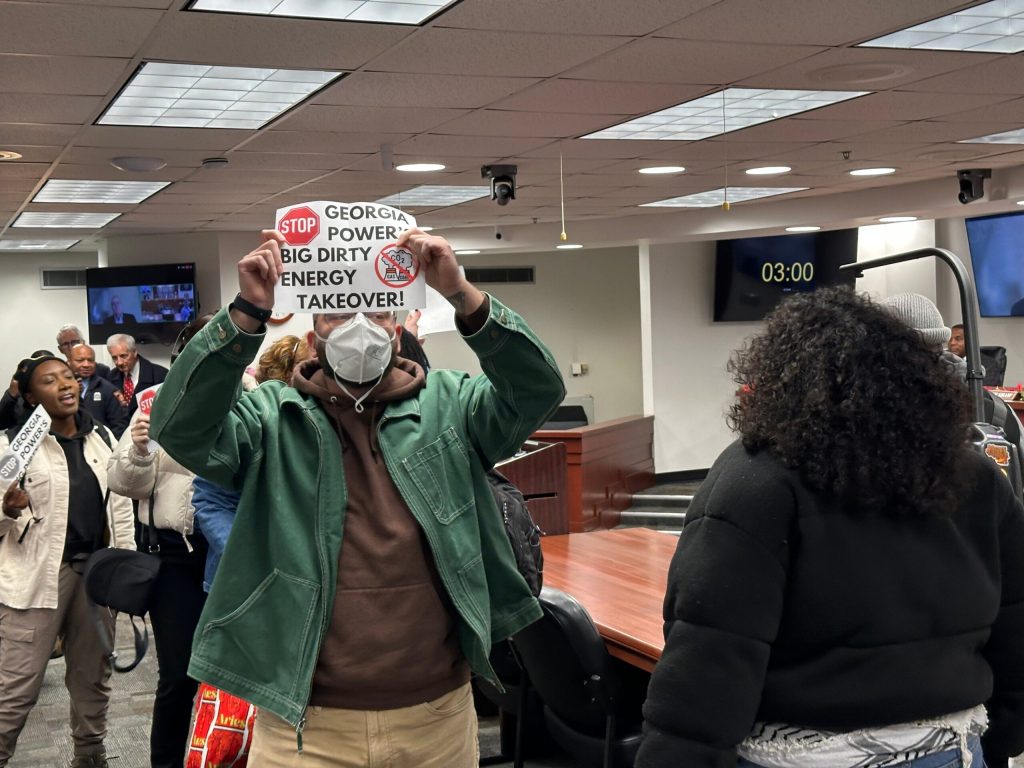
Many opponents also express concerns about any new generation powered by natural gas, arguing that it will exacerbate climate change. Some dissenters were escorted out of the commission meeting after chanting, “Nay! Nay! Nay! The people say nay!”
“Increased natural gas output for the sake of these silicon billionaire kings seems like a lose-lose,” remarked opponent Zak Norton during the meeting.
Photo: Protestors are escorted out of a Georgia Public Service Commission meeting on Friday, Dec. 19, 2025 in Atlanta. (AP Photo/Jeff Amy)
Copyright 2025 Associated Press. All rights reserved. This material may not be published, broadcast, rewritten or redistributed.
Topics
Georgia
The most important insurance news, in your inbox every business day.
Get the insurance industry’s trusted newsletter
Georgia’s only private electric utility is set to expand its power capacity by an impressive 50%. This decision follows a unanimous vote by state regulators, who recognized the necessity of this plan to accommodate the growing demand from data centers.
This expansion represents one of the largest infrastructure projects in the U.S., aimed at addressing the ever-increasing electricity demand driven by artificial intelligence developers. The projected construction cost is estimated at $16.3 billion; however, customers may end up paying between $50 billion and $60 billion over the coming decades, factoring in interest and guaranteed profits for the monopoly utility.
Georgia Power Co. and the Public Service Commission assert that large energy users will cover their costs, and by distributing fixed costs among a larger customer base, residents could see a significant reduction in their power bills starting in 2029.
“Large energy users are paying more so families and small businesses can pay less, and that’s a great result for Georgians,” stated Georgia Power CEO Kim Greene following the vote.
However, critics argue that the five elected Republicans on the commission are making a risky gamble by pursuing data center customers, leaving existing ratepayers vulnerable if the anticipated demand fails to materialize. Bob Sherrier, a lawyer representing some opponents, voiced concerns, stating, “The need for 10,000 megawatts of new capacity resources on the system in the next six years isn’t here. It just isn’t, and it may never be.”
This approval comes on the heels of a significant political shift, as voters recently ousted two incumbent Republicans from the commission in favor of Democrats. These newly elected officials campaigned against the six rate increases approved by the commission in recent years, despite Georgia Power agreeing to a three-year rate freeze in July.
Peter Hubbard and Alicia Johnson, the incoming Democrats who will assume office on January 1, opposed the recent vote, but current commissioners chose not to delay the decision.
Electric bills have become a significant political issue in Georgia and across the nation, with grassroots movements opposing data centers due to concerns that local customers may end up subsidizing the energy needs of large tech companies.
Georgia Power, the largest subsidiary of Atlanta-based Southern Co., claims it requires 10,000 megawatts of new capacity—enough to power 4 million Georgia homes—with 80% of this capacity designated for data centers. Currently, the company serves 2.7 million customers, including residential, commercial, and industrial clients.
The central debate revolves around whether Georgia Power’s projections of increased demand will materialize. On December 9, the company and commission staff agreed to allow the utility to build or acquire the desired capacity, despite earlier concerns that the forecast included excessive speculative construction.
In exchange, Georgia Power committed to using revenue from new customers to exert “downward pressure” on rates after the current freeze ends in 2028. This could translate to at least $8.50 a month, or $102 annually, for a typical residential customer, who currently pays over $175 monthly, including taxes.
“We’re leveraging the upsides from this additional revenue while shifting the risks to the company. I’m proud of that,” remarked Commission Chairman Jason Shaw after the vote.
However, the term “downward pressure” does not guarantee a reduction in rates. Liz Coyle, executive director of consumer advocacy group Georgia Watch, cautioned, “It doesn’t mean your bills are going down. It means that maybe they’re not going up as fast.”
Existing customers will bear part of the construction costs that do not directly benefit data centers. Opponents are particularly concerned that Georgia Power’s promise of rate relief may not be enforceable or sustainable over the long term, especially considering the 40-plus years required to pay off new natural gas-fired power plants.
During a recent news conference, Hubbard likened the situation to taking out a mortgage to build a massive addition to a home for a new roommate, in this case, big tech. “If in 10 years, the AI bubble bursts or the data centers move to a cheaper state, then the roommate moves out, but the mortgage doesn’t go away,” he explained.
Commission staff emphasized the need to closely monitor demand, stating that if data centers do not consume as much power as anticipated, Georgia Power must renegotiate wholesale power agreements, close inefficient generating plants, and seek additional customers.
Many opponents also express concerns about any new generation powered by natural gas, arguing that it will exacerbate climate change. Some dissenters were escorted out of the commission meeting after chanting, “Nay! Nay! Nay! The people say nay!”
“Increased natural gas output for the sake of these silicon billionaire kings seems like a lose-lose,” remarked opponent Zak Norton during the meeting.
Photo: Protestors are escorted out of a Georgia Public Service Commission meeting on Friday, Dec. 19, 2025 in Atlanta. (AP Photo/Jeff Amy)
Copyright 2025 Associated Press. All rights reserved. This material may not be published, broadcast, rewritten or redistributed.
Topics
Georgia
The most important insurance news, in your inbox every business day.
Get the insurance industry’s trusted newsletter