Starbucks CEO: AI as a ‘Co-Pilot’ Rather Than a Replacement for Employees
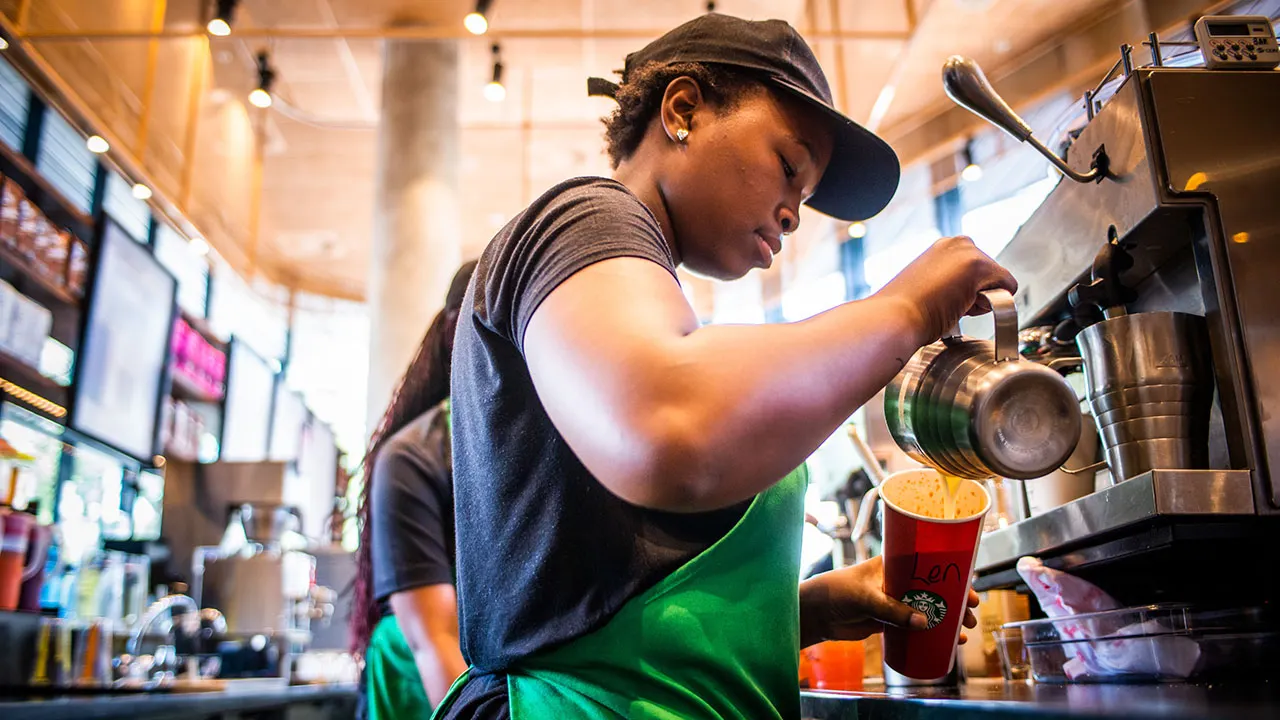
Starbucks CEO tells Fox Business that the coffee chain is ‘ahead of schedule’ in its major turnaround effort.
Starbucks is actively exploring the potential of artificial intelligence (AI) as part of its strategy to revitalize its business and maintain a competitive edge in the coffee industry. Despite the push towards automation, CEO Brian Niccol emphasizes that AI is intended to support, not replace, human workers. In a recent interview with FOX Business, he stated, “It’s more of a co-pilot than a replacement,” highlighting the importance of human connection in the brand’s turnaround efforts.
To reinforce this commitment, Starbucks has invested over $600 million to bring more employees—referred to as “partners”—back into its stores. Niccol explained that the aim is to enhance the human touch that customers value. “I think one of the things that people definitely highly, highly value is the humanity of Starbucks. And that’s never going away. We’ve got to have craft, connection, and a community coffee house,” he said.
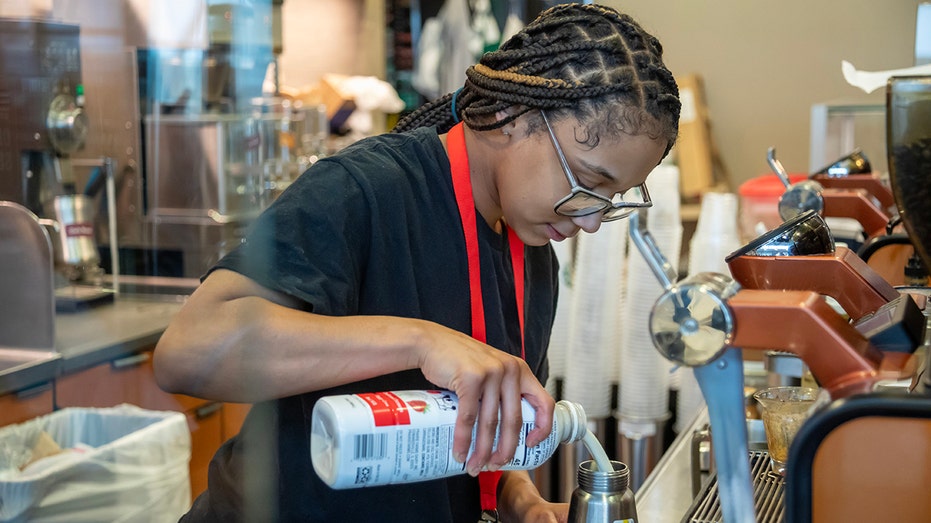
A worker at a Starbucks coffee shop makes a drink at the Detroit Metro Airport in Michigan. (Jim West/UCG/Universal Images Group via Getty Images)
While maintaining its focus on human interaction, Starbucks is also embracing technology to alleviate the workload of its employees and enhance productivity. In today’s competitive landscape, leveraging AI has become essential for companies in the retail and food service sectors to streamline operations, minimize human error, and reduce costs.
In June, Starbucks introduced Green Dot Assist, a virtual assistant designed to help baristas manage their workflows via an iPad system. This tool offers quick reminders for seasonal beverage ingredients, ensuring that employees can serve customers efficiently.
A Starbucks coffee shop in New York, on July 28, 2025. (Victor J. Blue/Bloomberg)
Additionally, the company has implemented a new inventory management tool that utilizes an iPad to automatically scan stock in the back room, eliminating the need for manual counting by employees.
As Niccol stated, “I think there’s going to be a lot more breakthroughs on how we can use AI in our business. And it’s something that we’re going to experiment with, we’re going to learn, and I think it’ll continue to be a part of the business.”
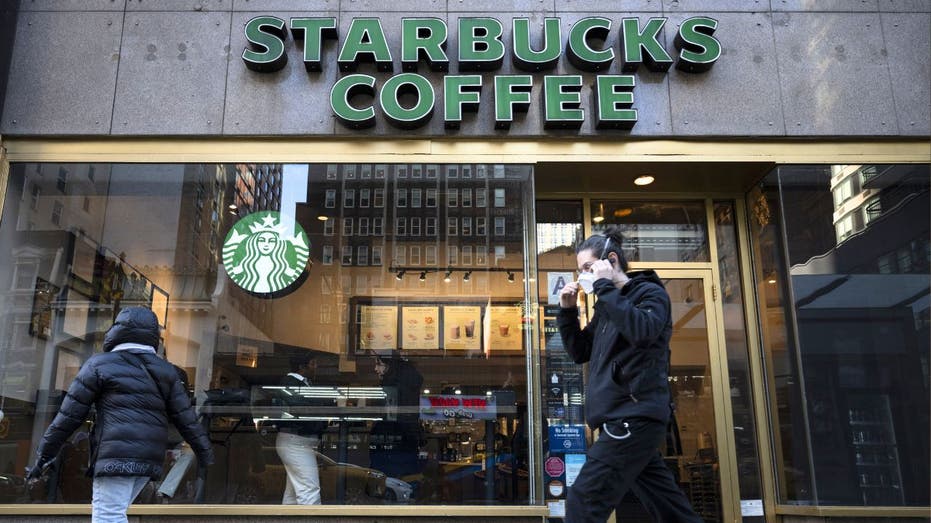
People pass by a Starbucks coffee shop in Manhattan, New York, on Jan. 15, 2025. (Mostafa Bassim/Anadolu via Getty Images)
GET FOX BUSINESS ON THE GO BY CLICKING HERE
While the exact future of AI at Starbucks remains uncertain, Niccol is optimistic about the potential breakthroughs ahead. “It definitely feels like there’s a big breakthrough that we’ll continue to work our way towards,” he remarked.
Starbucks CEO tells Fox Business that the coffee chain is ‘ahead of schedule’ in its major turnaround effort.
Starbucks is actively exploring the potential of artificial intelligence (AI) as part of its strategy to revitalize its business and maintain a competitive edge in the coffee industry. Despite the push towards automation, CEO Brian Niccol emphasizes that AI is intended to support, not replace, human workers. In a recent interview with FOX Business, he stated, “It’s more of a co-pilot than a replacement,” highlighting the importance of human connection in the brand’s turnaround efforts.
To reinforce this commitment, Starbucks has invested over $600 million to bring more employees—referred to as “partners”—back into its stores. Niccol explained that the aim is to enhance the human touch that customers value. “I think one of the things that people definitely highly, highly value is the humanity of Starbucks. And that’s never going away. We’ve got to have craft, connection, and a community coffee house,” he said.
A worker at a Starbucks coffee shop makes a drink at the Detroit Metro Airport in Michigan. (Jim West/UCG/Universal Images Group via Getty Images)
While maintaining its focus on human interaction, Starbucks is also embracing technology to alleviate the workload of its employees and enhance productivity. In today’s competitive landscape, leveraging AI has become essential for companies in the retail and food service sectors to streamline operations, minimize human error, and reduce costs.
In June, Starbucks introduced Green Dot Assist, a virtual assistant designed to help baristas manage their workflows via an iPad system. This tool offers quick reminders for seasonal beverage ingredients, ensuring that employees can serve customers efficiently.
A Starbucks coffee shop in New York, on July 28, 2025. (Victor J. Blue/Bloomberg)
Additionally, the company has implemented a new inventory management tool that utilizes an iPad to automatically scan stock in the back room, eliminating the need for manual counting by employees.
As Niccol stated, “I think there’s going to be a lot more breakthroughs on how we can use AI in our business. And it’s something that we’re going to experiment with, we’re going to learn, and I think it’ll continue to be a part of the business.”
People pass by a Starbucks coffee shop in Manhattan, New York, on Jan. 15, 2025. (Mostafa Bassim/Anadolu via Getty Images)
GET FOX BUSINESS ON THE GO BY CLICKING HERE
While the exact future of AI at Starbucks remains uncertain, Niccol is optimistic about the potential breakthroughs ahead. “It definitely feels like there’s a big breakthrough that we’ll continue to work our way towards,” he remarked.