Goldman Sachs Predicts Acceleration in US Economic Growth by 2026

‘The Big Money Show’ panel breaks down falling gas prices, record stock gains, and why strong economic data has critics scrambling.
The U.S. economy’s resilience in 2025 is projected to extend into 2026, with anticipated growth accelerating as tax cuts and improved financial conditions take effect. This optimism comes as headwinds from tariffs and inflation begin to ease, according to a recent report from Goldman Sachs.
Goldman Sachs economists, led by Jan Hatzius, noted in their 2026 outlook that this year’s economic growth was somewhat restrained due to unexpectedly high tariffs. These tariffs raised the average effective tariff rate on goods imported to the U.S. by several percentage points more than initially anticipated.
“While the tailwinds powering the U.S. economy did trump tariffs in the end, as we predicted, it didn’t always look like they would,” they stated. “The estimated 2.1% growth rate fell 0.4 percentage points short of our forecast, primarily due to an 11 percentage point increase in the average effective tariff rate, which was higher than the 4 percentage points we assumed in our baseline forecast.”
Looking ahead, Goldman Sachs forecasts a more robust growth rate of 2.6% real GDP in 2026, surpassing the Bloomberg consensus of 2%. This trend reflects a post-pandemic optimism surrounding the U.S. economy compared to consensus forecasts.
US ECONOMY GREW MUCH FASTER THAN EXPECTED IN THE THIRD QUARTER, DELAYED REPORT SHOWS
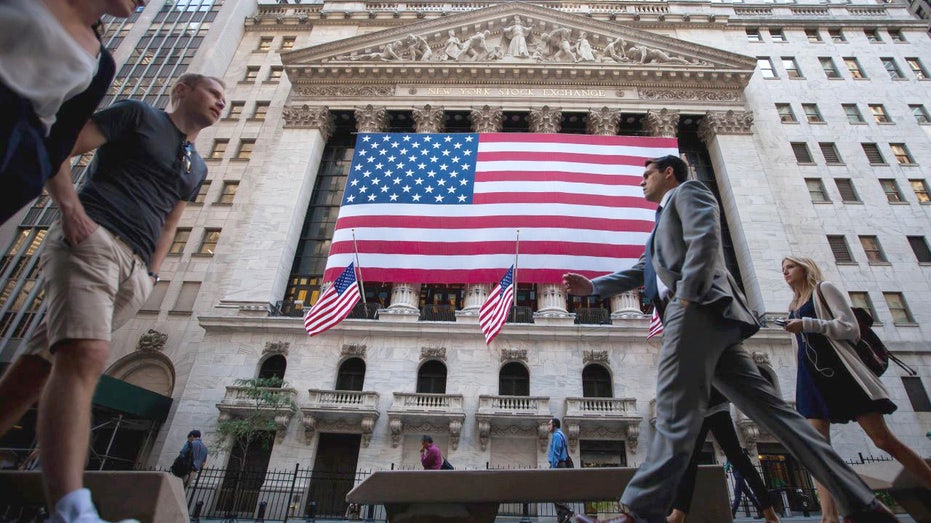
Goldman Sachs’ 2026 outlook shows an acceleration in GDP growth for the U.S., though the labor market is expected to remain stagnant. (Michael Nagle/Bloomberg via Getty Images)
Goldman attributes the anticipated acceleration in U.S. economic growth in 2026 to three key factors. First, a reduction in tariff drag is expected, as the report indicates that the 11 percentage point increase in the average effective tariff rate cut 0.6 percentage points from U.S. GDP in the latter half of 2025. If tariff rates remain stable, this impact is likely to diminish in 2026.
Secondly, the tax cuts and reforms introduced in the One Big Beautiful Bill Act (OBBBA) are expected to stimulate faster economic growth. Goldman Sachs estimates that consumers will receive an additional $100 billion in tax refunds in the first half of next year, which equates to approximately 0.4% of annual disposable income. Furthermore, OBBBA’s business tax provisions, allowing full expensing of plant and equipment spending, have already begun to enhance forward-looking capital expenditure indicators.
US ADDED 64K JOBS IN NOVEMBER AFTER LOSING 105K IN OCTOBER, DELAYED REPORT SHOWS
The third factor contributing to the forecast of accelerated economic growth in 2026 is the more favorable financial conditions resulting from interest rate cuts by the Federal Reserve, along with deregulation and advancements in artificial intelligence (AI).
Despite the optimistic outlook for economic growth, Goldman Sachs does not foresee a significant improvement in the labor market. The labor market has cooled throughout 2025, influenced by economic uncertainties related to tariffs, immigration changes, and federal government downsizing.
The unemployment rate rose from 4.1% in June to 4.6% in November. While some of this increase may be attributed to the government shutdown, the analysis indicates that the labor market began to cool mid-year, suggesting a broader trend.
INFLATION REMAINED ELEVATED IN NOVEMBER AS FED CONSIDERS PAUSING INTEREST RATE CUTS
Goldman’s outlook suggests that while productivity benefits from AI are anticipated to materialize in the coming years, the unemployment rate is expected to stabilize around 4.5% in 2026. However, the economists caution that “we do not see a meaningful decline anytime soon.” They also noted the potential for further increases in the unemployment rate if productivity-enhancing AI applications are adopted more rapidly than expected.
The year-ahead outlook also anticipates progress in lowering inflation, which rebounded to nearly 3% throughout 2025. Goldman economists highlighted that “the main reason why core PCE inflation has remained elevated at 2.8% in 2025 is tariff pass-through.” Without tariffs, inflation would have dropped to approximately 2.3%.
GET FOX BUSINESS ON THE GO BY CLICKING HERE
Goldman economists predict that while the tariff pass-through may rise slightly from about 0.5 percentage points now to 0.8 percentage points by mid-2026, the impact on inflation will lessen in the latter half of next year, allowing core PCE inflation to decline to just above 2% by the end of 2026.
‘The Big Money Show’ panel breaks down falling gas prices, record stock gains, and why strong economic data has critics scrambling.
The U.S. economy’s resilience in 2025 is projected to extend into 2026, with anticipated growth accelerating as tax cuts and improved financial conditions take effect. This optimism comes as headwinds from tariffs and inflation begin to ease, according to a recent report from Goldman Sachs.
Goldman Sachs economists, led by Jan Hatzius, noted in their 2026 outlook that this year’s economic growth was somewhat restrained due to unexpectedly high tariffs. These tariffs raised the average effective tariff rate on goods imported to the U.S. by several percentage points more than initially anticipated.
“While the tailwinds powering the U.S. economy did trump tariffs in the end, as we predicted, it didn’t always look like they would,” they stated. “The estimated 2.1% growth rate fell 0.4 percentage points short of our forecast, primarily due to an 11 percentage point increase in the average effective tariff rate, which was higher than the 4 percentage points we assumed in our baseline forecast.”
Looking ahead, Goldman Sachs forecasts a more robust growth rate of 2.6% real GDP in 2026, surpassing the Bloomberg consensus of 2%. This trend reflects a post-pandemic optimism surrounding the U.S. economy compared to consensus forecasts.
US ECONOMY GREW MUCH FASTER THAN EXPECTED IN THE THIRD QUARTER, DELAYED REPORT SHOWS
Goldman Sachs’ 2026 outlook shows an acceleration in GDP growth for the U.S., though the labor market is expected to remain stagnant. (Michael Nagle/Bloomberg via Getty Images)
Goldman attributes the anticipated acceleration in U.S. economic growth in 2026 to three key factors. First, a reduction in tariff drag is expected, as the report indicates that the 11 percentage point increase in the average effective tariff rate cut 0.6 percentage points from U.S. GDP in the latter half of 2025. If tariff rates remain stable, this impact is likely to diminish in 2026.
Secondly, the tax cuts and reforms introduced in the One Big Beautiful Bill Act (OBBBA) are expected to stimulate faster economic growth. Goldman Sachs estimates that consumers will receive an additional $100 billion in tax refunds in the first half of next year, which equates to approximately 0.4% of annual disposable income. Furthermore, OBBBA’s business tax provisions, allowing full expensing of plant and equipment spending, have already begun to enhance forward-looking capital expenditure indicators.
US ADDED 64K JOBS IN NOVEMBER AFTER LOSING 105K IN OCTOBER, DELAYED REPORT SHOWS
The third factor contributing to the forecast of accelerated economic growth in 2026 is the more favorable financial conditions resulting from interest rate cuts by the Federal Reserve, along with deregulation and advancements in artificial intelligence (AI).
Despite the optimistic outlook for economic growth, Goldman Sachs does not foresee a significant improvement in the labor market. The labor market has cooled throughout 2025, influenced by economic uncertainties related to tariffs, immigration changes, and federal government downsizing.
The unemployment rate rose from 4.1% in June to 4.6% in November. While some of this increase may be attributed to the government shutdown, the analysis indicates that the labor market began to cool mid-year, suggesting a broader trend.
INFLATION REMAINED ELEVATED IN NOVEMBER AS FED CONSIDERS PAUSING INTEREST RATE CUTS
Goldman’s outlook suggests that while productivity benefits from AI are anticipated to materialize in the coming years, the unemployment rate is expected to stabilize around 4.5% in 2026. However, the economists caution that “we do not see a meaningful decline anytime soon.” They also noted the potential for further increases in the unemployment rate if productivity-enhancing AI applications are adopted more rapidly than expected.
The year-ahead outlook also anticipates progress in lowering inflation, which rebounded to nearly 3% throughout 2025. Goldman economists highlighted that “the main reason why core PCE inflation has remained elevated at 2.8% in 2025 is tariff pass-through.” Without tariffs, inflation would have dropped to approximately 2.3%.
GET FOX BUSINESS ON THE GO BY CLICKING HERE
Goldman economists predict that while the tariff pass-through may rise slightly from about 0.5 percentage points now to 0.8 percentage points by mid-2026, the impact on inflation will lessen in the latter half of next year, allowing core PCE inflation to decline to just above 2% by the end of 2026.