Impact of Wild Hogs on Mississippi Agriculture: Economic Disruption Uncovered
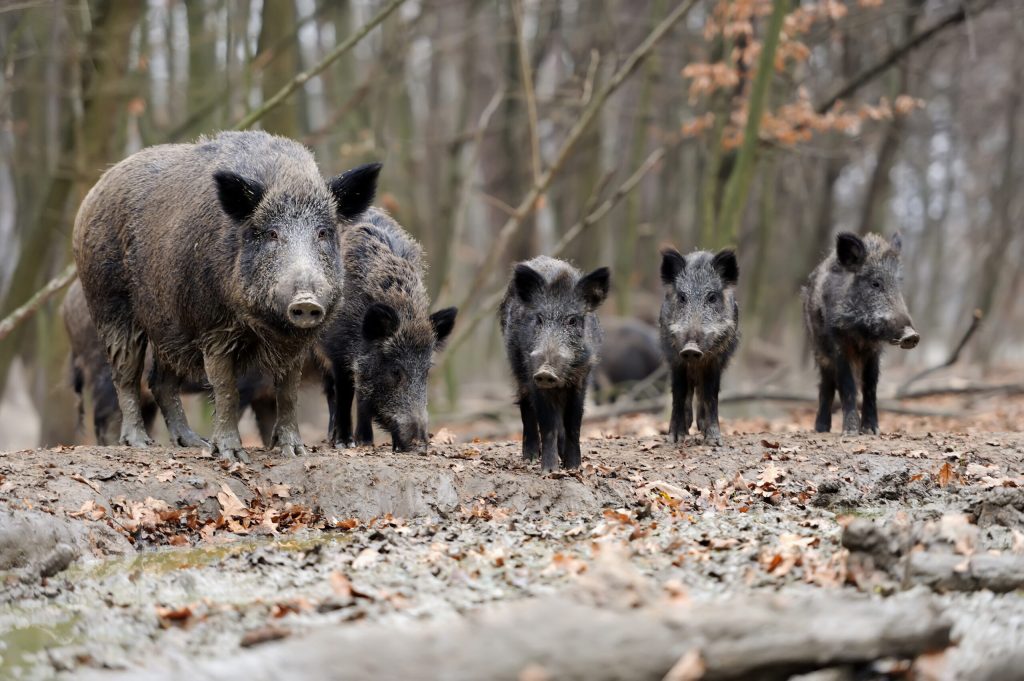
John Parker Campbell describes the wild pigs on his family farm as “a constant headache.” These feral hogs wreak havoc by consuming newly planted corn and peanuts, causing significant damage to crops overnight. This issue has plagued Campbell and his father since they began farming in Copiah County in the 1990s.
In Mississippi alone, wild hogs inflict an estimated $60 million to $80 million in damages annually, impacting both crops and property. Despite efforts from farmers, researchers, and government agencies to combat this infestation, landowners find themselves in a relentless struggle.
“Farmers have enough stress as it is. They don’t need this modern-day locust,” remarked Mississippi Commissioner of Agriculture and Commerce, Andy Gipson.
To protect their land, Campbell and his father employ traps and have installed an electric fence around their property. While the fence has proven effective, it has also been breached in the past. The initial setup was costly, and ongoing maintenance expenses run into the thousands each year.
“You have to know that they’re out there,” Campbell explained. “We keep an eye on our fields, but if you get busy and miss a couple of days, they can cause tremendous damage.”
The wild hog population has surged over the past 40 years, expanding from 17 states in the 1980s to 35 today. Previously estimated to cost the U.S. $2 billion annually, recent research suggests the figure has now exceeded $3 billion.
Wild pigs are not native to the U.S.; they originated from escaped livestock brought by European settlers, later supplemented by imported Eurasian boars. With no natural predators and abundant resources, their numbers have ballooned.
While some landowners have successfully deterred pigs using electric fences, the most effective way to manage the growing population remains through culling.
In 2020, Mississippi became the first state to implement a statewide wild hog-control program, offering education and traps to landowners. This program operates on an annual budget of $183,000, primarily allocated for staff salaries and the upkeep of smart traps and cameras. Each of the four application cycles receives between 35 and 40 applications.
Various methods exist to reduce the wild pig population, including trapping, aerial gunning, and poison. Although wild hogs can be hunted year-round, hunting alone is often insufficient for controlling their numbers.
Aerial gunning is limited to the U.S. Department of Agriculture in Mississippi and is less effective due to the dense tree cover that provides pigs with ample hiding spots. In contrast, states like Texas benefit from more open terrain. Ongoing research into poisons, including contraceptives, faces challenges in ensuring non-target animals do not consume them.
Trapping remains the most common and efficient method, requiring less time and effort than alternatives. A recent study from Mississippi State University highlighted the economic advantages of trapping.
The average landowner in the study faced approximately $20,000 in hog-related damages annually. Reducing the local pig population could lead to savings of $300 to $4,000 per pig the following year. However, tackling the wild hog issue is an expensive and ongoing endeavor.
The study involved intensive hog removal efforts by Delta Wildlife, a conservation nonprofit. Jody Acosta, the program manager for nuisance and invasive species, leads a dedicated team that sets up and monitors traps throughout the Delta. Acosta emphasizes that their work is focused on pest management rather than hunting for sport.
Some traps are designed to close only when triggered remotely by a Delta Wildlife team member. This requires constant monitoring, often late at night, to check live video feeds. Once a group of pigs is trapped, a team member quickly arrives to dispose of them and reset the trap.
According to the study, outsourcing all aspects of trapping could cost a landowner around $200 per pig. While this figure may seem daunting, the average landowner is likely to pay less. Strickland, one of the study’s authors, asserts that pig removal can yield a “positive return on investment,” making government programs economically viable.
In the long run, Strickland believes a concerted effort and investment could reduce the wild pig population. He urges farmers and landowners to take the threat of wild pigs seriously, even if they currently see only a few on their property.
“The problem will only get worse and worse,” Strickland warns.
___
This story was originally published by Mississippi Today and distributed through a partnership with The Associated Press. Katherine Lin reported.
Photo: AdobeStock
Copyright 2025 Associated Press. All rights reserved. This material may not be published, broadcast, rewritten or redistributed.
Topics
Agribusiness
Mississippi
John Parker Campbell describes the wild pigs on his family farm as “a constant headache.” These feral hogs wreak havoc by consuming newly planted corn and peanuts, causing significant damage to crops overnight. This issue has plagued Campbell and his father since they began farming in Copiah County in the 1990s.
In Mississippi alone, wild hogs inflict an estimated $60 million to $80 million in damages annually, impacting both crops and property. Despite efforts from farmers, researchers, and government agencies to combat this infestation, landowners find themselves in a relentless struggle.
“Farmers have enough stress as it is. They don’t need this modern-day locust,” remarked Mississippi Commissioner of Agriculture and Commerce, Andy Gipson.
To protect their land, Campbell and his father employ traps and have installed an electric fence around their property. While the fence has proven effective, it has also been breached in the past. The initial setup was costly, and ongoing maintenance expenses run into the thousands each year.
“You have to know that they’re out there,” Campbell explained. “We keep an eye on our fields, but if you get busy and miss a couple of days, they can cause tremendous damage.”
The wild hog population has surged over the past 40 years, expanding from 17 states in the 1980s to 35 today. Previously estimated to cost the U.S. $2 billion annually, recent research suggests the figure has now exceeded $3 billion.
Wild pigs are not native to the U.S.; they originated from escaped livestock brought by European settlers, later supplemented by imported Eurasian boars. With no natural predators and abundant resources, their numbers have ballooned.
While some landowners have successfully deterred pigs using electric fences, the most effective way to manage the growing population remains through culling.
In 2020, Mississippi became the first state to implement a statewide wild hog-control program, offering education and traps to landowners. This program operates on an annual budget of $183,000, primarily allocated for staff salaries and the upkeep of smart traps and cameras. Each of the four application cycles receives between 35 and 40 applications.
Various methods exist to reduce the wild pig population, including trapping, aerial gunning, and poison. Although wild hogs can be hunted year-round, hunting alone is often insufficient for controlling their numbers.
Aerial gunning is limited to the U.S. Department of Agriculture in Mississippi and is less effective due to the dense tree cover that provides pigs with ample hiding spots. In contrast, states like Texas benefit from more open terrain. Ongoing research into poisons, including contraceptives, faces challenges in ensuring non-target animals do not consume them.
Trapping remains the most common and efficient method, requiring less time and effort than alternatives. A recent study from Mississippi State University highlighted the economic advantages of trapping.
The average landowner in the study faced approximately $20,000 in hog-related damages annually. Reducing the local pig population could lead to savings of $300 to $4,000 per pig the following year. However, tackling the wild hog issue is an expensive and ongoing endeavor.
The study involved intensive hog removal efforts by Delta Wildlife, a conservation nonprofit. Jody Acosta, the program manager for nuisance and invasive species, leads a dedicated team that sets up and monitors traps throughout the Delta. Acosta emphasizes that their work is focused on pest management rather than hunting for sport.
Some traps are designed to close only when triggered remotely by a Delta Wildlife team member. This requires constant monitoring, often late at night, to check live video feeds. Once a group of pigs is trapped, a team member quickly arrives to dispose of them and reset the trap.
According to the study, outsourcing all aspects of trapping could cost a landowner around $200 per pig. While this figure may seem daunting, the average landowner is likely to pay less. Strickland, one of the study’s authors, asserts that pig removal can yield a “positive return on investment,” making government programs economically viable.
In the long run, Strickland believes a concerted effort and investment could reduce the wild pig population. He urges farmers and landowners to take the threat of wild pigs seriously, even if they currently see only a few on their property.
“The problem will only get worse and worse,” Strickland warns.
___
This story was originally published by Mississippi Today and distributed through a partnership with The Associated Press. Katherine Lin reported.
Photo: AdobeStock
Copyright 2025 Associated Press. All rights reserved. This material may not be published, broadcast, rewritten or redistributed.
Topics
Agribusiness
Mississippi