CEO Warns: China’s Advancements in Fusion Technology May Pose Threat to the US
Commonwealth Fusion Systems CEO Bob Mumgaard emphasizes that the global race for fusion energy is intensifying, with significant implications for U.S. energy leadership.
During the Cold War, the U.S. and the Soviet Union were locked in a fierce competition across various domains, including space exploration. This rivalry took a pivotal turn on October 4, 1957, when the U.S.S.R. launched Sputnik, the first artificial satellite, marking the dawn of the Space Age. Fast forward nearly 70 years, and the U.S. finds itself in a new technological race—this time over fusion energy. Mumgaard warns that the U.S. could be on the brink of another “Sputnik moment” as China accelerates its efforts in this field.
“Fusion is at an inflection point,” Mumgaard stated in an interview with FOX Business. “Foreign governments are making substantial investments, and we are beginning to see what the future fusion industry will look like. This will be a crucial sector globally, especially at the intersection with AI.”
He added, “The U.S. government, which has long supported fusion, is currently not structured to capitalize on this moment and truly lead in energy dominance.”
THIS DEAL IS ABOUT ENERGY OF THE FUTURE, EXPERT REVEALS
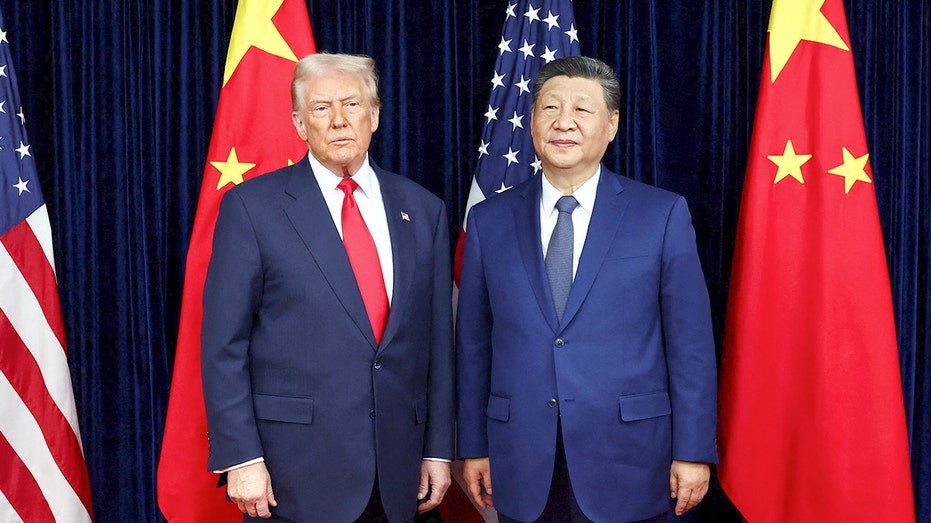
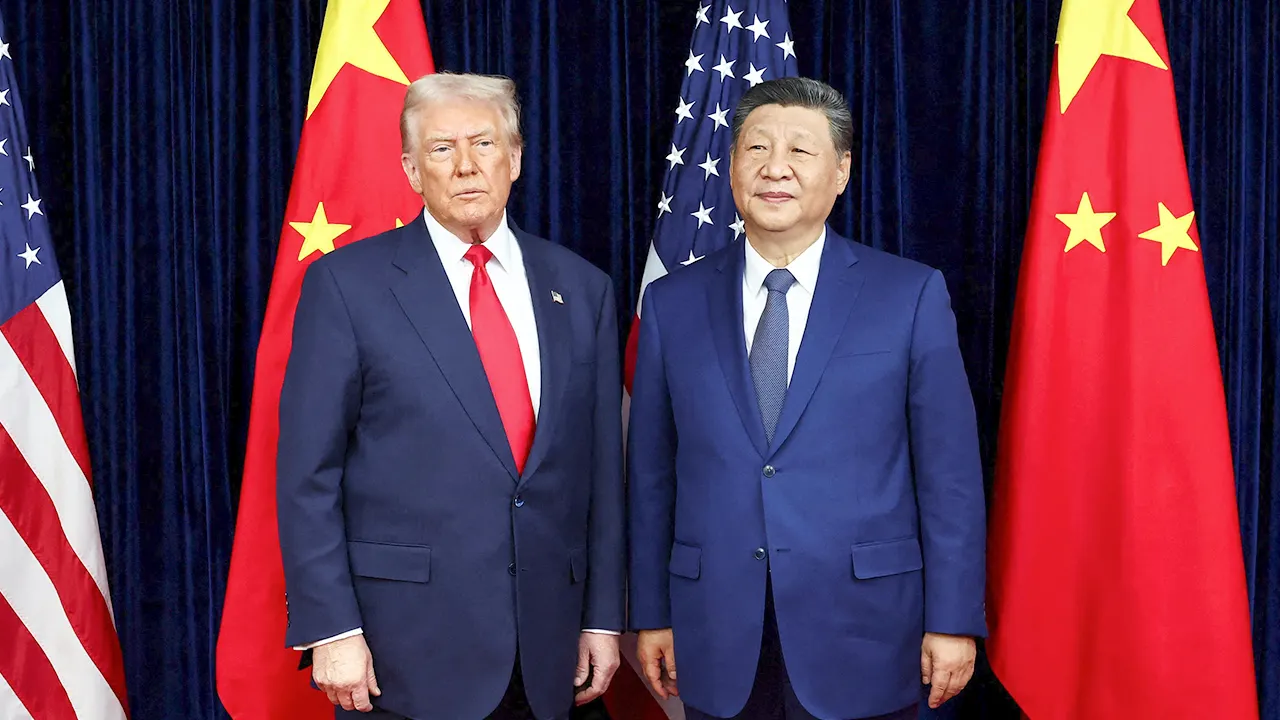
President Donald Trump and Chinese President Xi Jinping during a bilateral meeting at Gimhae International Airport, on the sidelines of the APEC summit, in Busan, South Korea, Oct. 3 (Evelyn Hockstein/Reuters / Reuters)
Mumgaard identifies China as the U.S.’s primary competitor in the fusion energy sector, as Beijing ramps up its investments and strategic initiatives. In July, the People’s Daily Online reported the launch of the China Fusion Energy Co. Ltd (CFEC), a subsidiary of the China National Nuclear Corporation (CNNC), with a registered capital of 15 billion yuan (approximately $2.1 billion).
The International Atomic Energy Agency (IAEA) noted in October that fusion energy development has “entered a decisive new phase,” highlighting global collaboration involving 33 countries and thousands of engineers and scientists working on a tokamak—a doughnut-shaped magnetic fusion device. This collaboration aims to demonstrate the feasibility of fusion as a large-scale, carbon-free energy source.
Mumgaard acknowledges the challenges in measuring the potential impacts of China leading the fusion energy race, given the unprecedented nature of the technology. “We’ve never had an energy source quite like fusion before,” he remarked, emphasizing that it requires significantly less land and infrastructure compared to traditional energy sources, making it revolutionary.
“It’s hard to predict how this will unfold, but it represents a significant technological shift. Any country that achieves fusion will likely leverage it to power their economy,” he added.
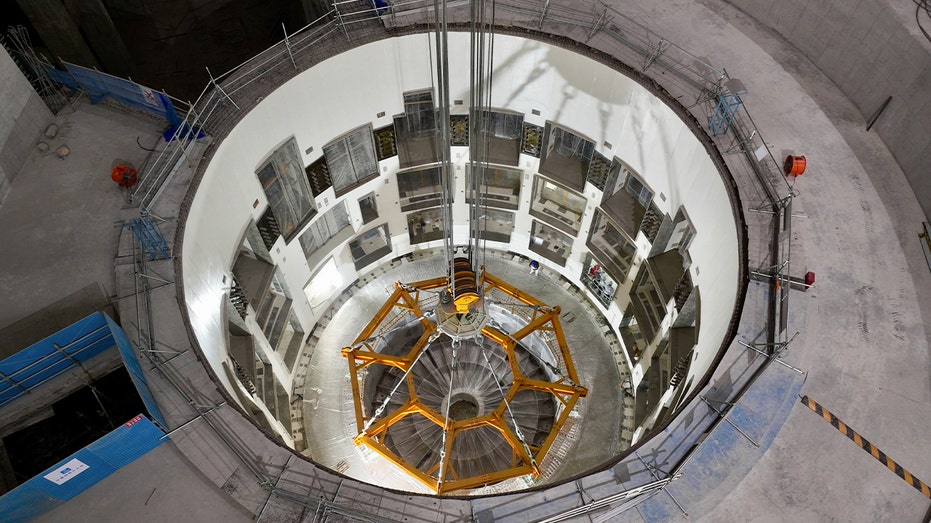
East China’s Anhui Province is constructing the Burning Plasma Experimental Superconducting Tokamak (BEST) in Hefei, which aims to demonstrate fusion electricity generation for the first time. (Zhou Mu/Xinhua via Getty Images / Getty Images)
TRUMP MEDIA STRIKES MAJOR $6B FUSION DEAL TO POWER FUTURE DATA CENTERS
Mumgaard cautions that while China is aggressively advancing its fusion development, the U.S. infrastructure remains largely stagnant. “China has invested between $6 billion and $12 billion in fusion over the past few years, building large-scale test facilities and organizing universities, national labs, and private companies to tackle remaining challenges and construct demonstration power plants,” he explained. “In contrast, the U.S. has not made similar strides; our fusion program resembles what it was in the 1990s, and modernization is essential.”
He believes that modernizing the U.S. fusion program could catalyze an industrial revolution. To achieve this, Mumgaard suggests leveraging past collaborations between the government and private sector, similar to initiatives like SpaceX and Operation Warp Speed.
“We see effective models that could be applied to fusion, utilizing private capital—over $10 billion is currently invested in fusion companies—along with the expertise and acceleration that government support can provide,” Mumgaard stated during his conversation with FOX Business.
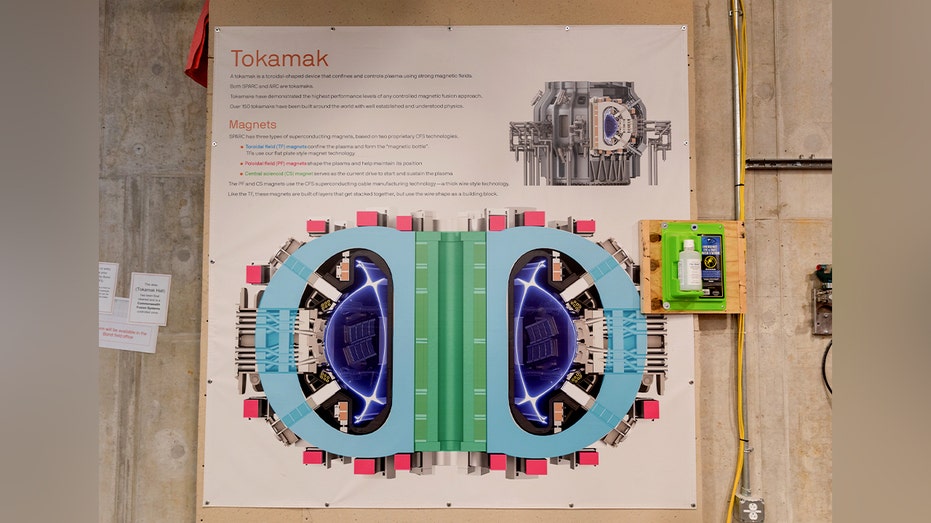
A diagram of the SPARC tokamak at the Commonwealth Fusion Systems campus in Devens, Mass., on Wednesday, Nov. 6, 2024. (Cassandra Klos/Bloomberg via Getty Images / Getty Images)
GROUND BREAKING FOR FIRST COMMERCIAL-SCALE ADVANCED NUCLEAR REACTOR IN DECADES BEGINS IN IDAHO
Despite the challenges, Mumgaard noted that American companies are making strides in advancing fusion technology. He spoke to FOX Business from Devens, Massachusetts, where Commonwealth Fusion Systems is constructing the Soonest Possible Advanced Reactor Compact (SPARC), designed to produce more power than it consumes.
Last year, CFS announced plans to independently finance, build, own, and operate a grid-scale fusion power plant in Chesterfield County, Virginia. “This is a historic moment,” Mumgaard stated in a 2024 statement about the project. “In the early 2030s, all eyes will be on the Richmond region, specifically Chesterfield County, Virginia, as the birthplace of commercial fusion energy.”
Mumgaard reiterated this timeline when speaking with FOX Business, emphasizing that tangible results will be the true measure of progress in the U.S. fusion race. “The biggest indicator is, ‘are we starting to build things?’” he said. “‘Are the things we’re building turning on? Are they working?'”

Bob Mumgaard, co-founder and CEO of Commonwealth Fusion Systems, speaks during the CERAWeek by S&P Global conference in Houston, Texas, on Tuesday, March 11, 2025. (F. Carter Smith/Bloomberg via Getty Images / Getty Images)
GET FOX BUSINESS ON THE GO BY CLICKING HERE
Mumgaard believes that transformative technologies like fusion may seem distant until rapid progress occurs. He likens the current state of fusion to past discussions around AI, where years of speculation suddenly gave way to breakthroughs like ChatGPT.
“Fusion is similar; unless you are closely monitoring the detailed progress, it can feel impossible. Then, all of a sudden, it seems inevitable. That shift can happen rapidly if you’re only casually observing,” he remarked.
Commonwealth Fusion Systems CEO Bob Mumgaard emphasizes that the global race for fusion energy is intensifying, with significant implications for U.S. energy leadership.
During the Cold War, the U.S. and the Soviet Union were locked in a fierce competition across various domains, including space exploration. This rivalry took a pivotal turn on October 4, 1957, when the U.S.S.R. launched Sputnik, the first artificial satellite, marking the dawn of the Space Age. Fast forward nearly 70 years, and the U.S. finds itself in a new technological race—this time over fusion energy. Mumgaard warns that the U.S. could be on the brink of another “Sputnik moment” as China accelerates its efforts in this field.
“Fusion is at an inflection point,” Mumgaard stated in an interview with FOX Business. “Foreign governments are making substantial investments, and we are beginning to see what the future fusion industry will look like. This will be a crucial sector globally, especially at the intersection with AI.”
He added, “The U.S. government, which has long supported fusion, is currently not structured to capitalize on this moment and truly lead in energy dominance.”
THIS DEAL IS ABOUT ENERGY OF THE FUTURE, EXPERT REVEALS
President Donald Trump and Chinese President Xi Jinping during a bilateral meeting at Gimhae International Airport, on the sidelines of the APEC summit, in Busan, South Korea, Oct. 3 (Evelyn Hockstein/Reuters / Reuters)
Mumgaard identifies China as the U.S.’s primary competitor in the fusion energy sector, as Beijing ramps up its investments and strategic initiatives. In July, the People’s Daily Online reported the launch of the China Fusion Energy Co. Ltd (CFEC), a subsidiary of the China National Nuclear Corporation (CNNC), with a registered capital of 15 billion yuan (approximately $2.1 billion).
The International Atomic Energy Agency (IAEA) noted in October that fusion energy development has “entered a decisive new phase,” highlighting global collaboration involving 33 countries and thousands of engineers and scientists working on a tokamak—a doughnut-shaped magnetic fusion device. This collaboration aims to demonstrate the feasibility of fusion as a large-scale, carbon-free energy source.
Mumgaard acknowledges the challenges in measuring the potential impacts of China leading the fusion energy race, given the unprecedented nature of the technology. “We’ve never had an energy source quite like fusion before,” he remarked, emphasizing that it requires significantly less land and infrastructure compared to traditional energy sources, making it revolutionary.
“It’s hard to predict how this will unfold, but it represents a significant technological shift. Any country that achieves fusion will likely leverage it to power their economy,” he added.
East China’s Anhui Province is constructing the Burning Plasma Experimental Superconducting Tokamak (BEST) in Hefei, which aims to demonstrate fusion electricity generation for the first time. (Zhou Mu/Xinhua via Getty Images / Getty Images)
TRUMP MEDIA STRIKES MAJOR $6B FUSION DEAL TO POWER FUTURE DATA CENTERS
Mumgaard cautions that while China is aggressively advancing its fusion development, the U.S. infrastructure remains largely stagnant. “China has invested between $6 billion and $12 billion in fusion over the past few years, building large-scale test facilities and organizing universities, national labs, and private companies to tackle remaining challenges and construct demonstration power plants,” he explained. “In contrast, the U.S. has not made similar strides; our fusion program resembles what it was in the 1990s, and modernization is essential.”
He believes that modernizing the U.S. fusion program could catalyze an industrial revolution. To achieve this, Mumgaard suggests leveraging past collaborations between the government and private sector, similar to initiatives like SpaceX and Operation Warp Speed.
“We see effective models that could be applied to fusion, utilizing private capital—over $10 billion is currently invested in fusion companies—along with the expertise and acceleration that government support can provide,” Mumgaard stated during his conversation with FOX Business.
A diagram of the SPARC tokamak at the Commonwealth Fusion Systems campus in Devens, Mass., on Wednesday, Nov. 6, 2024. (Cassandra Klos/Bloomberg via Getty Images / Getty Images)
GROUND BREAKING FOR FIRST COMMERCIAL-SCALE ADVANCED NUCLEAR REACTOR IN DECADES BEGINS IN IDAHO
Despite the challenges, Mumgaard noted that American companies are making strides in advancing fusion technology. He spoke to FOX Business from Devens, Massachusetts, where Commonwealth Fusion Systems is constructing the Soonest Possible Advanced Reactor Compact (SPARC), designed to produce more power than it consumes.
Last year, CFS announced plans to independently finance, build, own, and operate a grid-scale fusion power plant in Chesterfield County, Virginia. “This is a historic moment,” Mumgaard stated in a 2024 statement about the project. “In the early 2030s, all eyes will be on the Richmond region, specifically Chesterfield County, Virginia, as the birthplace of commercial fusion energy.”
Mumgaard reiterated this timeline when speaking with FOX Business, emphasizing that tangible results will be the true measure of progress in the U.S. fusion race. “The biggest indicator is, ‘are we starting to build things?’” he said. “‘Are the things we’re building turning on? Are they working?'”
Bob Mumgaard, co-founder and CEO of Commonwealth Fusion Systems, speaks during the CERAWeek by S&P Global conference in Houston, Texas, on Tuesday, March 11, 2025. (F. Carter Smith/Bloomberg via Getty Images / Getty Images)
GET FOX BUSINESS ON THE GO BY CLICKING HERE
Mumgaard believes that transformative technologies like fusion may seem distant until rapid progress occurs. He likens the current state of fusion to past discussions around AI, where years of speculation suddenly gave way to breakthroughs like ChatGPT.
“Fusion is similar; unless you are closely monitoring the detailed progress, it can feel impossible. Then, all of a sudden, it seems inevitable. That shift can happen rapidly if you’re only casually observing,” he remarked.