IRS Raises Business Mileage Tax Deduction Rate by 2.5 Cents for 2026
‘The Big Money Show’ panel discusses Wall Street’s bold 2026 forecasts, the A.I. boom reshaping the economy, and how President Donald Trump’s policies could drive the next major market rally.
For those who use their cars for work, there’s good news on the horizon. Starting in the new year, the Internal Revenue Service (IRS) has announced an increase in the standard mileage rate for business driving, allowing taxpayers to deduct more money per mile on their taxes.
Effective January 1, the standard mileage rate for business driving will rise by 2.5 cents per mile. Conversely, the rate for vehicles used for medical purposes will see a slight decrease of half a cent. The IRS attributes these changes to “updated cost data and annual inflation adjustments.”
The standard mileage rate is a figure set by the IRS, expressed in cents per mile, which is utilized to calculate the deductible costs of using a personal vehicle for business purposes when filing federal income taxes. This deduction is available to self-employed individuals, gig workers, freelancers, and small businesses that use personal vehicles for business activities. Additionally, the standard mileage rate applies to vehicles used for medical purposes, moving purposes for active duty members, and charitable work.
US ECONOMY EXPECTED TO GROW FASTER IN 2026 DESPITE STAGNANT JOB MARKET: GOLDMAN SACHS
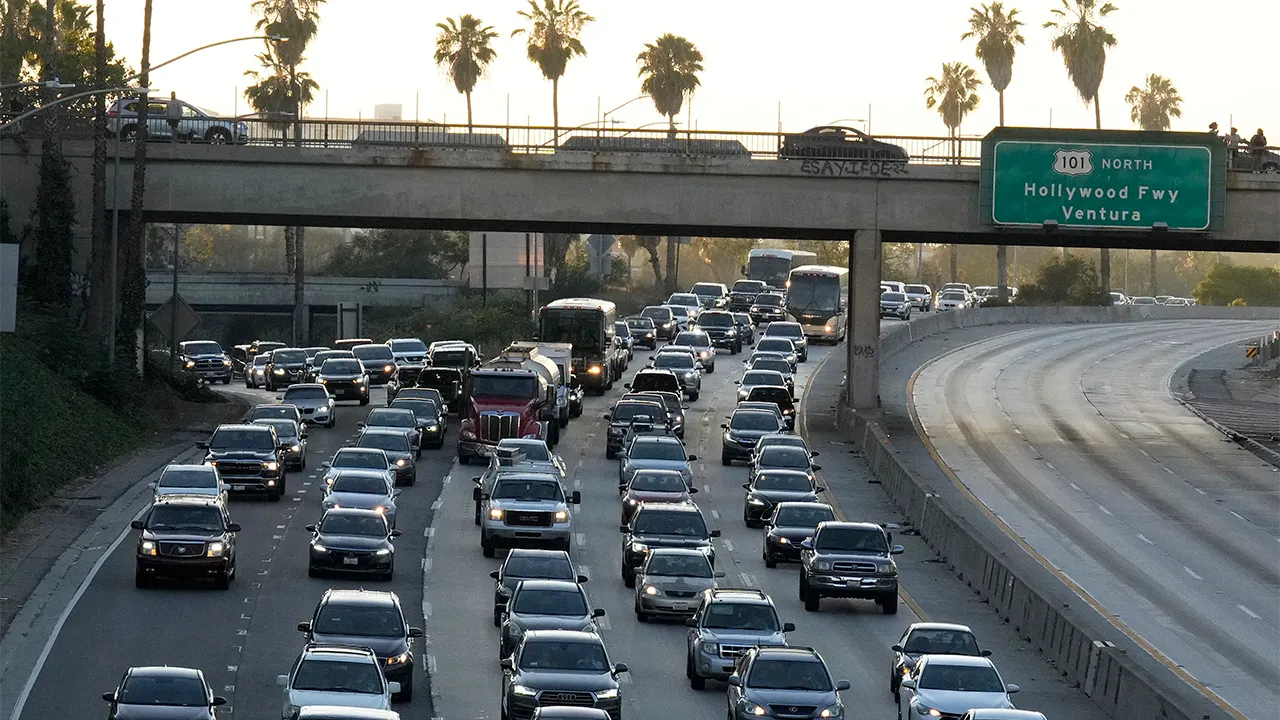
Traffic is stalled on the 110 freeway. (Keith Birmingham/MediaNews Group/Pasadena Star-News via Getty Images / Getty Images)
Starting January 1, the standard mileage rates will be as follows: 72.5 cents per mile for business use, and 20.5 cents per mile for medical purposes and moving purposes for certain active-duty members of the Armed Forces. The rate for charitable organizations will remain unchanged at 14 cents per mile, according to the IRS.

Cars travel on the Brooklyn-Queens Expressway (BQE) through the neighborhood of Dumbo on November 2, 2024, in New York City. (Gary Hershorn/Getty Images / Getty Images)
US ECONOMY GREW MUCH FASTER THAN EXPECTED IN THE THIRD QUARTER, DELAYED REPORT SHOWS
These rates apply to fully-electric and hybrid vehicles, in addition to gasoline and diesel-powered cars. Taxpayers using a leased vehicle must apply the standard mileage rate for the entire lease period, including any renewals.

Cars driving on the highway (Jonas Walzberg/picture alliance via Getty Images / Getty Images)
US ADDED 64K JOBS IN NOVEMBER AFTER LOSING 105K IN OCTOBER, DELAYED REPORT SHOWS
The rates for medical and moving purposes are based solely on costs that increase with more driving, such as fuel, oil changes, and basic vehicle maintenance.
GET FOX BUSINESS ON THE GO BY CLICKING HERE
It’s important to note that the IRS allows taxpayers to opt for the standard mileage rate, but they also have the option to calculate the actual costs of using their vehicle.
‘The Big Money Show’ panel discusses Wall Street’s bold 2026 forecasts, the A.I. boom reshaping the economy, and how President Donald Trump’s policies could drive the next major market rally.
For those who use their cars for work, there’s good news on the horizon. Starting in the new year, the Internal Revenue Service (IRS) has announced an increase in the standard mileage rate for business driving, allowing taxpayers to deduct more money per mile on their taxes.
Effective January 1, the standard mileage rate for business driving will rise by 2.5 cents per mile. Conversely, the rate for vehicles used for medical purposes will see a slight decrease of half a cent. The IRS attributes these changes to “updated cost data and annual inflation adjustments.”
The standard mileage rate is a figure set by the IRS, expressed in cents per mile, which is utilized to calculate the deductible costs of using a personal vehicle for business purposes when filing federal income taxes. This deduction is available to self-employed individuals, gig workers, freelancers, and small businesses that use personal vehicles for business activities. Additionally, the standard mileage rate applies to vehicles used for medical purposes, moving purposes for active duty members, and charitable work.
US ECONOMY EXPECTED TO GROW FASTER IN 2026 DESPITE STAGNANT JOB MARKET: GOLDMAN SACHS
Traffic is stalled on the 110 freeway. (Keith Birmingham/MediaNews Group/Pasadena Star-News via Getty Images / Getty Images)
Starting January 1, the standard mileage rates will be as follows: 72.5 cents per mile for business use, and 20.5 cents per mile for medical purposes and moving purposes for certain active-duty members of the Armed Forces. The rate for charitable organizations will remain unchanged at 14 cents per mile, according to the IRS.
Cars travel on the Brooklyn-Queens Expressway (BQE) through the neighborhood of Dumbo on November 2, 2024, in New York City. (Gary Hershorn/Getty Images / Getty Images)
US ECONOMY GREW MUCH FASTER THAN EXPECTED IN THE THIRD QUARTER, DELAYED REPORT SHOWS
These rates apply to fully-electric and hybrid vehicles, in addition to gasoline and diesel-powered cars. Taxpayers using a leased vehicle must apply the standard mileage rate for the entire lease period, including any renewals.
Cars driving on the highway (Jonas Walzberg/picture alliance via Getty Images / Getty Images)
US ADDED 64K JOBS IN NOVEMBER AFTER LOSING 105K IN OCTOBER, DELAYED REPORT SHOWS
The rates for medical and moving purposes are based solely on costs that increase with more driving, such as fuel, oil changes, and basic vehicle maintenance.
GET FOX BUSINESS ON THE GO BY CLICKING HERE
It’s important to note that the IRS allows taxpayers to opt for the standard mileage rate, but they also have the option to calculate the actual costs of using their vehicle.