14 Key Global Trends Influencing Climate Change by 2026

The world is now moving into the latter half of a critical decade to fight climate change. Scientists have warned that nations need to cut carbon emissions nearly 50% by 2030 to stave off a 1.5C temperature rise.
Unfortunately, the world is significantly off track to meet these targets, risking further backsliding, even as some surprising sources of progress emerge.
In the United States, the tensions surrounding the energy transition are palpable. President Donald Trump’s climate policy rollbacks favor fossil fuels, yet paradoxically, the demand for data center power is providing unexpected support for renewables and batteries.
Read more: Some Good Climate News to End the Year
China, as the world’s largest emitter and a hub for green technology, is also influencing global efforts to curb carbon pollution. This year, the country will unveil a new plan that aligns climate goals with its economic ambitions, while its burgeoning clean tech sector is expected to assist developing nations in adopting renewable energy and electric vehicles.
Here are 14 themes Bloomberg News writers are monitoring in 2026.
Climate Clues in China’s New Economic Blueprint
In March, Chinese officials will gather for their annual legislative meetings to approve the next five-year plan. Climate observers will be keen to see if this plan accelerates decarbonization, especially after Beijing set what many consider a conservative climate target for 2035 last year. A critical statistic to watch is China’s carbon intensity target, which measures emissions per unit of GDP. Currently, it is off track from its previous five-year plan established in 2020. How much policymakers push to close this gap will be a litmus test for China’s climate leadership amid global backtracking. —Lili Pike
Can Diplomats Make Headway at COP31?
International negotiators will spend much of this year crafting a basic roadmap to phase out fossil fuels and eliminate deforestation, issues left unresolved at COP30 in Brazil. With the nation holding the COP presidency this year, there is potential for progress. Key milestones include a conference in Colombia in April focused on phasing out fossil fuels, followed by discussions at the Bonn Climate Change Conference in June, and climate weeks in London and New York in June and September. The efforts will culminate at COP31 in Antalya, Turkey, in November. —Laura Millan
Look to Developing Countries for Climate Progress
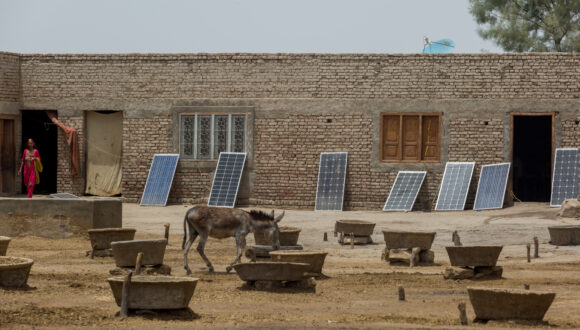
In recent years, developing countries have showcased remarkable climate success stories, largely fueled by affordable Chinese clean tech exports. Bangladesh has set a global record with its off-grid home solar installations, enabling rapid rural electrification. Pakistan’s significant investment in solar panels and batteries has led to a strategic shift away from natural gas. Ethiopia’s de facto ban on fossil-fuel car imports has resulted in a surge in electric vehicle sales. These transitions have been largely driven by access to Chinese technology, and as green exports from China increase, more success stories are expected in 2026. —Akshat Rathi
The Clean Tech Revival Continues
Global climate tech investment rebounded in 2025, primarily due to rising energy demand from data centers. This trend is likely to persist, with both emerging nuclear technologies and established renewable solutions attracting investor interest. Upgrading the power grid will also see continued investments, benefiting everything from battery energy storage to power management software. However, questions linger about whether the AI boom can sustain the climate tech sector and how to foster growth in companies outside the energy ecosystem. —Coco Liu
Nuclear Energy’s Boom Is Just Over the Horizon
Data centers are consuming electricity at an unprecedented rate, and Big Tech is investing heavily in nuclear energy. Numerous companies are developing next-generation small reactors, while the Trump administration is working to streamline the regulatory process and secure billions in financing for larger projects. By the end of 2025, over 60 reactors were under construction globally, although the world’s nuclear capacity saw a slight contraction. Despite favorable regulations and substantial funding, the notoriously slow-moving industry means that significant momentum in nuclear energy is still a few years away. —Will Wade

Will the AI Bubble Burst?
Last year began with a crash in AI-related stocks after news of Chinese company DeepSeek’s more efficient models disrupted power demand growth projections. Investors are left wondering if there will be another “DeepSeek moment” in 2026, even as funds continue to flow into AI and the energy sector. The bubble could burst in various ways; clean energy and real estate developers are already warning that electric grids, permitting, and regulations are lagging behind the pace of interconnection. Some regions are experiencing lengthy delays in connecting power projects to the grid, which could hinder AI investors’ ambitions. —Michelle Ma
Everyone Wants a Piece of the Arctic
The saying “What happens in the Arctic doesn’t stay in the Arctic” has never been more relevant. The past year marked the hottest in 125 years at the planet’s northernmost regions, with consequences felt globally, from rising sea levels to increased atmospheric carbon. As temperatures rise, the world is increasingly focused on exploiting the Arctic. In 2026, expect local or regional Arctic issues—such as ports and critical mineral development—to gain international attention. This includes concerns about China’s ambitions to transport cargo through the Northern Sea Route and the potential for the US to intensify its claims over Greenland. —Danielle Bochove

The EV Market Splits
The global transition to electric vehicles is expected to diverge in 2026, with EV sales slowing in the US while accelerating elsewhere. BloombergNEF forecasts that global EV sales will reach 16.9 million through September, marking a 16% increase from the previous year. The influx of affordable and well-reviewed Chinese vehicles from companies like BYD and SAIC Motor will drive this growth, building on the rise in exports from 2025.
However, the outlook for the US market is less optimistic, as it continues to restrict Chinese vehicles. The expiration of federal subsidies for EV purchases in September has significantly impacted adoption rates. BNEF anticipates that US sales will remain flat in the first half of the year and may decline in the third quarter compared to the record sales seen in August, September, and October of the previous year. —Kyle Stock
What Will New York City Do About BlackRock?
Three of New York City’s five pension funds are considering whether to terminate BlackRock’s $42 billion mandate due to the asset manager’s climate policies. Former Comptroller Brad Lander recommended this move after reviewing the fund managers overseeing the city’s retirement money, citing BlackRock’s inadequate response to global warming. Although Lander attempted to pass a resolution to cut ties with BlackRock in December, he was unable to secure a vote before year-end. The decision now rests with new Comptroller Mark Levine, with Mayor Zohran Mamdani likely to influence the outcome. BlackRock is also facing challenges, having lost a mandate with a Dutch pension fund over climate-related concerns. —Olivia Raimonde
Climate Risk Modeling Gains Steam
The demand for accurate climate information is rising, particularly for assessing risk. Researchers are exploring various levels of risk and potential solutions, from neighborhoods facing increased flooding to the feasibility of atmospheric cooling approaches. This demand comes as the Trump administration attempts to dismantle much of the scientific infrastructure in the US, including suppressing reports and data, cutting funding, and providing analyses that downplay climate change. The next year is shaping up to be a battle for more accurate climate information in an increasingly challenging environment. —Eric Roston
US Renewables Face a Bumpy Road
The boom days for clean energy in the US appear to be over—at least for now. Trump’s efforts to halt the expansion of solar and wind energy have created significant policy and financial challenges for the industry. While large-scale solar installations are still expected to dominate new power plant additions, they are projected to decline as lucrative federal tax incentives fade by mid-year and tariffs increase costs, according to BloombergNEF. Rooftop solar tax credits for homeowners have also been eliminated, although leasing panels will still qualify. Wind developers face even greater challenges, with subsidies disappearing and new permitting hurdles arising. A silver lining exists for batteries, which may still qualify for tax breaks if they meet new material sourcing rules. Data centers are likely to remain a strong source of power demand, potentially aiding the industry. Clean energy developers are hopeful that the energy needs of artificial intelligence will persuade Trump to ease his stance on the sector. —Mark Chediak

The EPA’s Biggest Climate Attack Is Coming
A process initiated by the Environmental Protection Agency last summer to undermine the federal government’s authority to regulate greenhouse gases is expected to conclude this year. The EPA is anticipated to finalize a controversial rulemaking that would roll back the endangerment finding, thereby removing greenhouse gas regulations for passenger cars and trucks. While the administration has already rolled back numerous climate rules, this would be the most consequential yet. Any decision to rescind the endangerment finding will likely face swift legal challenges, igniting a significant legal battle over the federal government’s ability to address global warming. —Zahra Hirji
FEMA’s Fate Will Be Decided
The Trump administration spent 2025 deliberating whether to abolish the Federal Emergency Management Agency, establishing a review council co-chaired by Homeland Security Secretary Kristi Noem and Defense Secretary Pete Hegseth. This group is expected to finalize recommendations regarding the agency early this year. While the president cannot unilaterally dissolve FEMA—Congress holds that power—he can still implement significant changes. —Zahra Hirji
Can California Meet its Climate Goals?
2026 marks the 20th anniversary of California’s landmark climate law, which has transformed the state into a green powerhouse. However, it will face challenges this year as it defends its authority to regulate greenhouse gas emissions against the Trump administration’s campaign to dismantle it. The elimination of federal renewable energy and electric vehicle incentives due to the Trump tax bill is already hindering California’s progress toward achieving net-zero emissions by 2045. As the administration seeks to undermine the state’s cap-and-trade market, California will likely spend more time in court and developing alternative solutions. Meanwhile, local and regional agencies continue to phase out fossil fuels, with a Bay Area ban on gas water heaters and furnaces set to take effect in 2027, impacting a fifth of the state’s population. —Todd Woody
Top photograph: Floating solar panels manufactured by Hanwha Solutions Corp. on the Hapcheon Dam in Hapcheon, Gyeongsangnam-do province, South Korea, on Tuesday, Feb. 8, 2022. More than 92,000 solar panels floating on the surface of a reservoir are able to generate 41 megawatts, enough to power 20,000 homes; photo credit: SeongJoon Cho/Bloomberg
Related:
Copyright 2026 Bloomberg.
Topics
Trends
The world is now moving into the latter half of a critical decade to fight climate change. Scientists have warned that nations need to cut carbon emissions nearly 50% by 2030 to stave off a 1.5C temperature rise.
Unfortunately, the world is significantly off track to meet these targets, risking further backsliding, even as some surprising sources of progress emerge.
In the United States, the tensions surrounding the energy transition are palpable. President Donald Trump’s climate policy rollbacks favor fossil fuels, yet paradoxically, the demand for data center power is providing unexpected support for renewables and batteries.
Read more: Some Good Climate News to End the Year
China, as the world’s largest emitter and a hub for green technology, is also influencing global efforts to curb carbon pollution. This year, the country will unveil a new plan that aligns climate goals with its economic ambitions, while its burgeoning clean tech sector is expected to assist developing nations in adopting renewable energy and electric vehicles.
Here are 14 themes Bloomberg News writers are monitoring in 2026.
Climate Clues in China’s New Economic Blueprint
In March, Chinese officials will gather for their annual legislative meetings to approve the next five-year plan. Climate observers will be keen to see if this plan accelerates decarbonization, especially after Beijing set what many consider a conservative climate target for 2035 last year. A critical statistic to watch is China’s carbon intensity target, which measures emissions per unit of GDP. Currently, it is off track from its previous five-year plan established in 2020. How much policymakers push to close this gap will be a litmus test for China’s climate leadership amid global backtracking. —Lili Pike
Can Diplomats Make Headway at COP31?
International negotiators will spend much of this year crafting a basic roadmap to phase out fossil fuels and eliminate deforestation, issues left unresolved at COP30 in Brazil. With the nation holding the COP presidency this year, there is potential for progress. Key milestones include a conference in Colombia in April focused on phasing out fossil fuels, followed by discussions at the Bonn Climate Change Conference in June, and climate weeks in London and New York in June and September. The efforts will culminate at COP31 in Antalya, Turkey, in November. —Laura Millan
Look to Developing Countries for Climate Progress
In recent years, developing countries have showcased remarkable climate success stories, largely fueled by affordable Chinese clean tech exports. Bangladesh has set a global record with its off-grid home solar installations, enabling rapid rural electrification. Pakistan’s significant investment in solar panels and batteries has led to a strategic shift away from natural gas. Ethiopia’s de facto ban on fossil-fuel car imports has resulted in a surge in electric vehicle sales. These transitions have been largely driven by access to Chinese technology, and as green exports from China increase, more success stories are expected in 2026. —Akshat Rathi
The Clean Tech Revival Continues
Global climate tech investment rebounded in 2025, primarily due to rising energy demand from data centers. This trend is likely to persist, with both emerging nuclear technologies and established renewable solutions attracting investor interest. Upgrading the power grid will also see continued investments, benefiting everything from battery energy storage to power management software. However, questions linger about whether the AI boom can sustain the climate tech sector and how to foster growth in companies outside the energy ecosystem. —Coco Liu
Nuclear Energy’s Boom Is Just Over the Horizon
Data centers are consuming electricity at an unprecedented rate, and Big Tech is investing heavily in nuclear energy. Numerous companies are developing next-generation small reactors, while the Trump administration is working to streamline the regulatory process and secure billions in financing for larger projects. By the end of 2025, over 60 reactors were under construction globally, although the world’s nuclear capacity saw a slight contraction. Despite favorable regulations and substantial funding, the notoriously slow-moving industry means that significant momentum in nuclear energy is still a few years away. —Will Wade
Will the AI Bubble Burst?
Last year began with a crash in AI-related stocks after news of Chinese company DeepSeek’s more efficient models disrupted power demand growth projections. Investors are left wondering if there will be another “DeepSeek moment” in 2026, even as funds continue to flow into AI and the energy sector. The bubble could burst in various ways; clean energy and real estate developers are already warning that electric grids, permitting, and regulations are lagging behind the pace of interconnection. Some regions are experiencing lengthy delays in connecting power projects to the grid, which could hinder AI investors’ ambitions. —Michelle Ma
Everyone Wants a Piece of the Arctic
The saying “What happens in the Arctic doesn’t stay in the Arctic” has never been more relevant. The past year marked the hottest in 125 years at the planet’s northernmost regions, with consequences felt globally, from rising sea levels to increased atmospheric carbon. As temperatures rise, the world is increasingly focused on exploiting the Arctic. In 2026, expect local or regional Arctic issues—such as ports and critical mineral development—to gain international attention. This includes concerns about China’s ambitions to transport cargo through the Northern Sea Route and the potential for the US to intensify its claims over Greenland. —Danielle Bochove
The EV Market Splits
The global transition to electric vehicles is expected to diverge in 2026, with EV sales slowing in the US while accelerating elsewhere. BloombergNEF forecasts that global EV sales will reach 16.9 million through September, marking a 16% increase from the previous year. The influx of affordable and well-reviewed Chinese vehicles from companies like BYD and SAIC Motor will drive this growth, building on the rise in exports from 2025.
However, the outlook for the US market is less optimistic, as it continues to restrict Chinese vehicles. The expiration of federal subsidies for EV purchases in September has significantly impacted adoption rates. BNEF anticipates that US sales will remain flat in the first half of the year and may decline in the third quarter compared to the record sales seen in August, September, and October of the previous year. —Kyle Stock
What Will New York City Do About BlackRock?
Three of New York City’s five pension funds are considering whether to terminate BlackRock’s $42 billion mandate due to the asset manager’s climate policies. Former Comptroller Brad Lander recommended this move after reviewing the fund managers overseeing the city’s retirement money, citing BlackRock’s inadequate response to global warming. Although Lander attempted to pass a resolution to cut ties with BlackRock in December, he was unable to secure a vote before year-end. The decision now rests with new Comptroller Mark Levine, with Mayor Zohran Mamdani likely to influence the outcome. BlackRock is also facing challenges, having lost a mandate with a Dutch pension fund over climate-related concerns. —Olivia Raimonde
Climate Risk Modeling Gains Steam
The demand for accurate climate information is rising, particularly for assessing risk. Researchers are exploring various levels of risk and potential solutions, from neighborhoods facing increased flooding to the feasibility of atmospheric cooling approaches. This demand comes as the Trump administration attempts to dismantle much of the scientific infrastructure in the US, including suppressing reports and data, cutting funding, and providing analyses that downplay climate change. The next year is shaping up to be a battle for more accurate climate information in an increasingly challenging environment. —Eric Roston
US Renewables Face a Bumpy Road
The boom days for clean energy in the US appear to be over—at least for now. Trump’s efforts to halt the expansion of solar and wind energy have created significant policy and financial challenges for the industry. While large-scale solar installations are still expected to dominate new power plant additions, they are projected to decline as lucrative federal tax incentives fade by mid-year and tariffs increase costs, according to BloombergNEF. Rooftop solar tax credits for homeowners have also been eliminated, although leasing panels will still qualify. Wind developers face even greater challenges, with subsidies disappearing and new permitting hurdles arising. A silver lining exists for batteries, which may still qualify for tax breaks if they meet new material sourcing rules. Data centers are likely to remain a strong source of power demand, potentially aiding the industry. Clean energy developers are hopeful that the energy needs of artificial intelligence will persuade Trump to ease his stance on the sector. —Mark Chediak
The EPA’s Biggest Climate Attack Is Coming
A process initiated by the Environmental Protection Agency last summer to undermine the federal government’s authority to regulate greenhouse gases is expected to conclude this year. The EPA is anticipated to finalize a controversial rulemaking that would roll back the endangerment finding, thereby removing greenhouse gas regulations for passenger cars and trucks. While the administration has already rolled back numerous climate rules, this would be the most consequential yet. Any decision to rescind the endangerment finding will likely face swift legal challenges, igniting a significant legal battle over the federal government’s ability to address global warming. —Zahra Hirji
FEMA’s Fate Will Be Decided
The Trump administration spent 2025 deliberating whether to abolish the Federal Emergency Management Agency, establishing a review council co-chaired by Homeland Security Secretary Kristi Noem and Defense Secretary Pete Hegseth. This group is expected to finalize recommendations regarding the agency early this year. While the president cannot unilaterally dissolve FEMA—Congress holds that power—he can still implement significant changes. —Zahra Hirji
Can California Meet its Climate Goals?
2026 marks the 20th anniversary of California’s landmark climate law, which has transformed the state into a green powerhouse. However, it will face challenges this year as it defends its authority to regulate greenhouse gas emissions against the Trump administration’s campaign to dismantle it. The elimination of federal renewable energy and electric vehicle incentives due to the Trump tax bill is already hindering California’s progress toward achieving net-zero emissions by 2045. As the administration seeks to undermine the state’s cap-and-trade market, California will likely spend more time in court and developing alternative solutions. Meanwhile, local and regional agencies continue to phase out fossil fuels, with a Bay Area ban on gas water heaters and furnaces set to take effect in 2027, impacting a fifth of the state’s population. —Todd Woody
Top photograph: Floating solar panels manufactured by Hanwha Solutions Corp. on the Hapcheon Dam in Hapcheon, Gyeongsangnam-do province, South Korea, on Tuesday, Feb. 8, 2022. More than 92,000 solar panels floating on the surface of a reservoir are able to generate 41 megawatts, enough to power 20,000 homes; photo credit: SeongJoon Cho/Bloomberg
Related:
Copyright 2026 Bloomberg.
Topics
Trends