Germany Views Russian Covert Operations as Prelude to Escalated Conflict
Russia is intensifying covert attacks on key infrastructure in Germany as part of a hybrid warfare campaign that Berlin perceives as a potential precursor to a broader conflict, according to a military document obtained by Bloomberg.
As Germany positions itself as NATO’s primary hub in Europe, it anticipates being the first target of Russia’s hybrid attacks—operations that employ irregular or non-military tactics aimed at energy and defense infrastructure. This expectation is outlined in a defense ministry document that summarizes guidelines for cooperation among various government levels and institutions in the event of conflict with Moscow.
According to the ministry, “Only after an open armed attack on NATO’s eastern flank will Germany increasingly be threatened or attacked with military means such as long-range missiles, armed drones, and special forces.” The document emphasizes that the hybrid measures and attacks identified, particularly those occurring in Germany, are tools deliberately employed by Russia in its security policy and its struggle against the “collective West.” Furthermore, these actions may also serve as preparations for military conflict.
Read more: Russia Is Trying to Overwhelm Europe With its Sabotage Campaign: Western Officials
This language marks a shift from previous guidelines and aligns with recent warnings from Martin Jäger, the new president of Germany’s BND foreign-intelligence service. He informed lawmakers in October that Russia is intent on testing European borders and could escalate the situation into a “hot confrontation” at any moment.
Germany’s national security strategy identifies Russia as “the greatest and most immediate threat to Germany’s security.” A defense ministry spokeswoman declined to comment on the military document—titled Operationsplan Deutschland (OPLAN)—during a regular government news conference, citing its confidentiality. However, she noted that Russia has indeed increased its covert attacks on German infrastructure.
The defense ministry plan, first reported by Politico and Welt newspaper, referenced national and foreign intelligence indicating that Russia is working to develop capabilities and strategic options for waging and enduring a large-scale war against NATO.
“Even if Russia’s war against Ukraine continues unchanged, it is expected that Russia will have developed these capabilities and strategic options by 2029 at the latest,” the document states. “However, Russia continues to see the need to limit any potential conflict to the region, i.e., to avoid direct military confrontation with the US,” it added.
In the event of a conventional attack by Russia on NATO’s eastern flank, Germany is not expected to become a frontline state or the site of direct confrontation between ground forces. The ministry noted, “However, Russia will do everything in its power to prevent or at least hinder the deployment of NATO forces on the eastern flank for deterrence and, if necessary, defense.”
The defense ministry concluded that Russia is deliberately targeting and probing potential weak links in cooperation among different levels of German government with hybrid measures designed to unsettle citizens. “The aim is to prevent the early detection of these hybrid measures and their actual extent and impact, thereby slowing down and paralyzing our decision-making and response capabilities across federal, state, and local levels.”
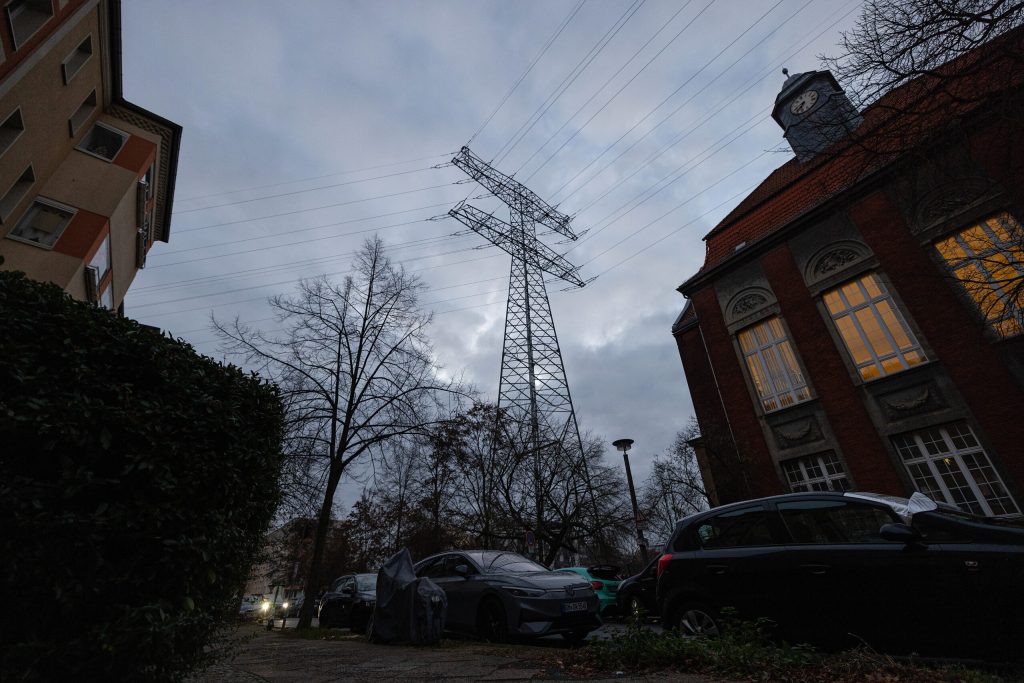
Photograph: A high voltage electricity transmission tower near a partially lit school in a residential district of Berlin, Germany, on Thursday, Nov. 27, 2025; photo credit: Krisztian Bocsi/Bloomberg
Related:
Copyright 2026 Bloomberg.
Topics
Russia
The most important insurance news, in your inbox every business day.
Get the insurance industry’s trusted newsletter
Russia is intensifying covert attacks on key infrastructure in Germany as part of a hybrid warfare campaign that Berlin perceives as a potential precursor to a broader conflict, according to a military document obtained by Bloomberg.
As Germany positions itself as NATO’s primary hub in Europe, it anticipates being the first target of Russia’s hybrid attacks—operations that employ irregular or non-military tactics aimed at energy and defense infrastructure. This expectation is outlined in a defense ministry document that summarizes guidelines for cooperation among various government levels and institutions in the event of conflict with Moscow.
According to the ministry, “Only after an open armed attack on NATO’s eastern flank will Germany increasingly be threatened or attacked with military means such as long-range missiles, armed drones, and special forces.” The document emphasizes that the hybrid measures and attacks identified, particularly those occurring in Germany, are tools deliberately employed by Russia in its security policy and its struggle against the “collective West.” Furthermore, these actions may also serve as preparations for military conflict.
Read more: Russia Is Trying to Overwhelm Europe With its Sabotage Campaign: Western Officials
This language marks a shift from previous guidelines and aligns with recent warnings from Martin Jäger, the new president of Germany’s BND foreign-intelligence service. He informed lawmakers in October that Russia is intent on testing European borders and could escalate the situation into a “hot confrontation” at any moment.
Germany’s national security strategy identifies Russia as “the greatest and most immediate threat to Germany’s security.” A defense ministry spokeswoman declined to comment on the military document—titled Operationsplan Deutschland (OPLAN)—during a regular government news conference, citing its confidentiality. However, she noted that Russia has indeed increased its covert attacks on German infrastructure.
The defense ministry plan, first reported by Politico and Welt newspaper, referenced national and foreign intelligence indicating that Russia is working to develop capabilities and strategic options for waging and enduring a large-scale war against NATO.
“Even if Russia’s war against Ukraine continues unchanged, it is expected that Russia will have developed these capabilities and strategic options by 2029 at the latest,” the document states. “However, Russia continues to see the need to limit any potential conflict to the region, i.e., to avoid direct military confrontation with the US,” it added.
In the event of a conventional attack by Russia on NATO’s eastern flank, Germany is not expected to become a frontline state or the site of direct confrontation between ground forces. The ministry noted, “However, Russia will do everything in its power to prevent or at least hinder the deployment of NATO forces on the eastern flank for deterrence and, if necessary, defense.”
The defense ministry concluded that Russia is deliberately targeting and probing potential weak links in cooperation among different levels of German government with hybrid measures designed to unsettle citizens. “The aim is to prevent the early detection of these hybrid measures and their actual extent and impact, thereby slowing down and paralyzing our decision-making and response capabilities across federal, state, and local levels.”
Photograph: A high voltage electricity transmission tower near a partially lit school in a residential district of Berlin, Germany, on Thursday, Nov. 27, 2025; photo credit: Krisztian Bocsi/Bloomberg
Related:
Copyright 2026 Bloomberg.
Topics
Russia
The most important insurance news, in your inbox every business day.
Get the insurance industry’s trusted newsletter