Trump Unveils $1.5 Trillion Military Budget Amid Debt Concerns
BTIG Aerospace and defense analyst Andre Madrid discusses the Space Force and investment opportunity in the wider industry on Making Money.
On Wednesday, President Donald Trump proposed a significant increase in next year’s defense budget, suggesting it should rise to $1.5 trillion from his earlier proposal of $1 trillion. This move has raised concerns among budget watchdogs, who warn that such an increase could add trillions to the national debt.
In a post on his Truth Social platform, Trump stated that after discussions with lawmakers and administration officials, he concluded that “in these very troubled and dangerous times, our Military Budget for the year 2027 should not be $1 Trillion Dollars, but rather $1.5 Trillion Dollars.”
The president indicated that revenue from tariffs would help fund this increased defense spending and other initiatives he has championed, including a tariff dividend. He emphasized that this budget increase would enable the U.S. to “build the ‘Dream Military’ that we have long been entitled to and, more importantly, that will keep us SAFE and SECURE, regardless of foe.”
| Ticker | Security | Last | Change | Change % |
|---|---|---|---|---|
| LMT | LOCKHEED MARTIN CORP. | 518.28 | +21.46 | +4.32% |
| RTX | RTX CORP. | 185.53 | -0.20 | -0.11% |
| NOC | NORTHROP GRUMMAN CORP. | 592.73 | +16.04 | +2.78% |
| GD | GENERAL DYNAMICS CORP. | 353.26 | +7.61 | +2.20% |
The nonpartisan Committee for a Responsible Federal Budget (CRFB) analyzed Trump’s proposal and found that the proposed $500 billion annual increase in defense spending would nearly double the expected tariff revenue. This increase could push the national debt up by $5.8 trillion over the next decade.
TRUMP’S $2K TARIFF DIVIDENDS COULD CARRY A HEFTY PRICE TAG

President Donald Trump called for a $1.5 trillion defense budget in FY2027, up from his initial $1 trillion proposal. (REUTERS/Kent Nishimura/File Photo / Reuters Photos)
According to the CRFB, the Congressional Budget Office estimates that tariffs could generate $2.5 trillion in additional revenue through 2035, or $3 trillion with interest. However, this revenue may be lower when accounting for economic shifts caused by tariffs.
Moreover, many of the tariffs imposed by the president were enacted under the International Emergency Economic Powers Act (IEEPA), and the Supreme Court is expected to rule on their legality soon.
SUPREME COURT EXPECTED TO RULE FRIDAY ON TRUMP’S POWER TO IMPOSE TARIFFS

Trump said his proposed $500 billion increase to the defense budget would allow the U.S. to build a “dream military.” (U.S. Navy/Mass Communication Specialist 2nd Class Jacob Mattingly / DVIDS / Fox News)
If the IEEPA tariffs are invalidated, the CRFB estimates that tariff revenues could drop by $700 billion through 2035, covering only 15% of the proposed $500 billion annual increase in defense spending.
The CRFB stated, “Given the $175 billion appropriated to the defense budget under the One Big Beautiful Bill Act (OBBBA), there is little case for a near-term increase in military spending. Any future increases that may be necessary should be fully paid for, ideally twice-over given our high and rising national debt, with new revenue or spending cuts.”
They further added, “Policymakers should not rely on existing tariff revenue – without which deficits would be much higher – and even if they did, it would fall far short of covering the costs of such a large defense spending increase.”
TRUMP ANNOUNCES PLANS TO BAN INSTITUTIONAL INVESTORS FROM BUYING SINGLE-FAMILY HOMES
Congress will be considering FY2027 defense spending levels this year before the new fiscal year begins on Oct. 1. (Photo by Anna Moneymaker/Getty Images / Getty Images)
The appropriations process for fiscal year 2027 will unfold throughout the year leading up to October 1, when the new fiscal year begins. However, Congress and the White House often resort to continuing resolutions to maintain funding at current levels and prevent government shutdowns.
Most recently, Congress enacted a short-term continuing resolution in November after a record 43-day government shutdown, extending funding for most agencies in FY2026 until January 30, 2026.
GET FOX BUSINESS ON THE GO BY CLICKING HERE
Lawmakers have already passed full-year FY2026 appropriations for three of the twelve annual discretionary spending bills, but the defense portions are funded under the continuing resolution and will only last until January 30.
BTIG Aerospace and defense analyst Andre Madrid discusses the Space Force and investment opportunity in the wider industry on Making Money.
On Wednesday, President Donald Trump proposed a significant increase in next year’s defense budget, suggesting it should rise to $1.5 trillion from his earlier proposal of $1 trillion. This move has raised concerns among budget watchdogs, who warn that such an increase could add trillions to the national debt.
In a post on his Truth Social platform, Trump stated that after discussions with lawmakers and administration officials, he concluded that “in these very troubled and dangerous times, our Military Budget for the year 2027 should not be $1 Trillion Dollars, but rather $1.5 Trillion Dollars.”
The president indicated that revenue from tariffs would help fund this increased defense spending and other initiatives he has championed, including a tariff dividend. He emphasized that this budget increase would enable the U.S. to “build the ‘Dream Military’ that we have long been entitled to and, more importantly, that will keep us SAFE and SECURE, regardless of foe.”
| Ticker | Security | Last | Change | Change % |
|---|---|---|---|---|
| LMT | LOCKHEED MARTIN CORP. | 518.28 | +21.46 | +4.32% |
| RTX | RTX CORP. | 185.53 | -0.20 | -0.11% |
| NOC | NORTHROP GRUMMAN CORP. | 592.73 | +16.04 | +2.78% |
| GD | GENERAL DYNAMICS CORP. | 353.26 | +7.61 | +2.20% |
The nonpartisan Committee for a Responsible Federal Budget (CRFB) analyzed Trump’s proposal and found that the proposed $500 billion annual increase in defense spending would nearly double the expected tariff revenue. This increase could push the national debt up by $5.8 trillion over the next decade.
TRUMP’S $2K TARIFF DIVIDENDS COULD CARRY A HEFTY PRICE TAG
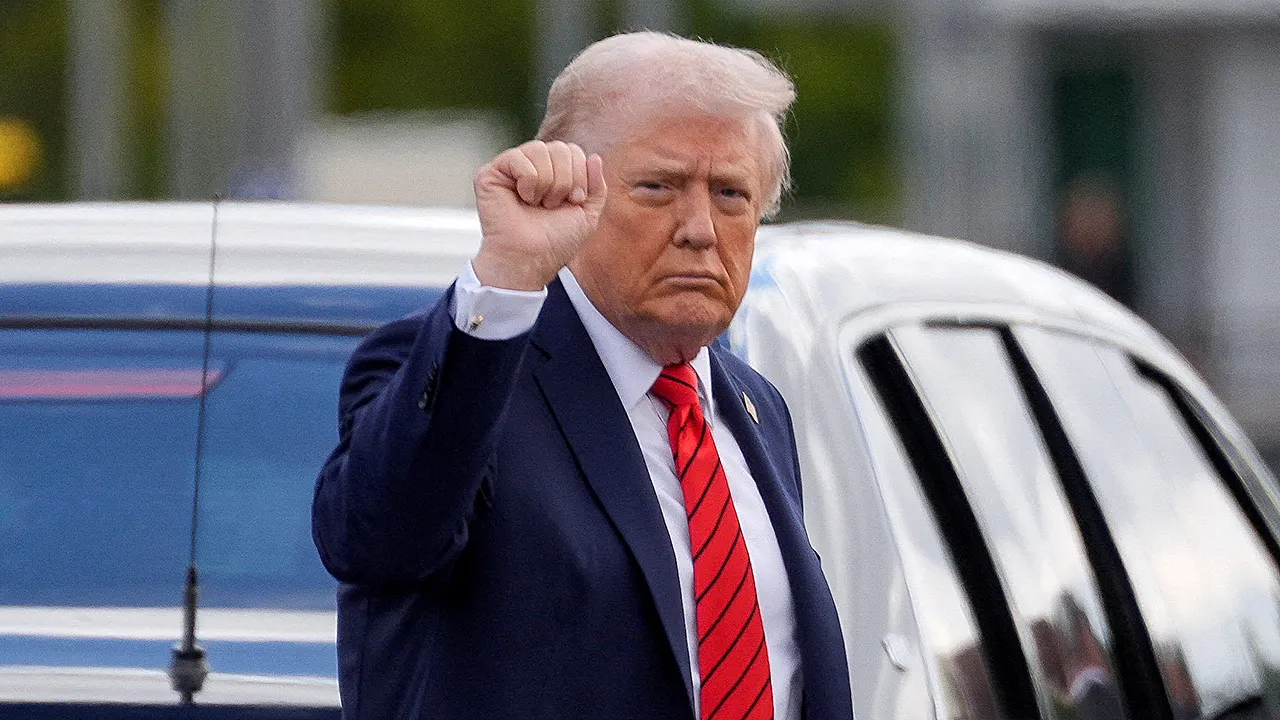
President Donald Trump called for a $1.5 trillion defense budget in FY2027, up from his initial $1 trillion proposal. (REUTERS/Kent Nishimura/File Photo / Reuters Photos)
According to the CRFB, the Congressional Budget Office estimates that tariffs could generate $2.5 trillion in additional revenue through 2035, or $3 trillion with interest. However, this revenue may be lower when accounting for economic shifts caused by tariffs.
Moreover, many of the tariffs imposed by the president were enacted under the International Emergency Economic Powers Act (IEEPA), and the Supreme Court is expected to rule on their legality soon.
SUPREME COURT EXPECTED TO RULE FRIDAY ON TRUMP’S POWER TO IMPOSE TARIFFS
Trump said his proposed $500 billion increase to the defense budget would allow the U.S. to build a “dream military.” (U.S. Navy/Mass Communication Specialist 2nd Class Jacob Mattingly / DVIDS / Fox News)
If the IEEPA tariffs are invalidated, the CRFB estimates that tariff revenues could drop by $700 billion through 2035, covering only 15% of the proposed $500 billion annual increase in defense spending.
The CRFB stated, “Given the $175 billion appropriated to the defense budget under the One Big Beautiful Bill Act (OBBBA), there is little case for a near-term increase in military spending. Any future increases that may be necessary should be fully paid for, ideally twice-over given our high and rising national debt, with new revenue or spending cuts.”
They further added, “Policymakers should not rely on existing tariff revenue – without which deficits would be much higher – and even if they did, it would fall far short of covering the costs of such a large defense spending increase.”
TRUMP ANNOUNCES PLANS TO BAN INSTITUTIONAL INVESTORS FROM BUYING SINGLE-FAMILY HOMES
Congress will be considering FY2027 defense spending levels this year before the new fiscal year begins on Oct. 1. (Photo by Anna Moneymaker/Getty Images / Getty Images)
The appropriations process for fiscal year 2027 will unfold throughout the year leading up to October 1, when the new fiscal year begins. However, Congress and the White House often resort to continuing resolutions to maintain funding at current levels and prevent government shutdowns.
Most recently, Congress enacted a short-term continuing resolution in November after a record 43-day government shutdown, extending funding for most agencies in FY2026 until January 30, 2026.
GET FOX BUSINESS ON THE GO BY CLICKING HERE
Lawmakers have already passed full-year FY2026 appropriations for three of the twelve annual discretionary spending bills, but the defense portions are funded under the continuing resolution and will only last until January 30.