Listen: Green Goodbyes: Choosing an Eco-Friendly Burial
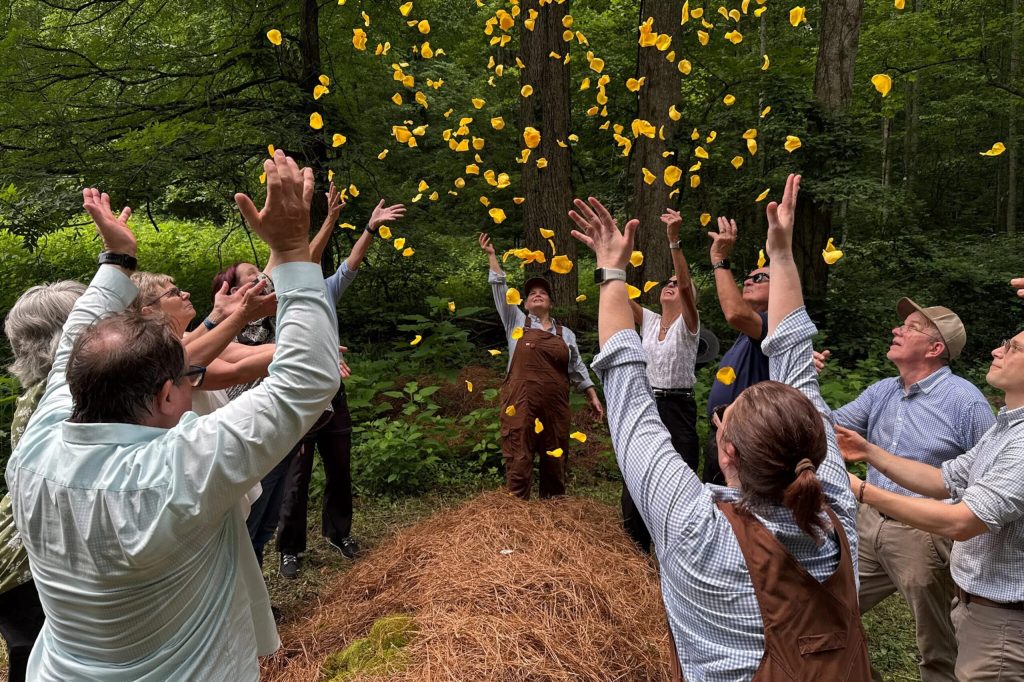
Cremation has emerged as Americans’ most popular choice for postmortem body treatment. However, this process involves burning fossil fuels, which can release toxic gases into the atmosphere. In a recent segment on WAMU’s “Health Hub,” columnist Paula Span discussed more environmentally friendly alternatives to traditional cremation and burial methods.
Among these alternatives, green burials are gaining traction as an affordable and eco-conscious option. Unlike conventional funerals, green burials avoid the use of toxic embalming chemicals, steel caskets, and concrete vaults. Instead, they allow the body to decompose naturally, returning to the earth in a more sustainable manner. The methods for green burials can vary widely, from elaborate techniques like “human composting” and water cremation to simpler options such as using a plain pine box.
During her appearance on WAMU’s “Health Hub,” Paula Span highlighted the environmental and economic motivations driving the shift towards these alternatives. Many individuals are becoming increasingly aware of the ecological impact of traditional burial practices and are seeking ways to minimize their carbon footprint even in death. The rising costs associated with conventional funerals also play a significant role in this trend, prompting families to explore more budget-friendly options that do not compromise their values.
As awareness grows, more funeral homes are beginning to offer green burial options, making it easier for families to choose environmentally responsible practices. This shift not only reflects changing societal values but also encourages a broader conversation about sustainability in all aspects of life, including how we handle death and remembrance.
Jackson Sinnenberg contributed to this report.
KFF Health News is a national newsroom dedicated to producing in-depth journalism on health issues. It operates as one of the core programs at KFF, an independent source of health policy research, polling, and journalism. To learn more about KFF, visit here.
USE OUR CONTENT
This story can be republished for free (details).
Cremation has emerged as Americans’ most popular choice for postmortem body treatment. However, this process involves burning fossil fuels, which can release toxic gases into the atmosphere. In a recent segment on WAMU’s “Health Hub,” columnist Paula Span discussed more environmentally friendly alternatives to traditional cremation and burial methods.
Among these alternatives, green burials are gaining traction as an affordable and eco-conscious option. Unlike conventional funerals, green burials avoid the use of toxic embalming chemicals, steel caskets, and concrete vaults. Instead, they allow the body to decompose naturally, returning to the earth in a more sustainable manner. The methods for green burials can vary widely, from elaborate techniques like “human composting” and water cremation to simpler options such as using a plain pine box.
During her appearance on WAMU’s “Health Hub,” Paula Span highlighted the environmental and economic motivations driving the shift towards these alternatives. Many individuals are becoming increasingly aware of the ecological impact of traditional burial practices and are seeking ways to minimize their carbon footprint even in death. The rising costs associated with conventional funerals also play a significant role in this trend, prompting families to explore more budget-friendly options that do not compromise their values.
As awareness grows, more funeral homes are beginning to offer green burial options, making it easier for families to choose environmentally responsible practices. This shift not only reflects changing societal values but also encourages a broader conversation about sustainability in all aspects of life, including how we handle death and remembrance.
Jackson Sinnenberg contributed to this report.
KFF Health News is a national newsroom dedicated to producing in-depth journalism on health issues. It operates as one of the core programs at KFF, an independent source of health policy research, polling, and journalism. To learn more about KFF, visit here.
USE OUR CONTENT
This story can be republished for free (details).