Scientists Verify 2025 as the Third-Hottest Year, Following 2024 and 2023
According to an analysis of temperature data released by three independent agencies, last year was the third hottest on record. This places 2025 just behind the second-hottest year, 2023, and the hottest year, 2024.
What makes this finding particularly remarkable is that 2025 experienced a cooling phase in the equatorial Pacific Ocean, known as La Niña, which typically suppresses global temperatures. In essence, the heat generated by greenhouse gases was strong enough to counteract this cooling effect, allowing 2025 to rank among the warmest years recorded.
Daniel Swain, a climate scientist at the University of California’s Agriculture and Natural Resources division, stated, “Human-caused warming is now really overwhelming inter-annual natural variability” in weather patterns.
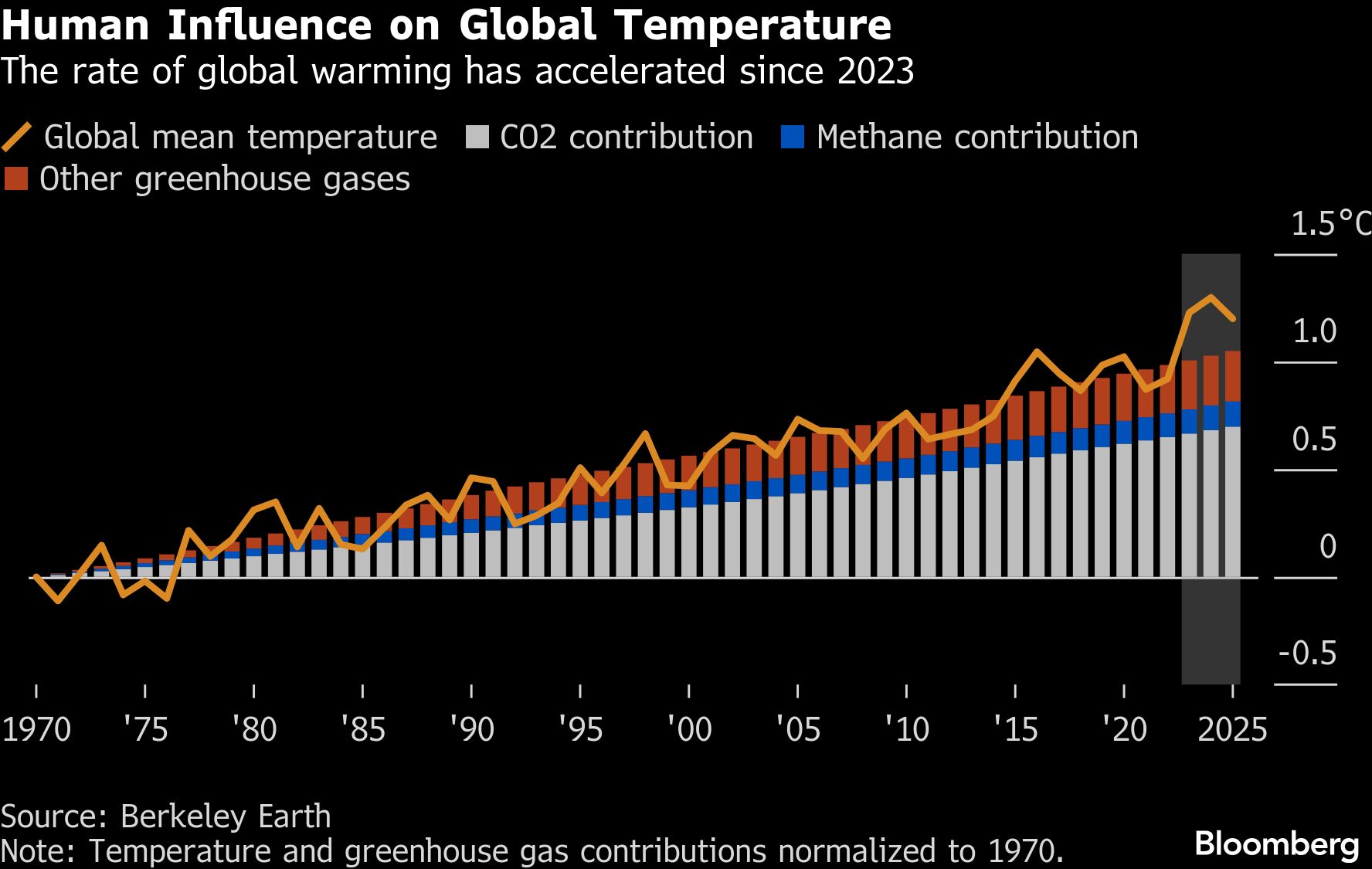
This notable heat in 2025 aligns with observations from many scientists regarding a recent acceleration in global warming. Researchers from Berkeley Earth, a scientific nonprofit, noted that the warming spike observed from 2023 to 2025 has been extreme, indicating a significant acceleration in temperature rise.
Several factors are likely contributing to this acceleration, including a decline in reflective low-hanging clouds and reduced sulfur pollution from shipping, which typically has a cooling effect.
The EU’s Copernicus Climate Change Service, the UK Met Office, and Berkeley Earth reported that 2025 was hotter than the 1850-1900 average by 1.47°C, 1.41°C, and 1.44°C, respectively. Notably, the three-year warming average has now surpassed 1.5°C for the first time, a threshold that countries pledged not to exceed in the 2015 Paris Agreement. Estimates suggest that the world may fully surpass this mark by mid-2029, a full 13 years earlier than initially projected.
The primary driver of global warming remains the burning of fossil fuels, which continues to push the planet’s temperature upward. As a result, the past 11 years have all ranked among the hottest on record, with the hottest 25 years occurring since 1998.
In 2025, at least half of the globe’s land experienced a higher-than-average number of heat-stress days, with conditions feeling like at least 32°C (90°F). In Greenland, temperatures soared more than 12°C above average in May, leading to ice melting at a rate 12 times faster than usual.
This additional heat exacerbates extreme weather events. For instance, over 400 people lost their lives in wildfires in Los Angeles in January, resulting in $40 billion in insured losses. According to World Weather Attribution, climate change made the fire weather 35% more likely.
Year-to-year fluctuations in average temperature often reflect short-term weather conditions as much as climate change. The presence of a warming El Niño or cooling La Niña phase in the equatorial Pacific usually dictates where any given year ranks among the most recent years.
Despite the Pacific being in a neutral phase or slightly tilted toward La Niña last year, 2025 was still exceptionally hot. It was only marginally cooler than 2023, which saw the emergence of an El Niño in the summer. In fact, 2025 was hotter than every El Niño year prior to 2023.
While lower temperatures in the tropics offset surging heat elsewhere, Antarctica recorded its hottest year ever, and the Arctic experienced its second hottest. February also marked a record low for global sea ice, according to Copernicus.
Despite total precipitation being relatively average, many regions faced destructive flooding. In central Texas, flash flooding claimed over 135 lives, including 27 children and counselors at Camp Mystic in Kerr County. Pakistan experienced a near-repeat of its deadly 2022 floods during its monsoon season, while late November saw over 1,750 fatalities across Sri Lanka, Indonesia, Malaysia, Vietnam, and Thailand due to three cyclones.
In early October, Jamaicans braced for Hurricane Melissa, which rapidly intensified into a Category 5 storm with wind gusts reaching 252 miles per hour. The storm caused $8.8 billion in damage—41% of Jamaica’s GDP for 2024—and claimed over 100 lives across Jamaica, Haiti, the Dominican Republic, and Cuba.
Friederike Otto, co-founder of World Weather Attribution, remarked, “If such a storm just hits you face-on, there is just not much that you can do.” She emphasized that greenhouse gas pollution is intensifying storms, making their impact significantly more severe. WWA found that climate change made the high ocean temperatures fueling Melissa about six times more likely.
Looking ahead, Berkeley Earth anticipates that the global average temperature for 2026 will be similar to last year’s, potentially ranking as the fourth hottest on record. The current La Niña is expected to transition to a neutral phase, and while it’s too early to predict the next El Niño, such events typically lead to new global temperature records.
The analysis of 2025’s heat comes at a time when the U.S., historically a leader in climate science and diplomacy, has shifted away from that role. The administration has dismissed numerous scientists, removed critical reports and risk tools from public access, and recently pledged to exit both the foundational 1992 UN climate treaty and the UN’s scientific advisory body, the Intergovernmental Panel on Climate Change.
Florian Pappenberger, director general of the European Centre for Medium-Range Weather Forecasts, which operates Copernicus, emphasized the importance of data and observations in addressing climate change and air-quality challenges, stating, “These challenges don’t know any borders.” He expressed concern over the previous administration’s stance toward climate data.
Despite significant advancements in clean-energy technologies, greenhouse gas emissions remain at an all-time high, leading the world to continue on a “very bad climate trajectory,” according to Swain. “We still have the ability to manage this, but we’re not managing it,” he noted, adding that a “period of global cooperation, for many different types of things, seems to have at least for now ended.”
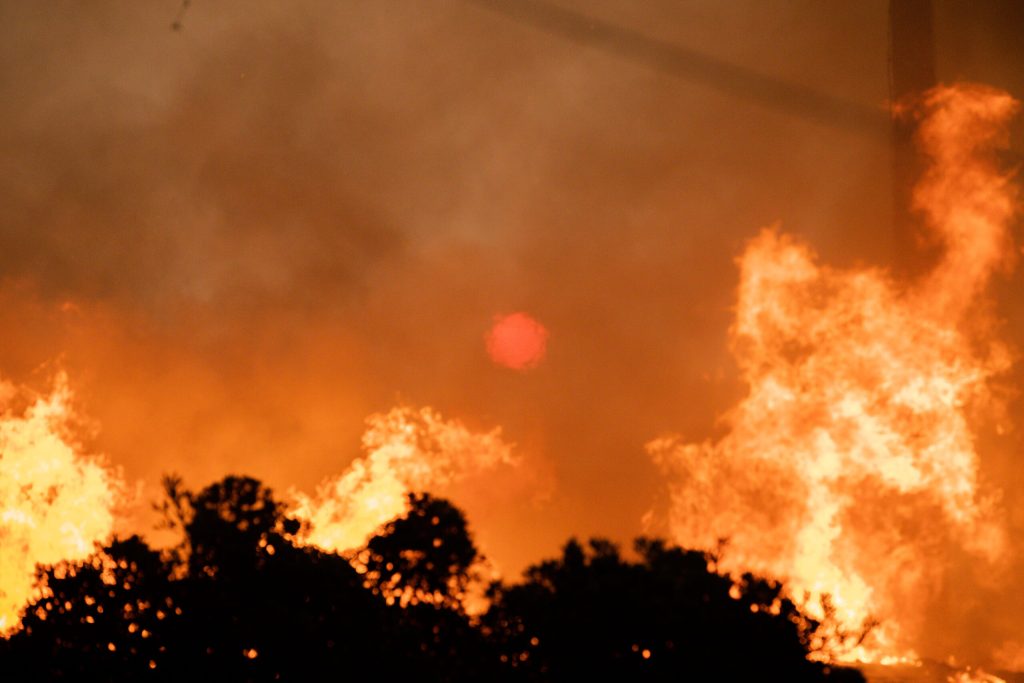
Photo: The Eaton Fire, which ravaged part of Los Angeles in January 2025. Photographer: Michael Nigro/Bloomberg
Copyright 2026 Bloomberg.
According to an analysis of temperature data released by three independent agencies, last year was the third hottest on record. This places 2025 just behind the second-hottest year, 2023, and the hottest year, 2024.
What makes this finding particularly remarkable is that 2025 experienced a cooling phase in the equatorial Pacific Ocean, known as La Niña, which typically suppresses global temperatures. In essence, the heat generated by greenhouse gases was strong enough to counteract this cooling effect, allowing 2025 to rank among the warmest years recorded.
Daniel Swain, a climate scientist at the University of California’s Agriculture and Natural Resources division, stated, “Human-caused warming is now really overwhelming inter-annual natural variability” in weather patterns.
This notable heat in 2025 aligns with observations from many scientists regarding a recent acceleration in global warming. Researchers from Berkeley Earth, a scientific nonprofit, noted that the warming spike observed from 2023 to 2025 has been extreme, indicating a significant acceleration in temperature rise.
Several factors are likely contributing to this acceleration, including a decline in reflective low-hanging clouds and reduced sulfur pollution from shipping, which typically has a cooling effect.
The EU’s Copernicus Climate Change Service, the UK Met Office, and Berkeley Earth reported that 2025 was hotter than the 1850-1900 average by 1.47°C, 1.41°C, and 1.44°C, respectively. Notably, the three-year warming average has now surpassed 1.5°C for the first time, a threshold that countries pledged not to exceed in the 2015 Paris Agreement. Estimates suggest that the world may fully surpass this mark by mid-2029, a full 13 years earlier than initially projected.
The primary driver of global warming remains the burning of fossil fuels, which continues to push the planet’s temperature upward. As a result, the past 11 years have all ranked among the hottest on record, with the hottest 25 years occurring since 1998.
In 2025, at least half of the globe’s land experienced a higher-than-average number of heat-stress days, with conditions feeling like at least 32°C (90°F). In Greenland, temperatures soared more than 12°C above average in May, leading to ice melting at a rate 12 times faster than usual.
This additional heat exacerbates extreme weather events. For instance, over 400 people lost their lives in wildfires in Los Angeles in January, resulting in $40 billion in insured losses. According to World Weather Attribution, climate change made the fire weather 35% more likely.
Year-to-year fluctuations in average temperature often reflect short-term weather conditions as much as climate change. The presence of a warming El Niño or cooling La Niña phase in the equatorial Pacific usually dictates where any given year ranks among the most recent years.
Despite the Pacific being in a neutral phase or slightly tilted toward La Niña last year, 2025 was still exceptionally hot. It was only marginally cooler than 2023, which saw the emergence of an El Niño in the summer. In fact, 2025 was hotter than every El Niño year prior to 2023.
While lower temperatures in the tropics offset surging heat elsewhere, Antarctica recorded its hottest year ever, and the Arctic experienced its second hottest. February also marked a record low for global sea ice, according to Copernicus.
Despite total precipitation being relatively average, many regions faced destructive flooding. In central Texas, flash flooding claimed over 135 lives, including 27 children and counselors at Camp Mystic in Kerr County. Pakistan experienced a near-repeat of its deadly 2022 floods during its monsoon season, while late November saw over 1,750 fatalities across Sri Lanka, Indonesia, Malaysia, Vietnam, and Thailand due to three cyclones.
In early October, Jamaicans braced for Hurricane Melissa, which rapidly intensified into a Category 5 storm with wind gusts reaching 252 miles per hour. The storm caused $8.8 billion in damage—41% of Jamaica’s GDP for 2024—and claimed over 100 lives across Jamaica, Haiti, the Dominican Republic, and Cuba.
Friederike Otto, co-founder of World Weather Attribution, remarked, “If such a storm just hits you face-on, there is just not much that you can do.” She emphasized that greenhouse gas pollution is intensifying storms, making their impact significantly more severe. WWA found that climate change made the high ocean temperatures fueling Melissa about six times more likely.
Looking ahead, Berkeley Earth anticipates that the global average temperature for 2026 will be similar to last year’s, potentially ranking as the fourth hottest on record. The current La Niña is expected to transition to a neutral phase, and while it’s too early to predict the next El Niño, such events typically lead to new global temperature records.
The analysis of 2025’s heat comes at a time when the U.S., historically a leader in climate science and diplomacy, has shifted away from that role. The administration has dismissed numerous scientists, removed critical reports and risk tools from public access, and recently pledged to exit both the foundational 1992 UN climate treaty and the UN’s scientific advisory body, the Intergovernmental Panel on Climate Change.
Florian Pappenberger, director general of the European Centre for Medium-Range Weather Forecasts, which operates Copernicus, emphasized the importance of data and observations in addressing climate change and air-quality challenges, stating, “These challenges don’t know any borders.” He expressed concern over the previous administration’s stance toward climate data.
Despite significant advancements in clean-energy technologies, greenhouse gas emissions remain at an all-time high, leading the world to continue on a “very bad climate trajectory,” according to Swain. “We still have the ability to manage this, but we’re not managing it,” he noted, adding that a “period of global cooperation, for many different types of things, seems to have at least for now ended.”
Photo: The Eaton Fire, which ravaged part of Los Angeles in January 2025. Photographer: Michael Nigro/Bloomberg
Copyright 2026 Bloomberg.