Trump Attributes Economic Success to Tariffs Amid US-Taiwan Trade Agreement
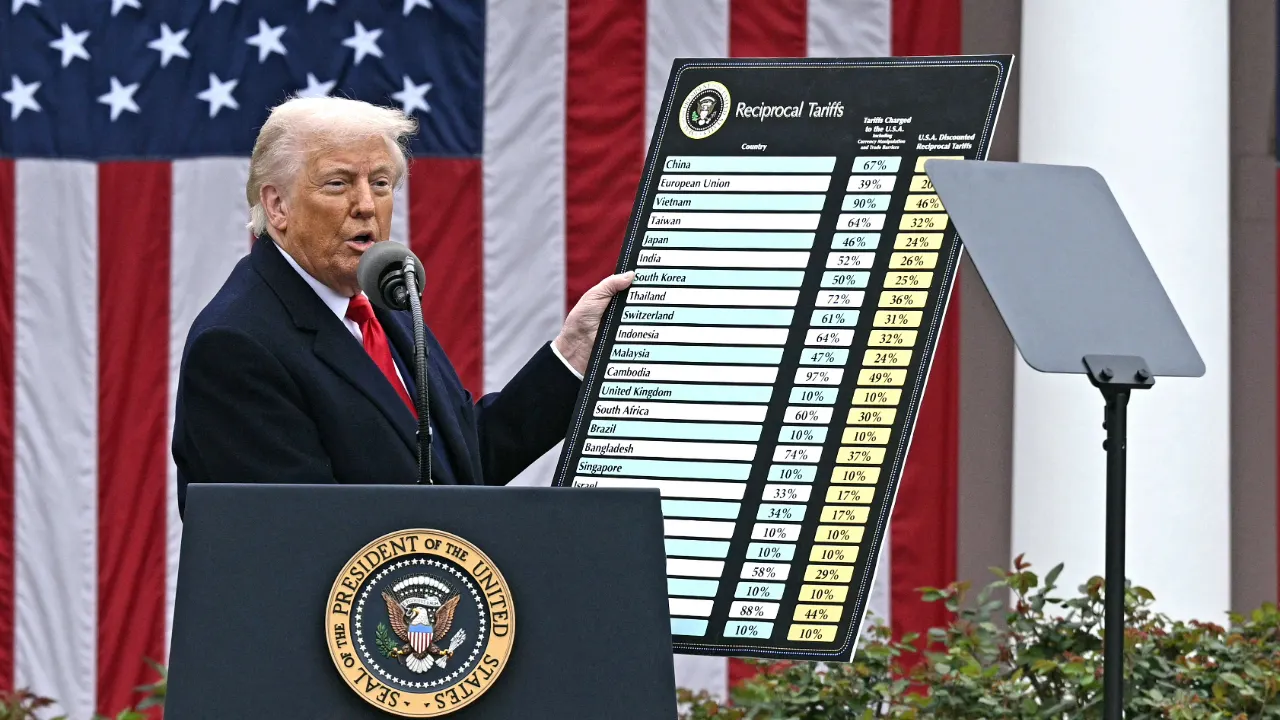
The Heritage Foundation senior economist Peter St. Onge discusses the Trump administration’s ‘back-up options’ as the Supreme Court ruling on tariffs looms and more on ‘The Bottom Line.’
President Donald Trump recently attributed what he described as historic economic gains to tariffs, asserting that the U.S. has garnered hundreds of billions of dollars with minimal inflation while simultaneously bolstering national security.
In a post on Truth Social, Trump stated, “Great Financial Numbers were released today. Our Country has never done better! So many people ask me the reason for this, and I tell them, in just one word – TARIFFS!”
He further emphasized, “We’ve taken in Hundreds of Billions of Dollars, with virtually No Inflation, and our National Security has never been as strong as it is today. GOD BLESS THE U.S.A.”
This announcement coincided with a significant trade agreement between the United States and Taiwan, aimed at reshoring semiconductor manufacturing and enhancing U.S. supply chains. This development reinforces Trump’s long-held belief that tariffs can serve as a tool to revitalize domestic industries.
US, TAIWAN COME TO $250B ‘AMERICA FIRST’ TARIFF DEAL OVER SEMICONDUCTORS
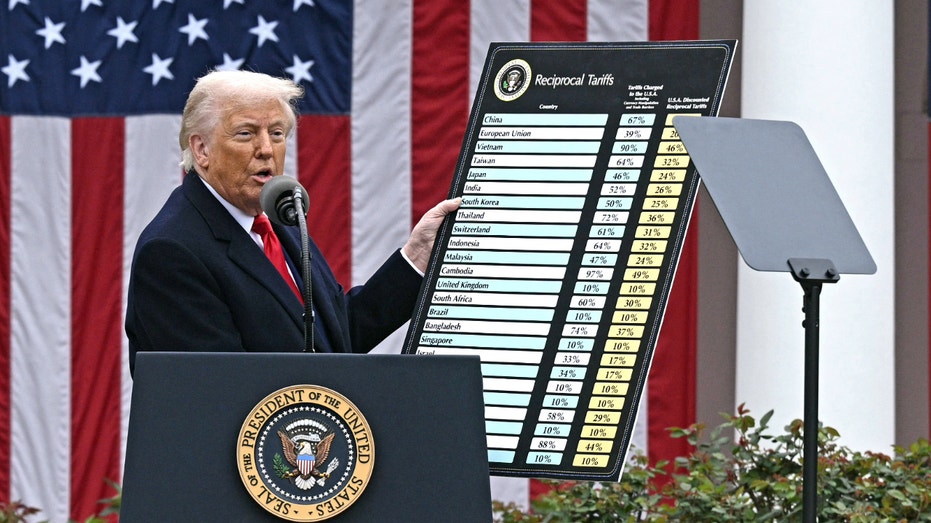
President Donald Trump delivers remarks on reciprocal tariffs during an event in the Rose Garden. (Brendan Smialowski/AFP via Getty Images / Getty Images)
As part of the agreement, Taiwanese semiconductor and technology firms are set to invest at least $250 billion in the U.S. This investment aims to promote “America First trade and investment,” along with an additional $250 billion in credit guarantees to bolster supply chain expansion across the nation, as stated by the Department of Commerce.
U.S. and Taiwanese officials noted that this deal seeks to reverse decades of offshoring, which has seen America’s share of global semiconductor manufacturing plummet from 37% in 1990 to less than 10% by 2024. This decline has raised significant economic and national security concerns in Washington.
Future U.S. semiconductor tariffs will favor Taiwanese companies that establish manufacturing operations in the U.S., allowing for duty-free imports directly linked to expanded domestic production capacity.
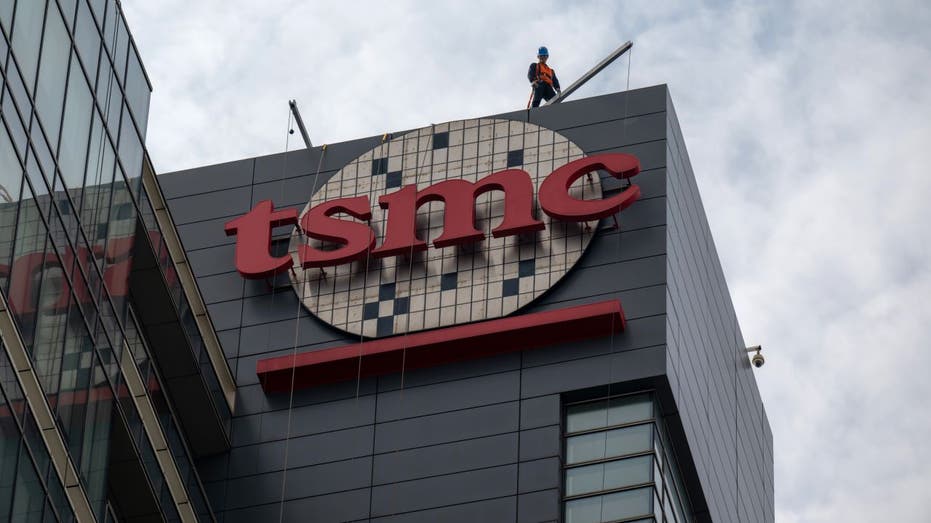
The Taiwan Semiconductor Manufacturing Co. (TSMC) is the world’s leading producer of semiconductors. (Mike Kai Chen/Bloomberg via Getty Images / Getty Images)
This agreement is structured to incentivize companies that invest in American workers and facilities while discouraging reliance on overseas production. Additionally, Taiwan is expected to facilitate U.S. investment in critical industries such as semiconductors, artificial intelligence, defense technology, telecommunications, and biotechnology—sectors deemed essential for economic competitiveness and national security.
CHINA’S GLOBAL AGGRESSION CHECK: TAIWAN TENSIONS, MILITARY POSTURING AND US RESPONSE IN 2025
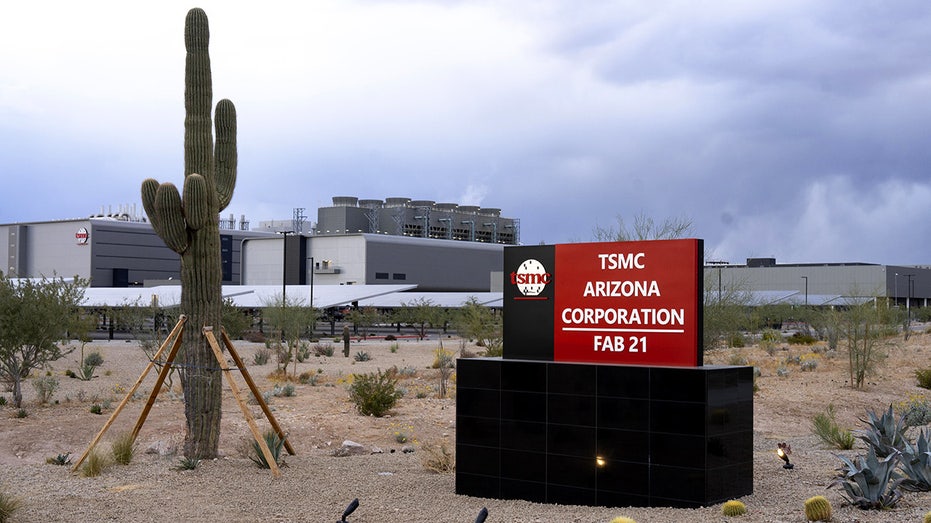
The Taiwan Semiconductor Manufacturing Company (TSMC) has invested billions in a chip fabrication facility in Arizona. (Rebecca Noble/Bloomberg via Getty Images / Getty Images)
This investment is anticipated to broaden market access for U.S. companies, enhance technological collaboration with Taiwan, and reinforce U.S. leadership in critical and emerging industries.
Trump has consistently argued that tariffs serve to protect American workers, diminish reliance on foreign adversaries, and provide the U.S. with leverage in trade negotiations. While critics caution that tariffs may lead to increased consumer prices, Trump has repeatedly dismissed these concerns, citing economic data that indicates robust growth with limited inflation.
GET FOX BUSINESS ON THE GO BY CLICKING HERE
The Taiwan deal underscores that tariffs are likely to remain a cornerstone of Trump’s broader trade strategy as his administration seeks to revitalize domestic manufacturing and secure essential supply chains.
FOX Business’ Jasmine Baehr and Eric Revell contributed to this report.
The Heritage Foundation senior economist Peter St. Onge discusses the Trump administration’s ‘back-up options’ as the Supreme Court ruling on tariffs looms and more on ‘The Bottom Line.’
President Donald Trump recently attributed what he described as historic economic gains to tariffs, asserting that the U.S. has garnered hundreds of billions of dollars with minimal inflation while simultaneously bolstering national security.
In a post on Truth Social, Trump stated, “Great Financial Numbers were released today. Our Country has never done better! So many people ask me the reason for this, and I tell them, in just one word – TARIFFS!”
He further emphasized, “We’ve taken in Hundreds of Billions of Dollars, with virtually No Inflation, and our National Security has never been as strong as it is today. GOD BLESS THE U.S.A.”
This announcement coincided with a significant trade agreement between the United States and Taiwan, aimed at reshoring semiconductor manufacturing and enhancing U.S. supply chains. This development reinforces Trump’s long-held belief that tariffs can serve as a tool to revitalize domestic industries.
US, TAIWAN COME TO $250B ‘AMERICA FIRST’ TARIFF DEAL OVER SEMICONDUCTORS
President Donald Trump delivers remarks on reciprocal tariffs during an event in the Rose Garden. (Brendan Smialowski/AFP via Getty Images / Getty Images)
As part of the agreement, Taiwanese semiconductor and technology firms are set to invest at least $250 billion in the U.S. This investment aims to promote “America First trade and investment,” along with an additional $250 billion in credit guarantees to bolster supply chain expansion across the nation, as stated by the Department of Commerce.
U.S. and Taiwanese officials noted that this deal seeks to reverse decades of offshoring, which has seen America’s share of global semiconductor manufacturing plummet from 37% in 1990 to less than 10% by 2024. This decline has raised significant economic and national security concerns in Washington.
Future U.S. semiconductor tariffs will favor Taiwanese companies that establish manufacturing operations in the U.S., allowing for duty-free imports directly linked to expanded domestic production capacity.
The Taiwan Semiconductor Manufacturing Co. (TSMC) is the world’s leading producer of semiconductors. (Mike Kai Chen/Bloomberg via Getty Images / Getty Images)
This agreement is structured to incentivize companies that invest in American workers and facilities while discouraging reliance on overseas production. Additionally, Taiwan is expected to facilitate U.S. investment in critical industries such as semiconductors, artificial intelligence, defense technology, telecommunications, and biotechnology—sectors deemed essential for economic competitiveness and national security.
CHINA’S GLOBAL AGGRESSION CHECK: TAIWAN TENSIONS, MILITARY POSTURING AND US RESPONSE IN 2025
The Taiwan Semiconductor Manufacturing Company (TSMC) has invested billions in a chip fabrication facility in Arizona. (Rebecca Noble/Bloomberg via Getty Images / Getty Images)
This investment is anticipated to broaden market access for U.S. companies, enhance technological collaboration with Taiwan, and reinforce U.S. leadership in critical and emerging industries.
Trump has consistently argued that tariffs serve to protect American workers, diminish reliance on foreign adversaries, and provide the U.S. with leverage in trade negotiations. While critics caution that tariffs may lead to increased consumer prices, Trump has repeatedly dismissed these concerns, citing economic data that indicates robust growth with limited inflation.
GET FOX BUSINESS ON THE GO BY CLICKING HERE
The Taiwan deal underscores that tariffs are likely to remain a cornerstone of Trump’s broader trade strategy as his administration seeks to revitalize domestic manufacturing and secure essential supply chains.
FOX Business’ Jasmine Baehr and Eric Revell contributed to this report.