US CEOs Identify Economic Uncertainty as Leading Threat for 2026: Insights from Conference Board Survey

Piper Sandler chief global economist Nancy Lazar discusses the economic outlook for 2026, the importance of patience, and more on Making Money.
The primary concern for CEOs of U.S. companies as 2026 approaches is economic uncertainty. This issue looms larger for American business leaders than for their global counterparts, according to a recent report.
The Conference Board conducted a survey involving over 1,700 executives, including more than 750 CEOs from North America, Europe, and Asia. The findings reveal a stark contrast in the main worries of U.S. CEOs compared to those worldwide.
Uncertainty emerged as the leading economic concern for U.S. CEOs in 2026, with 43% of respondents identifying it as their top threat. Following closely, 35% cited the risk of a downturn or recession.
In contrast, among global CEOs, the primary threat for 2026 was an economic downturn or recession, identified by 36% of respondents, while uncertainty ranked second, with 29% citing it as their top economic concern.
US ECONOMY EXPECTED TO GROW FASTER IN 2026 DESPITE STAGNANT JOB MARKET: GOLDMAN SACHS

The Conference Board released a survey of more than 1,700 executives, including over 750 CEOs, from North America, Europe, and Asia. (iStock)
“As we head into 2026, CEOs are facing converging pressures that impact profits and growth. These challenges are also driving innovation, with many CEOs globally focused on revamping their business models,” stated Dana M. Peterson, chief economist at The Conference Board.
The survey also explored CEOs’ perspectives on the workforce. Despite a slowing labor market, American workers continue to wield significant bargaining power during the hiring process.
Notably, 27% of U.S. CEOs identified “expectations of higher compensation” as a major challenge in recruiting talent, a figure that surpasses those in Asia (19%) and Europe (15%).
To enhance profitability, the top priority among U.S. CEOs was making changes to their business models, with 60% citing this as essential.
CONSUMER SENTIMENT RISES ABOVE EXPECTATIONS IN JANUARY BUT REMAINS BELOW LAST YEAR’S LEVEL

Measuring the ROI of AI investments is at the forefront of CEOs’ minds in 2026. (iStock / iStock)
When it comes to artificial intelligence (AI), U.S. CEOs are primarily focused on measuring return on investment (ROI). A significant 46% expressed a desire to improve data quality and quantity for this purpose. This concern is echoed globally, though only 33% of CEOs outside the U.S. share this priority.
Interestingly, U.S. CEOs exhibit a more pessimistic outlook regarding AI’s impact on their companies in 2026. About 38% believe AI will have a negative effect, influenced by societal, demographic, and technological shifts.
This sentiment is mirrored globally, with 30% of CEOs anticipating a negative impact, surpassing concerns about climate events (17%) and political polarization (26%).
AI remains a crucial investment priority for 39% of CEOs, and its integration is deemed the top supply chain priority among U.S. CEOs.
INFLATION HELD STEADY IN DECEMBER, REMAINING WELL ABOVE THE FED’S 2% TARGET
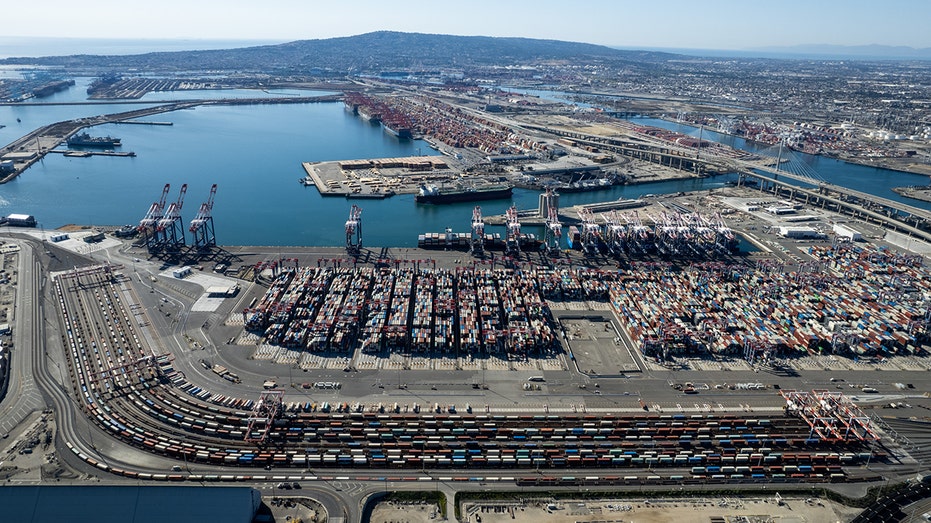
Economic uncertainty was the top concern of U.S. CEOs for 2026. (Qian Weizhong/VCG via Getty Images)
The survey findings indicate that while CEOs across various regions prioritize their home markets for expansion, the U.S. and Canada emerged as the most favored regions, with 53% of respondents indicating this as their primary focus.
Cyberattacks were identified as the top geopolitical threat, with 54% of U.S. CEOs and 47% of global CEOs ranking them as their biggest concern. Following closely were uncertainties and the potential for armed conflicts.
GET FOX BUSINESS ON THE GO BY CLICKING HERE
While war was not a primary concern for U.S. CEOs, it ranked higher among their global counterparts. For instance, CEOs in Japan placed war in the Asia-Pacific region as their top concern, while European CEOs ranked it third and those from other parts of Asia cited it as the third concern in the Middle East.
Piper Sandler chief global economist Nancy Lazar discusses the economic outlook for 2026, the importance of patience, and more on Making Money.
The primary concern for CEOs of U.S. companies as 2026 approaches is economic uncertainty. This issue looms larger for American business leaders than for their global counterparts, according to a recent report.
The Conference Board conducted a survey involving over 1,700 executives, including more than 750 CEOs from North America, Europe, and Asia. The findings reveal a stark contrast in the main worries of U.S. CEOs compared to those worldwide.
Uncertainty emerged as the leading economic concern for U.S. CEOs in 2026, with 43% of respondents identifying it as their top threat. Following closely, 35% cited the risk of a downturn or recession.
In contrast, among global CEOs, the primary threat for 2026 was an economic downturn or recession, identified by 36% of respondents, while uncertainty ranked second, with 29% citing it as their top economic concern.
US ECONOMY EXPECTED TO GROW FASTER IN 2026 DESPITE STAGNANT JOB MARKET: GOLDMAN SACHS
The Conference Board released a survey of more than 1,700 executives, including over 750 CEOs, from North America, Europe, and Asia. (iStock)
“As we head into 2026, CEOs are facing converging pressures that impact profits and growth. These challenges are also driving innovation, with many CEOs globally focused on revamping their business models,” stated Dana M. Peterson, chief economist at The Conference Board.
The survey also explored CEOs’ perspectives on the workforce. Despite a slowing labor market, American workers continue to wield significant bargaining power during the hiring process.
Notably, 27% of U.S. CEOs identified “expectations of higher compensation” as a major challenge in recruiting talent, a figure that surpasses those in Asia (19%) and Europe (15%).
To enhance profitability, the top priority among U.S. CEOs was making changes to their business models, with 60% citing this as essential.
CONSUMER SENTIMENT RISES ABOVE EXPECTATIONS IN JANUARY BUT REMAINS BELOW LAST YEAR’S LEVEL
Measuring the ROI of AI investments is at the forefront of CEOs’ minds in 2026. (iStock / iStock)
When it comes to artificial intelligence (AI), U.S. CEOs are primarily focused on measuring return on investment (ROI). A significant 46% expressed a desire to improve data quality and quantity for this purpose. This concern is echoed globally, though only 33% of CEOs outside the U.S. share this priority.
Interestingly, U.S. CEOs exhibit a more pessimistic outlook regarding AI’s impact on their companies in 2026. About 38% believe AI will have a negative effect, influenced by societal, demographic, and technological shifts.
This sentiment is mirrored globally, with 30% of CEOs anticipating a negative impact, surpassing concerns about climate events (17%) and political polarization (26%).
AI remains a crucial investment priority for 39% of CEOs, and its integration is deemed the top supply chain priority among U.S. CEOs.
INFLATION HELD STEADY IN DECEMBER, REMAINING WELL ABOVE THE FED’S 2% TARGET
Economic uncertainty was the top concern of U.S. CEOs for 2026. (Qian Weizhong/VCG via Getty Images)
The survey findings indicate that while CEOs across various regions prioritize their home markets for expansion, the U.S. and Canada emerged as the most favored regions, with 53% of respondents indicating this as their primary focus.
Cyberattacks were identified as the top geopolitical threat, with 54% of U.S. CEOs and 47% of global CEOs ranking them as their biggest concern. Following closely were uncertainties and the potential for armed conflicts.
GET FOX BUSINESS ON THE GO BY CLICKING HERE
While war was not a primary concern for U.S. CEOs, it ranked higher among their global counterparts. For instance, CEOs in Japan placed war in the Asia-Pacific region as their top concern, while European CEOs ranked it third and those from other parts of Asia cited it as the third concern in the Middle East.