Edison Files Lawsuit Against LA County for Delayed Alerts Linked to Fire Fatalities
Edison International has initiated legal action against Los Angeles County and various public agencies, alleging their failure to provide timely evacuation alerts that could have potentially saved many of the 19 lives lost in a devastating wildfire last year.
The lawsuits, filed jointly on Friday with its Southern California Edison unit, aim to shift some of the blame for the fatalities from last January’s Eaton wildfire, which stands as one of the most destructive in California’s history. The utility is already facing numerous lawsuits from homeowners and businesses, with potential damages reaching billions of dollars.
Related: The Return Period for An LA Wildfire-Scale Event May Be Shorter Than You Think
The outcomes of these lawsuits regarding the Eaton Fire, along with another fire that ravaged the coastal Pacific Palisades area, are critical as Los Angeles, the second-largest city in the U.S., attempts to recover from these dual disasters. Together, the Eaton and Palisades fires resulted in over 30 fatalities, scorched nearly 40,000 acres, and destroyed more than 16,000 structures.
According to insurer Swiss Re AG, insured losses from the January 2025 wildfires reached $40 billion, making them the most expensive catastrophe of the year. Gallagher Re also noted that these fires rank among the “costliest individual wildfire events” in the history of the insurance industry.
Related: LA Fire Survivors Got a Rude Surprise That Could Hit More Americans
Residents and business owners have claimed in their lawsuits that Edison is liable for the extensive property damage due to leaving power lines energized during a windstorm prior to the ignition of the Eaton Fire in the brush-covered foothills near Pasadena. Edison’s CEO, Pedro Pizarro, has conceded that the company’s equipment will likely be determined to have sparked the blaze.
An investigation into the Eaton Fire is currently underway by the Los Angeles County Fire Department and the California Department of Forestry and Fire Protection.
Edison asserts in its primary lawsuit that while many claims attribute the fire’s ignition to the company, “numerous factors and causes contributed to the severity of the fire and the resulting damage,” including actions and failures by about a dozen government entities, some of which have previously sued Edison.
The defendants named in Edison’s lawsuit include LA County’s fire, sheriff’s, and emergency preparedness departments, which allegedly mishandled evacuation warnings; local water companies that purportedly failed to provide adequate water for firefighting; and county fire officials who allegedly neglected to manage overgrown vegetation that fueled the fire.
Additionally, Edison criticized officials for not providing sufficient paratransit services for elderly residents, the local natural gas supplier, Southern California Gas Company, for not shutting off flammable gas lines, and the contractor responsible for emergency communications.
The contractor, San Diego-based Genasys Inc., has already been sued by families of victims from the Eaton Fire, accused of “digital redlining” for failing to send timely warnings to residents in a historically African American neighborhood in Altadena, where 18 fatalities occurred. Genasys has denied any wrongdoing in this case.
Chris Gilbride, a spokesperson for SoCalGas, stated that the company is reviewing the lawsuit and will respond in court. “Since January 7, 2025, SoCalGas has worked diligently, in close coordination with local and state officials, to assess the impacts of the fires on SoCalGas’ infrastructure, make necessary repairs, and safely restore service to thousands of customers,” he said.
The LA County agencies have declined to comment, and Genasys did not respond to requests for comment.
Among the specific allegations in the lawsuits:
- The first evacuation notices to the western Altadena neighborhood were sent out more than nine hours after the Eaton Fire began.
- SoCalGas took four days to initiate natural gas shutoffs after the Eaton Fire started, whereas the Palisades Fire saw shutoffs within one day.
- The water systems servicing areas affected by the Eaton Fire failed as the fire spread, leaving firefighters and residents without water to combat the flames.
- Altadena was not designated as a “Very High Fire Hazard Severity Zone,” despite the abundance of brush and vegetation that allowed the fire to spread rapidly.
- The wealthier Pacific Palisades area, served by the Los Angeles Department of Water and Power, is facing litigation over claims that it lacked sufficient water for firefighting efforts.
In July, Edison launched a private compensation program for victims of the Eaton Fire, with nearly 2,000 claims filed as of this month. While the program aims to expedite payouts, it has faced criticism from plaintiffs’ lawyers as an attempt to persuade victims to accept lower compensation for their losses.
For those who have filed lawsuits, an initial trial is scheduled for January 2027 in Los Angeles Superior Court. In addition to property owner claims, Edison is also contending with lawsuits from Los Angeles County, several local cities, and the federal government over hundreds of millions of dollars in costs related to the fire response and infrastructure repairs.
The cases may also involve California’s $21 billion wildfire insurance fund, established by state policymakers to ensure the solvency of utilities. This fund was created following a decade of wildfires that led PG&E Corp., the state’s largest utility, to file for bankruptcy protection in 2019 due to a surge of fire-related lawsuits.
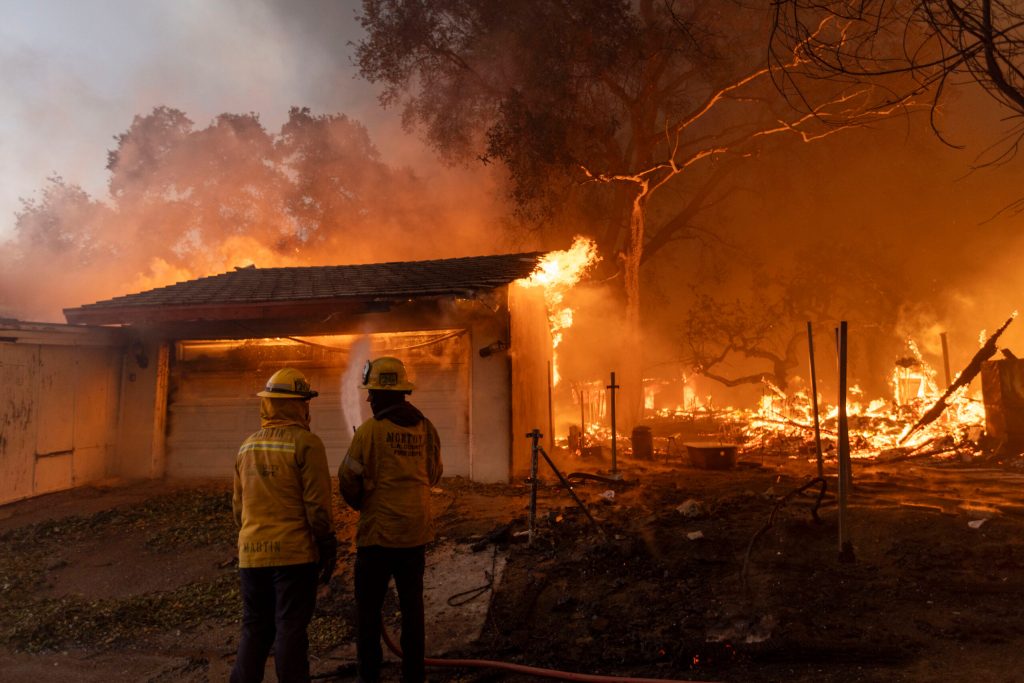
Top photo: Firefighters battle the Eaton Fire in Altadena, California, on Wednesday, Jan. 8, 2025.
Copyright 2026 Bloomberg.
Interested in Lawsuits?
Get automatic alerts for this topic.
Edison International has initiated legal action against Los Angeles County and various public agencies, alleging their failure to provide timely evacuation alerts that could have potentially saved many of the 19 lives lost in a devastating wildfire last year.
The lawsuits, filed jointly on Friday with its Southern California Edison unit, aim to shift some of the blame for the fatalities from last January’s Eaton wildfire, which stands as one of the most destructive in California’s history. The utility is already facing numerous lawsuits from homeowners and businesses, with potential damages reaching billions of dollars.
Related: The Return Period for An LA Wildfire-Scale Event May Be Shorter Than You Think
The outcomes of these lawsuits regarding the Eaton Fire, along with another fire that ravaged the coastal Pacific Palisades area, are critical as Los Angeles, the second-largest city in the U.S., attempts to recover from these dual disasters. Together, the Eaton and Palisades fires resulted in over 30 fatalities, scorched nearly 40,000 acres, and destroyed more than 16,000 structures.
According to insurer Swiss Re AG, insured losses from the January 2025 wildfires reached $40 billion, making them the most expensive catastrophe of the year. Gallagher Re also noted that these fires rank among the “costliest individual wildfire events” in the history of the insurance industry.
Related: LA Fire Survivors Got a Rude Surprise That Could Hit More Americans
Residents and business owners have claimed in their lawsuits that Edison is liable for the extensive property damage due to leaving power lines energized during a windstorm prior to the ignition of the Eaton Fire in the brush-covered foothills near Pasadena. Edison’s CEO, Pedro Pizarro, has conceded that the company’s equipment will likely be determined to have sparked the blaze.
An investigation into the Eaton Fire is currently underway by the Los Angeles County Fire Department and the California Department of Forestry and Fire Protection.
Edison asserts in its primary lawsuit that while many claims attribute the fire’s ignition to the company, “numerous factors and causes contributed to the severity of the fire and the resulting damage,” including actions and failures by about a dozen government entities, some of which have previously sued Edison.
The defendants named in Edison’s lawsuit include LA County’s fire, sheriff’s, and emergency preparedness departments, which allegedly mishandled evacuation warnings; local water companies that purportedly failed to provide adequate water for firefighting; and county fire officials who allegedly neglected to manage overgrown vegetation that fueled the fire.
Additionally, Edison criticized officials for not providing sufficient paratransit services for elderly residents, the local natural gas supplier, Southern California Gas Company, for not shutting off flammable gas lines, and the contractor responsible for emergency communications.
The contractor, San Diego-based Genasys Inc., has already been sued by families of victims from the Eaton Fire, accused of “digital redlining” for failing to send timely warnings to residents in a historically African American neighborhood in Altadena, where 18 fatalities occurred. Genasys has denied any wrongdoing in this case.
Chris Gilbride, a spokesperson for SoCalGas, stated that the company is reviewing the lawsuit and will respond in court. “Since January 7, 2025, SoCalGas has worked diligently, in close coordination with local and state officials, to assess the impacts of the fires on SoCalGas’ infrastructure, make necessary repairs, and safely restore service to thousands of customers,” he said.
The LA County agencies have declined to comment, and Genasys did not respond to requests for comment.
Among the specific allegations in the lawsuits:
- The first evacuation notices to the western Altadena neighborhood were sent out more than nine hours after the Eaton Fire began.
- SoCalGas took four days to initiate natural gas shutoffs after the Eaton Fire started, whereas the Palisades Fire saw shutoffs within one day.
- The water systems servicing areas affected by the Eaton Fire failed as the fire spread, leaving firefighters and residents without water to combat the flames.
- Altadena was not designated as a “Very High Fire Hazard Severity Zone,” despite the abundance of brush and vegetation that allowed the fire to spread rapidly.
- The wealthier Pacific Palisades area, served by the Los Angeles Department of Water and Power, is facing litigation over claims that it lacked sufficient water for firefighting efforts.
In July, Edison launched a private compensation program for victims of the Eaton Fire, with nearly 2,000 claims filed as of this month. While the program aims to expedite payouts, it has faced criticism from plaintiffs’ lawyers as an attempt to persuade victims to accept lower compensation for their losses.
For those who have filed lawsuits, an initial trial is scheduled for January 2027 in Los Angeles Superior Court. In addition to property owner claims, Edison is also contending with lawsuits from Los Angeles County, several local cities, and the federal government over hundreds of millions of dollars in costs related to the fire response and infrastructure repairs.
The cases may also involve California’s $21 billion wildfire insurance fund, established by state policymakers to ensure the solvency of utilities. This fund was created following a decade of wildfires that led PG&E Corp., the state’s largest utility, to file for bankruptcy protection in 2019 due to a surge of fire-related lawsuits.
Top photo: Firefighters battle the Eaton Fire in Altadena, California, on Wednesday, Jan. 8, 2025.
Copyright 2026 Bloomberg.
Interested in Lawsuits?
Get automatic alerts for this topic.