Want a Longevity Diet? Go Blue
Good nutrition becomes even more important as we head into the traditionally calorie-laden holiday season. Senior Planet is rerunning this archived article on how to live longer by eating healthy.
The longer you live, the healthier you’re likely to be during the last chunk of your life. This is one of Dan Buettner‘s key messages in his popular TED talks and books, and it’s a compelling one. While not everyone aspires to reach the age of one hundred, we all desire to remain independent and active for as long as possible.
So, what’s the secret to longevity?
According to Buettner, we can find answers in the Blue Zones—regions known for their long-lived populations, where individuals frequently celebrate their 100th birthdays and beyond. Learn more here.
Buettner, a Blue Zones expert, collaborates with a team of anthropologists, epidemiologists, and other researchers to study these unique areas. They aim to uncover what aspects of Blue Zones lifestyles contribute to longevity and how we can apply these insights to our own lives.
Key factors identified include a close-knit community of friends, family, and neighbors; a strong sense of purpose; regular physical activity; and, importantly, diet.
Focusing on diet, Buettner and his team introduced the Blue Zone dietary guidelines to a community in Albert Lea, Minnesota. The results were remarkable.
“I came to realize that the runway to health is through our mouth,” he shared with Lynne Rossetto Kasper on her culinary radio show, Splendid Table. “We took a really deep dive into the diets of longevity around the world, working with the University of Minnesota to distill down 155 dietary surveys from all five Blue Zones.”
In Albert Lea, Buettner and his team partnered with local restaurants and grocery stores to enhance the “longevity factor” of available foods by 20 percent. After a year and a half, they observed a 40 percent reduction in healthcare costs. This “Blue Zone makeover” has since expanded to 23 cities in Iowa.
The Blue Zone Diet: In a Nutshell
- People in the Blue Zones consume a high-carb diet centered on whole grains.
- The diet is largely plant-based, with meat consumed only four to five times a month.
- Beans serve as the primary protein source, averaging about one cup a day. “I would argue that’s the best longevity supplement in the world,” Buettner asserts.
- Portion sizes are smaller; the key takeaway is to stop eating before feeling full.
- Meals are largest earlier in the day, with the late afternoon or evening meal being the smallest.
- Regular alcohol consumption is common, with one or two glasses of red wine per day.
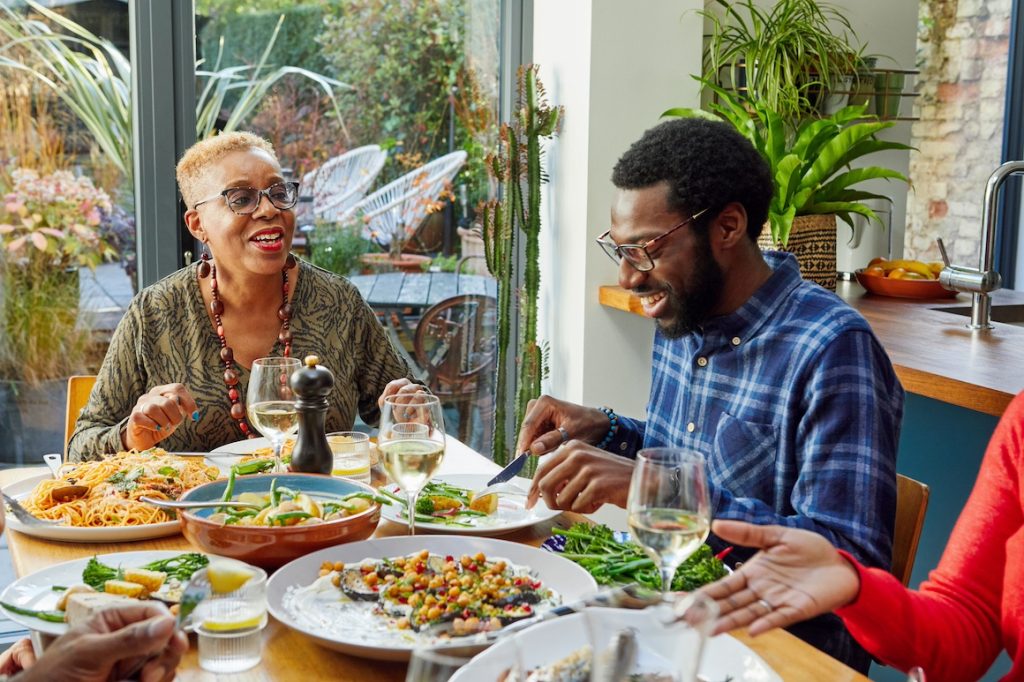
- These glasses of wine are often enjoyed in social settings. Blue Zoners prioritize communal eating. “If you’re technically lonely in this country, it shaves about eight years off your life expectancy,” Buettner notes. His team created small groups committed to plant-based potluck dinners over ten weeks; many of these groups remain active five or six years later.
- Click here to read more about “reverse engineering longevity” at The Splendid Table
This article offered by Senior Planet and Older Adults Technology Services is for informational purposes only and is not intended to substitute for professional medical advice, diagnosis, or treatment. Always seek the advice of your physician or other qualified health provider with any questions you may have regarding any medical condition. If you think you may have a medical emergency, call your doctor or 911 immediately.
Good nutrition becomes even more important as we head into the traditionally calorie-laden holiday season. Senior Planet is rerunning this archived article on how to live longer by eating healthy.
The longer you live, the healthier you’re likely to be during the last chunk of your life. This is one of Dan Buettner‘s key messages in his popular TED talks and books, and it’s a compelling one. While not everyone aspires to reach the age of one hundred, we all desire to remain independent and active for as long as possible.
So, what’s the secret to longevity?
According to Buettner, we can find answers in the Blue Zones—regions known for their long-lived populations, where individuals frequently celebrate their 100th birthdays and beyond. Learn more here.
Buettner, a Blue Zones expert, collaborates with a team of anthropologists, epidemiologists, and other researchers to study these unique areas. They aim to uncover what aspects of Blue Zones lifestyles contribute to longevity and how we can apply these insights to our own lives.
Key factors identified include a close-knit community of friends, family, and neighbors; a strong sense of purpose; regular physical activity; and, importantly, diet.
Focusing on diet, Buettner and his team introduced the Blue Zone dietary guidelines to a community in Albert Lea, Minnesota. The results were remarkable.
“I came to realize that the runway to health is through our mouth,” he shared with Lynne Rossetto Kasper on her culinary radio show, Splendid Table. “We took a really deep dive into the diets of longevity around the world, working with the University of Minnesota to distill down 155 dietary surveys from all five Blue Zones.”
In Albert Lea, Buettner and his team partnered with local restaurants and grocery stores to enhance the “longevity factor” of available foods by 20 percent. After a year and a half, they observed a 40 percent reduction in healthcare costs. This “Blue Zone makeover” has since expanded to 23 cities in Iowa.
The Blue Zone Diet: In a Nutshell
- People in the Blue Zones consume a high-carb diet centered on whole grains.
- The diet is largely plant-based, with meat consumed only four to five times a month.
- Beans serve as the primary protein source, averaging about one cup a day. “I would argue that’s the best longevity supplement in the world,” Buettner asserts.
- Portion sizes are smaller; the key takeaway is to stop eating before feeling full.
- Meals are largest earlier in the day, with the late afternoon or evening meal being the smallest.
- Regular alcohol consumption is common, with one or two glasses of red wine per day.
- These glasses of wine are often enjoyed in social settings. Blue Zoners prioritize communal eating. “If you’re technically lonely in this country, it shaves about eight years off your life expectancy,” Buettner notes. His team created small groups committed to plant-based potluck dinners over ten weeks; many of these groups remain active five or six years later.
- Click here to read more about “reverse engineering longevity” at The Splendid Table
This article offered by Senior Planet and Older Adults Technology Services is for informational purposes only and is not intended to substitute for professional medical advice, diagnosis, or treatment. Always seek the advice of your physician or other qualified health provider with any questions you may have regarding any medical condition. If you think you may have a medical emergency, call your doctor or 911 immediately.