North Sea Countries Commit to Collaborative Development and Protection of Wind Energy Sites
Countries including the UK, Germany, and the Netherlands are set to pledge a collaborative effort to develop 100 gigawatts of offshore wind capacity in the North Sea. This initiative comes in response to increasing threats of sabotage against such critical infrastructure.
Energy ministers from nine nations will convene in Hamburg next week to sign a declaration committing to these joint projects, with a target completion date of 2050, as outlined in a draft obtained by Bloomberg News.
As the security of these installations faces heightened risks, the participating countries will also agree to share security-related data. This includes measures to counter both physical and cyber threats, such as stress-testing components in wind turbines to ensure their resilience.
“Given the necessity to secure our offshore energy infrastructure against actions perpetrated in maritime and airspace by malicious actors, as well as negligent nautical behavior, it is crucial to maintain a high level of physical and digital protection for our energy infrastructure,” the draft document states.
The summit will also see participation from the North Atlantic Treaty Organization (NATO) and the European Commission, with Iceland joining the discussions despite not being a North Sea nation. The German government, which is hosting the summit, has yet to provide a comment.
While former US President Donald Trump has expressed ideological opposition to wind farms and criticized Europe’s expansion of this technology, the pledge underscores the continent’s steadfast commitment to renewable energy. Currently, the global offshore wind capacity stands at 83 gigawatts, according to a 2025 report by the Global Wind Energy Council.
In light of recent geopolitical tensions, particularly following Russia’s invasion of Ukraine in 2022, the need to enhance infrastructure protection from both foreign and domestic threats has become increasingly urgent. Earlier this month, an arson attack left 45,000 homes in Berlin without power for several days, highlighting vulnerabilities in energy systems. Additionally, there have been multiple incidents in recent years affecting subsea energy links.
The North Sea is poised to play a pivotal role in the European Union’s transition to net-zero emissions by mid-century. It holds significant potential for both wind and hydro power, which advocates believe could lead to lower energy bills, improved energy security, and the production of green hydrogen essential for decarbonizing heavy industry.
The overarching goal is to construct 300 gigawatts of offshore wind capacity in the region by 2050, with one-third of that capacity derived from joint developments. The draft declaration indicates that Transmission System Operators will initiate 20 gigawatts of such projects during the 2030s.
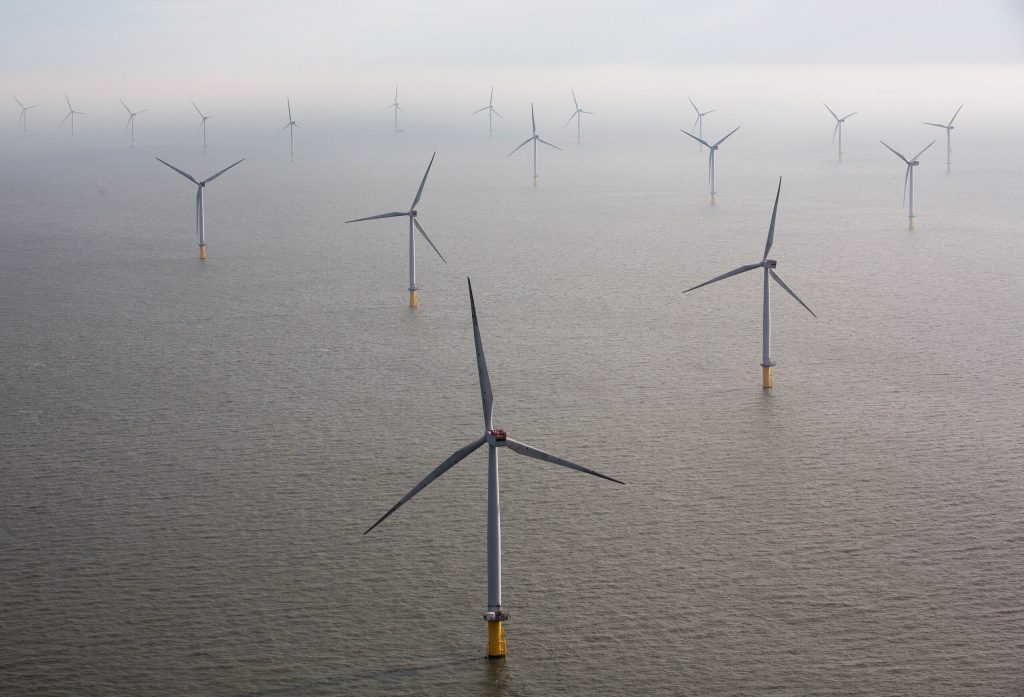
Photograph: An offshore wind farm in the North Sea. Photo credit: Simon Dawson/Bloomberg
Copyright 2026 Bloomberg.
The most important insurance news, in your inbox every business day.
Get the insurance industry’s trusted newsletter
Countries including the UK, Germany, and the Netherlands are set to pledge a collaborative effort to develop 100 gigawatts of offshore wind capacity in the North Sea. This initiative comes in response to increasing threats of sabotage against such critical infrastructure.
Energy ministers from nine nations will convene in Hamburg next week to sign a declaration committing to these joint projects, with a target completion date of 2050, as outlined in a draft obtained by Bloomberg News.
As the security of these installations faces heightened risks, the participating countries will also agree to share security-related data. This includes measures to counter both physical and cyber threats, such as stress-testing components in wind turbines to ensure their resilience.
“Given the necessity to secure our offshore energy infrastructure against actions perpetrated in maritime and airspace by malicious actors, as well as negligent nautical behavior, it is crucial to maintain a high level of physical and digital protection for our energy infrastructure,” the draft document states.
The summit will also see participation from the North Atlantic Treaty Organization (NATO) and the European Commission, with Iceland joining the discussions despite not being a North Sea nation. The German government, which is hosting the summit, has yet to provide a comment.
While former US President Donald Trump has expressed ideological opposition to wind farms and criticized Europe’s expansion of this technology, the pledge underscores the continent’s steadfast commitment to renewable energy. Currently, the global offshore wind capacity stands at 83 gigawatts, according to a 2025 report by the Global Wind Energy Council.
In light of recent geopolitical tensions, particularly following Russia’s invasion of Ukraine in 2022, the need to enhance infrastructure protection from both foreign and domestic threats has become increasingly urgent. Earlier this month, an arson attack left 45,000 homes in Berlin without power for several days, highlighting vulnerabilities in energy systems. Additionally, there have been multiple incidents in recent years affecting subsea energy links.
The North Sea is poised to play a pivotal role in the European Union’s transition to net-zero emissions by mid-century. It holds significant potential for both wind and hydro power, which advocates believe could lead to lower energy bills, improved energy security, and the production of green hydrogen essential for decarbonizing heavy industry.
The overarching goal is to construct 300 gigawatts of offshore wind capacity in the region by 2050, with one-third of that capacity derived from joint developments. The draft declaration indicates that Transmission System Operators will initiate 20 gigawatts of such projects during the 2030s.
Photograph: An offshore wind farm in the North Sea. Photo credit: Simon Dawson/Bloomberg
Copyright 2026 Bloomberg.
The most important insurance news, in your inbox every business day.
Get the insurance industry’s trusted newsletter