Navigators Struggle with ‘Additional Insured’ Policy Language in Georgia Explosion Incident
Navigators Insurance Co., an excess insurer based in Hartford, is facing challenges regarding its coverage obligations after a devastating gas explosion in Georgia in 2018. The incident, which resulted in severe injuries to three women, has sparked a legal debate over whether Atlanta Gas Light Co. qualifies as an additional insured under Navigators’ policy.
The U.S. 7th Circuit Court of Appeals in Chicago recently upheld a ruling from a federal district court in Indiana. The lower court had sided with the utility company on the “additional insured” issue while favoring Navigators on claims of bad faith and breach of fiduciary duty.
At the heart of Navigators’ defense was the assertion that Atlanta Gas Light Co. could only be considered an additional insured if a gas-line marking company was found liable in lawsuits stemming from the injuries. However, the appellate judges pointed out that the policy lacked any such stipulation. “We will not ‘supply omitted terms while professing to construe the contract,’” the judges stated in their Jan. 22 opinion.
This ruling not only clarifies the definition of additional insured but also highlights the clarity of Indiana’s insurance statutes regarding bad-faith allegations—a level of clarity that is not universally found across all states.
 In rural southeast Georgia, the explosion that destroyed a local coffee shop and led to extensive litigation is still fresh in the minds of residents. Atlanta Gas Light Co., a subsidiary of the Southern Company, had contracted Indianapolis-based United States Infrastructure Corp. (USIC) to locate and mark its gas lines throughout Georgia.
As part of this agreement, USIC was required to secure both primary and excess liability insurance, naming Atlanta Gas as an additional insured. However, complications arose when USIC failed to properly mark a gas line in Homerville, a small town located 40 miles from the Florida border. In 2018, a boring company inadvertently struck the line, leading to a natural gas leak that caused the Coffee Corner café to explode, injuring three women and inflicting significant damage to the establishment. This incident garnered national media attention, including coverage from NBC’s Today show, which can be viewed here. Further details can be found in an Insurance Journal report here.
Following mediation, the injured women reached a settlement with the line-marking company. However, Atlanta Gas was unable to negotiate a similar agreement and faced a lawsuit from the women in Georgia state court.
When Atlanta Gas sought defense and indemnification from Navigators, the insurer denied the claim. Navigators argued that the USIC umbrella policy only covered Atlanta Gas as an additional insured for injuries directly caused by the line-marking company. The lawsuit named only Atlanta Gas, not USIC, and the primary Zurich insurance policy had not been exhausted at the time of settlement discussions, despite Atlanta Gas contending that the primary policy’s $2 million limits would soon be reached.
In 2020, Atlanta Gas filed a lawsuit against Navigators in federal court in Indiana, alleging breach of contract, bad faith, and violation of fiduciary duty. The district court ruled in favor of Navigators on the bad faith and fiduciary duty claims but confirmed that Atlanta Gas was indeed an additional insured under the umbrella policy, awarding the utility $13.8 million.
Upon appeal, the 7th Circuit judges affirmed the clarity of the policy wording and upheld the lower court’s decision. Judge John Lee emphasized, “For AGL to qualify as an ‘additional insured,’ the liability the underlying suits seek to impose upon it must stem from injuries proximately caused ‘in whole or in part’ by USIC’s conduct. That is precisely what we have here.”
While Navigators’ attorneys argued that the underlying injury suits did not mention USIC by name, Judge Lee noted that “when assessing its duty to defend, the ‘insurer must look to the allegations in the complaint coupled with the facts known to the insurer after reasonable investigation,’” referencing a 2020 Indiana Court of Appeals decision.
The full opinion from Navigators can be accessed here. Attorneys representing Atlanta Gas were unavailable for comment.
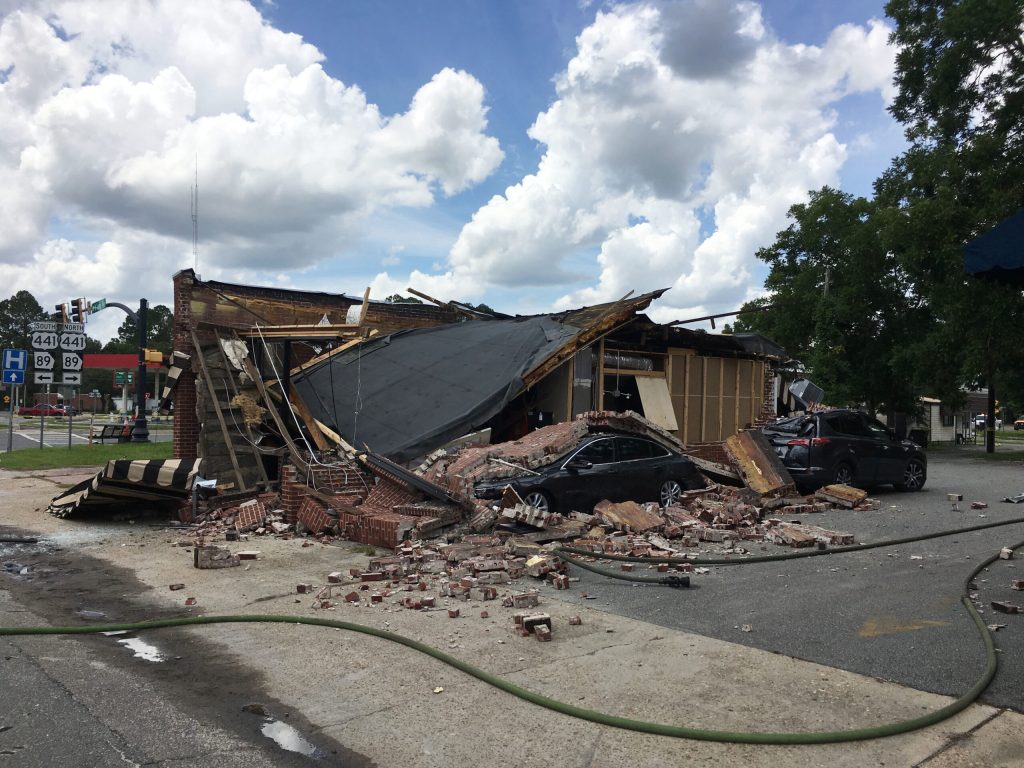
Photo: The destroyed coffee shop in 2018, a day after the explosion. (Georgia Insurance and Safety Fire Commissioner’s Office via AP)
Topics
Georgia
Interested in Additional Insureds?
Get automatic alerts for this topic.
Navigators Insurance Co., an excess insurer based in Hartford, is facing challenges regarding its coverage obligations after a devastating gas explosion in Georgia in 2018. The incident, which resulted in severe injuries to three women, has sparked a legal debate over whether Atlanta Gas Light Co. qualifies as an additional insured under Navigators’ policy.
The U.S. 7th Circuit Court of Appeals in Chicago recently upheld a ruling from a federal district court in Indiana. The lower court had sided with the utility company on the “additional insured” issue while favoring Navigators on claims of bad faith and breach of fiduciary duty.
At the heart of Navigators’ defense was the assertion that Atlanta Gas Light Co. could only be considered an additional insured if a gas-line marking company was found liable in lawsuits stemming from the injuries. However, the appellate judges pointed out that the policy lacked any such stipulation. “We will not ‘supply omitted terms while professing to construe the contract,’” the judges stated in their Jan. 22 opinion.
This ruling not only clarifies the definition of additional insured but also highlights the clarity of Indiana’s insurance statutes regarding bad-faith allegations—a level of clarity that is not universally found across all states.
In rural southeast Georgia, the explosion that destroyed a local coffee shop and led to extensive litigation is still fresh in the minds of residents. Atlanta Gas Light Co., a subsidiary of the Southern Company, had contracted Indianapolis-based United States Infrastructure Corp. (USIC) to locate and mark its gas lines throughout Georgia.
As part of this agreement, USIC was required to secure both primary and excess liability insurance, naming Atlanta Gas as an additional insured. However, complications arose when USIC failed to properly mark a gas line in Homerville, a small town located 40 miles from the Florida border. In 2018, a boring company inadvertently struck the line, leading to a natural gas leak that caused the Coffee Corner café to explode, injuring three women and inflicting significant damage to the establishment. This incident garnered national media attention, including coverage from NBC’s Today show, which can be viewed here. Further details can be found in an Insurance Journal report here.
Following mediation, the injured women reached a settlement with the line-marking company. However, Atlanta Gas was unable to negotiate a similar agreement and faced a lawsuit from the women in Georgia state court.
When Atlanta Gas sought defense and indemnification from Navigators, the insurer denied the claim. Navigators argued that the USIC umbrella policy only covered Atlanta Gas as an additional insured for injuries directly caused by the line-marking company. The lawsuit named only Atlanta Gas, not USIC, and the primary Zurich insurance policy had not been exhausted at the time of settlement discussions, despite Atlanta Gas contending that the primary policy’s $2 million limits would soon be reached.
In 2020, Atlanta Gas filed a lawsuit against Navigators in federal court in Indiana, alleging breach of contract, bad faith, and violation of fiduciary duty. The district court ruled in favor of Navigators on the bad faith and fiduciary duty claims but confirmed that Atlanta Gas was indeed an additional insured under the umbrella policy, awarding the utility $13.8 million.
Upon appeal, the 7th Circuit judges affirmed the clarity of the policy wording and upheld the lower court’s decision. Judge John Lee emphasized, “For AGL to qualify as an ‘additional insured,’ the liability the underlying suits seek to impose upon it must stem from injuries proximately caused ‘in whole or in part’ by USIC’s conduct. That is precisely what we have here.”
While Navigators’ attorneys argued that the underlying injury suits did not mention USIC by name, Judge Lee noted that “when assessing its duty to defend, the ‘insurer must look to the allegations in the complaint coupled with the facts known to the insurer after reasonable investigation,’” referencing a 2020 Indiana Court of Appeals decision.
The full opinion from Navigators can be accessed here. Attorneys representing Atlanta Gas were unavailable for comment.
Photo: The destroyed coffee shop in 2018, a day after the explosion. (Georgia Insurance and Safety Fire Commissioner’s Office via AP)
Topics
Georgia
Interested in Additional Insureds?
Get automatic alerts for this topic.