Get Social with Lifelong Learning
Think you’re too old to go back to school? Think again! Here are just a few ways to expand your horizons, share your knowledge…and get social!
Tuition-Free College Courses
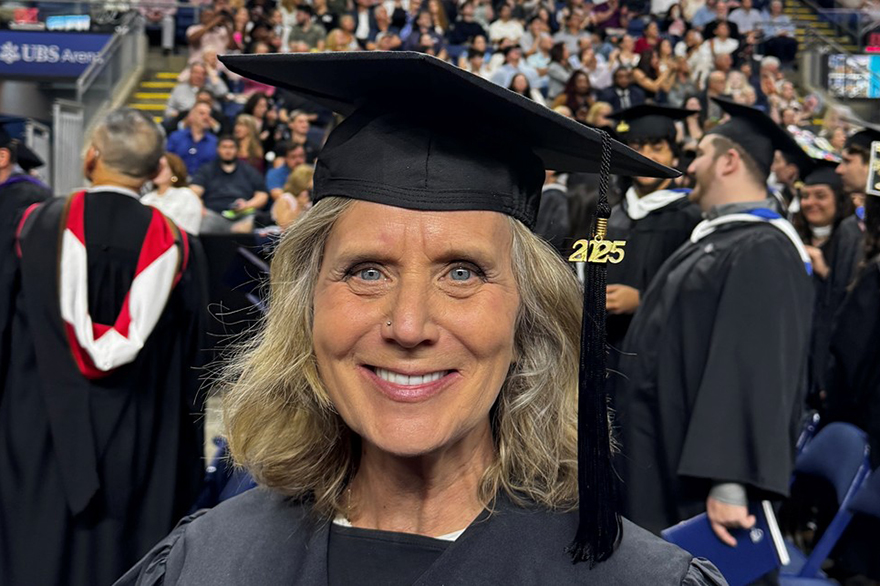
At the Western Connecticut State University graduation ceremony this past May, Andrea McLaughlin, 64, crossed the stage with a triumphant grin, accepting her hard-earned Master of Fine Arts diploma. Only two years earlier, Andrea had boldly enrolled, inspired by a little-known perk: Connecticut residents aged 62 and older can attend classes tuition-free at several state universities, including a network of 12 community technical colleges.
Other states like California, Delaware, Louisiana, and New Jersey have similar programs, inviting seniors to pursue new passions or finish old dreams without worrying about tuition costs. Many states also open their classroom doors to older adults as auditors, creating a vibrant mix of ages and experiences—proof that it’s never too late to go back to school.
“The senior waiver program was the overwhelming reason I returned to school to get my MFA. It made the program very affordable, saving me over $30,000. I was welcomed by professors and fellow students, and I felt that my life experiences added to the dynamics of our group. I learned so much, and this experience has led me to my third career at 65. I am now a professional painter, showing my work in galleries and considering teaching—specifically marginalized adults. I would recommend this to anyone looking to learn something new or explore a passion that they never had time for,” says McLaughlin.
Don’t Want a Degree? Keep Learning Anyway!
While most seniors may not have the time—or passion—to earn a full degree, there are several ways to continue learning.
Zachary Schulz, PhD, a senior lecturer at Auburn University with a background in public health (MPH in Policy and Promotion) and adult education (EdS), is very passionate about the ‘why’ behind lifelong learning. “For older adults, learning something new—whether it’s a skill, a language, or a hobby—is more than fun; it keeps the brain active, boosts mood, and strengthens community ties,” he says.
In his work with dementia patients, he emphasizes that learning is nothing short of preventative medicine. “It helps with daily structure and purpose and keeps the mind sharp. It also helps with loneliness, especially if one has lost a spouse. You may take a watercolor class and end up with new friendships.”
Learn…or Teach
OLLI, or the Osher Lifelong Learning Institute, is a national program providing non-credit courses and educational activities for adults, primarily those aged 50 and over. These programs are offered at universities and colleges across the United States and are supported in part by The Bernard Osher Foundation.
Kathleen Jordan, who does curriculum planning for OLLI at the University of South Carolina, Beaufort, notes that members range in age from the 50s and above. “Many are retired but are regenerated by the many courses offered,” Jordan says. OLLI at USCB’s classes include Art & Culture, Dance, Music, Writing, Local Ecology, and Local History, among others.
“These classes continue to provide many opportunities to expand our minds and our social interaction with participants of different ages and backgrounds,” says Jordan. “Our OLLI classes often inspire our participants to use their past experiences and expertise to commune with other OLLI members to recommend new courses with their common interests.”
University Clubs
University clubs around the country may offer educational and social programs for seniors. In Orlando, The University Club of Winter Park (https://uclubwp.org/), started in 1934, offers fee-based memberships for activities that range from Tai Chi to free performances by Orlando Opera.
“It’s great for camaraderie and continued lifelong learning, and we offer a number of lectures by experts, like our local beekeeper,” says Jeannie Schiff, the club’s president. Other activities include French language classes, film screenings, and Mah Jong.
Members join for intellectual engagement, service, and fellowship, pursuing educational, artistic, scientific, philanthropic, literary, and historical interests. The University Club hosts social and cultural activities year-round, including meals, discussion groups, and games.
Try the Library
Auburn University’s Schulz suggests that libraries, YMCAs, local church parishes, Elks Clubs, community, and senior centers can be low-cost venues for classes. For example, the New York Public Library (NYPL) offers Creative Aging classes in pursuits such as chess and the ukulele.
“Learning doesn’t have to be in a classroom. You can even start a knitting circle in your home with friends,” says Schulz. “It can also be really rewarding to pass on a skill and give back to the community. I am a trained fencer, and I love to do demos at Big Sisters and Big Brothers gatherings. I enjoy teaching them something new. It’s really rewarding.”
Tips for Starting Out
- Consider volunteering to moderate a Senior Planet Community group—online or in person.
- Change your perspective; think of an activity as fun, not work.
- Start small; it doesn’t have to be ‘learn the piano’—it can be ‘take one yoga class.’
- Keep it close to home. The longer you travel, the harder it will be to stay involved.
- Consider the time and expense.
PHOTO: Andrea McLaughlin

Jennifer Juergens Thomas has a lifelong interest in how people get together. As a former AP reporter, she covered feature stories and later wrote about conventions from Anaheim to New Zealand as editor of Meetings and Conventions magazine. She was a public relations consultant for clients like the Society of Incentive and Travel Executives, focusing on how and why people need to get together. An Orlando resident, she continues to contribute to Meetings Today magazine among other ventures.
Think you’re too old to go back to school? Think again! Here are just a few ways to expand your horizons, share your knowledge…and get social!
Tuition-Free College Courses
At the Western Connecticut State University graduation ceremony this past May, Andrea McLaughlin, 64, crossed the stage with a triumphant grin, accepting her hard-earned Master of Fine Arts diploma. Only two years earlier, Andrea had boldly enrolled, inspired by a little-known perk: Connecticut residents aged 62 and older can attend classes tuition-free at several state universities, including a network of 12 community technical colleges.
Other states like California, Delaware, Louisiana, and New Jersey have similar programs, inviting seniors to pursue new passions or finish old dreams without worrying about tuition costs. Many states also open their classroom doors to older adults as auditors, creating a vibrant mix of ages and experiences—proof that it’s never too late to go back to school.
“The senior waiver program was the overwhelming reason I returned to school to get my MFA. It made the program very affordable, saving me over $30,000. I was welcomed by professors and fellow students, and I felt that my life experiences added to the dynamics of our group. I learned so much, and this experience has led me to my third career at 65. I am now a professional painter, showing my work in galleries and considering teaching—specifically marginalized adults. I would recommend this to anyone looking to learn something new or explore a passion that they never had time for,” says McLaughlin.
Don’t Want a Degree? Keep Learning Anyway!
While most seniors may not have the time—or passion—to earn a full degree, there are several ways to continue learning.
Zachary Schulz, PhD, a senior lecturer at Auburn University with a background in public health (MPH in Policy and Promotion) and adult education (EdS), is very passionate about the ‘why’ behind lifelong learning. “For older adults, learning something new—whether it’s a skill, a language, or a hobby—is more than fun; it keeps the brain active, boosts mood, and strengthens community ties,” he says.
In his work with dementia patients, he emphasizes that learning is nothing short of preventative medicine. “It helps with daily structure and purpose and keeps the mind sharp. It also helps with loneliness, especially if one has lost a spouse. You may take a watercolor class and end up with new friendships.”
Learn…or Teach
OLLI, or the Osher Lifelong Learning Institute, is a national program providing non-credit courses and educational activities for adults, primarily those aged 50 and over. These programs are offered at universities and colleges across the United States and are supported in part by The Bernard Osher Foundation.
Kathleen Jordan, who does curriculum planning for OLLI at the University of South Carolina, Beaufort, notes that members range in age from the 50s and above. “Many are retired but are regenerated by the many courses offered,” Jordan says. OLLI at USCB’s classes include Art & Culture, Dance, Music, Writing, Local Ecology, and Local History, among others.
“These classes continue to provide many opportunities to expand our minds and our social interaction with participants of different ages and backgrounds,” says Jordan. “Our OLLI classes often inspire our participants to use their past experiences and expertise to commune with other OLLI members to recommend new courses with their common interests.”
University Clubs
University clubs around the country may offer educational and social programs for seniors. In Orlando, The University Club of Winter Park (https://uclubwp.org/), started in 1934, offers fee-based memberships for activities that range from Tai Chi to free performances by Orlando Opera.
“It’s great for camaraderie and continued lifelong learning, and we offer a number of lectures by experts, like our local beekeeper,” says Jeannie Schiff, the club’s president. Other activities include French language classes, film screenings, and Mah Jong.
Members join for intellectual engagement, service, and fellowship, pursuing educational, artistic, scientific, philanthropic, literary, and historical interests. The University Club hosts social and cultural activities year-round, including meals, discussion groups, and games.
Try the Library
Auburn University’s Schulz suggests that libraries, YMCAs, local church parishes, Elks Clubs, community, and senior centers can be low-cost venues for classes. For example, the New York Public Library (NYPL) offers Creative Aging classes in pursuits such as chess and the ukulele.
“Learning doesn’t have to be in a classroom. You can even start a knitting circle in your home with friends,” says Schulz. “It can also be really rewarding to pass on a skill and give back to the community. I am a trained fencer, and I love to do demos at Big Sisters and Big Brothers gatherings. I enjoy teaching them something new. It’s really rewarding.”
Tips for Starting Out
- Consider volunteering to moderate a Senior Planet Community group—online or in person.
- Change your perspective; think of an activity as fun, not work.
- Start small; it doesn’t have to be ‘learn the piano’—it can be ‘take one yoga class.’
- Keep it close to home. The longer you travel, the harder it will be to stay involved.
- Consider the time and expense.
PHOTO: Andrea McLaughlin
Jennifer Juergens Thomas has a lifelong interest in how people get together. As a former AP reporter, she covered feature stories and later wrote about conventions from Anaheim to New Zealand as editor of Meetings and Conventions magazine. She was a public relations consultant for clients like the Society of Incentive and Travel Executives, focusing on how and why people need to get together. An Orlando resident, she continues to contribute to Meetings Today magazine among other ventures.