Midair Collision at Reagan Airport Attributed to FAA’s Inaction on Safety Risks
The US Federal Aviation Administration (FAA) has come under scrutiny for its failure to adequately monitor and address safety risks in the airspace surrounding Washington, D.C. This oversight is part of a series of systemic failures that safety officials attribute to a tragic midair collision that occurred last year.
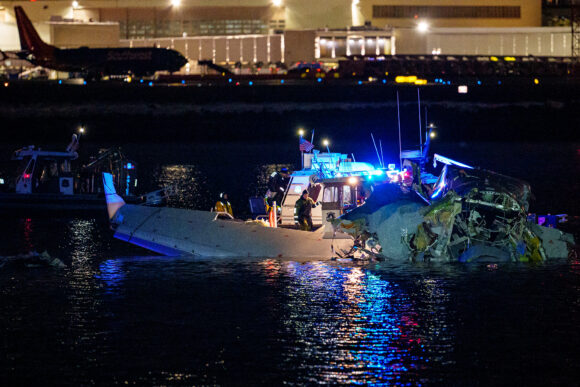
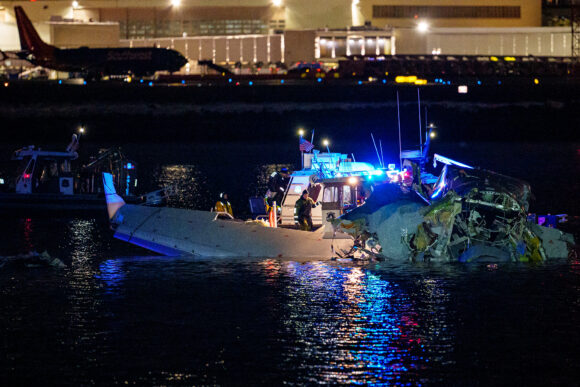
The National Transportation Safety Board (NTSB) is currently investigating the incident involving a US Army helicopter that collided with an American Airlines Group Inc. regional jet as it was attempting to land at Ronald Reagan Washington National Airport on January 29, 2025.
This accident marked the worst civil aviation disaster in the United States in over two decades, resulting in the deaths of three military personnel aboard the Sikorsky UH-60L helicopter and 64 individuals, including passengers and crew, on the commercial CRJ-700 airliner.
NTSB Chair Jennifer Homendy, along with board members Todd Inman and Michael Graham, stated during a recent meeting aimed at determining the probable cause of the collision that multiple errors and systemic failures contributed to this tragedy, rather than a single factor.
One significant failure identified was the helicopter route’s proximity to the runway approach path for Reagan airport. The NTSB also criticized air traffic control procedures, particularly the excessive reliance on “visual separation,” which allows pilots to maintain safe distances from other aircraft based on visual observation. The military helicopter crew had been authorized to use this technique on the night of the accident.
Furthermore, the NTSB noted that having a single air traffic controller managing both planes and helicopters in the airspace above Reagan airport that evening “degraded performance” due to an overwhelming workload. The US Army also failed to ensure that pilots were aware of conditions that could lead to inaccurate altitude readings, according to the agency.
While the NTSB voted on the probable cause and safety recommendations, the final report is expected to take several weeks to be published.
In response to the meeting, the FAA stated that it took immediate actions following last year’s crash, including restricting helicopter traffic near the airport. The agency also expressed its commitment to carefully consider the additional recommendations made by the NTSB.
The midair collision has reignited concerns regarding aviation safety and has garnered support for significant upgrades to the nation’s aging air traffic control system. During its investigation, the NTSB discovered thousands of previous instances where commercial aircraft and helicopters had come dangerously close to one another near Reagan airport.
US Admits Liability in Chopper-Jet Crash Over Potomac River
A working group formed after a near-miss incident in 2013 at the same location had previously recommended that the FAA remove or relocate the helicopter route utilized by the US Army Black Hawk last January. However, the agency opted not to adopt this recommendation at that time, as noted by NTSB investigator Brian Soper during the meeting.
Post-accident, the FAA evaluated other locations across the US that might be at risk for midair collisions. However, Homendy expressed dissatisfaction with the FAA’s efforts during a break in the meeting, citing concerns raised by commercial airlines regarding Burbank, California, and stating that “nobody at FAA is paying attention to us.”
In response to these concerns, the FAA recently announced a permanent reduction in the altitude for aircraft operating around Van Nuys Airport to ensure greater separation from planes arriving at the nearby Hollywood Burbank Airport.
Before the meeting, investigators revealed several findings, including that the helicopter involved in the crash was flying at an excessive altitude, dealing with faulty altitude data, and failing to broadcast its position using a technology known as ADS-B Out. While the NTSB concluded that the lack of ADS-B Out did not contribute to this specific accident, it acknowledged that risks could arise from military aircraft operating without it during training missions or non-sensitive operations.
In a bipartisan effort, Senate Commerce Committee Chair Ted Cruz and the committee’s top Democrat, Maria Cantwell, have introduced legislation aimed at tightening regulations that allow military aircraft to operate without ADS-B Out activated. The Senate passed the bill unanimously in December, but it has since stalled in the House.
In the wake of the accident, the Transportation Department’s Office of Inspector General has initiated an audit to evaluate the FAA’s management of the airspace around Reagan airport, as well as its policies and procedures regarding ADS-B Out exemptions.
At the conclusion of the meeting, Homendy reassured the families of the crash victims that “this was only the beginning,” emphasizing the importance of implementing the NTSB’s safety recommendations to prevent similar tragedies in the future.
Copyright 2026 Bloomberg.
Interested in Aerospace?
Get automatic alerts for this topic.
The US Federal Aviation Administration (FAA) has come under scrutiny for its failure to adequately monitor and address safety risks in the airspace surrounding Washington, D.C. This oversight is part of a series of systemic failures that safety officials attribute to a tragic midair collision that occurred last year.
The National Transportation Safety Board (NTSB) is currently investigating the incident involving a US Army helicopter that collided with an American Airlines Group Inc. regional jet as it was attempting to land at Ronald Reagan Washington National Airport on January 29, 2025.
This accident marked the worst civil aviation disaster in the United States in over two decades, resulting in the deaths of three military personnel aboard the Sikorsky UH-60L helicopter and 64 individuals, including passengers and crew, on the commercial CRJ-700 airliner.
NTSB Chair Jennifer Homendy, along with board members Todd Inman and Michael Graham, stated during a recent meeting aimed at determining the probable cause of the collision that multiple errors and systemic failures contributed to this tragedy, rather than a single factor.
One significant failure identified was the helicopter route’s proximity to the runway approach path for Reagan airport. The NTSB also criticized air traffic control procedures, particularly the excessive reliance on “visual separation,” which allows pilots to maintain safe distances from other aircraft based on visual observation. The military helicopter crew had been authorized to use this technique on the night of the accident.
Furthermore, the NTSB noted that having a single air traffic controller managing both planes and helicopters in the airspace above Reagan airport that evening “degraded performance” due to an overwhelming workload. The US Army also failed to ensure that pilots were aware of conditions that could lead to inaccurate altitude readings, according to the agency.
While the NTSB voted on the probable cause and safety recommendations, the final report is expected to take several weeks to be published.
In response to the meeting, the FAA stated that it took immediate actions following last year’s crash, including restricting helicopter traffic near the airport. The agency also expressed its commitment to carefully consider the additional recommendations made by the NTSB.
The midair collision has reignited concerns regarding aviation safety and has garnered support for significant upgrades to the nation’s aging air traffic control system. During its investigation, the NTSB discovered thousands of previous instances where commercial aircraft and helicopters had come dangerously close to one another near Reagan airport.
US Admits Liability in Chopper-Jet Crash Over Potomac River
A working group formed after a near-miss incident in 2013 at the same location had previously recommended that the FAA remove or relocate the helicopter route utilized by the US Army Black Hawk last January. However, the agency opted not to adopt this recommendation at that time, as noted by NTSB investigator Brian Soper during the meeting.
Post-accident, the FAA evaluated other locations across the US that might be at risk for midair collisions. However, Homendy expressed dissatisfaction with the FAA’s efforts during a break in the meeting, citing concerns raised by commercial airlines regarding Burbank, California, and stating that “nobody at FAA is paying attention to us.”
In response to these concerns, the FAA recently announced a permanent reduction in the altitude for aircraft operating around Van Nuys Airport to ensure greater separation from planes arriving at the nearby Hollywood Burbank Airport.
Before the meeting, investigators revealed several findings, including that the helicopter involved in the crash was flying at an excessive altitude, dealing with faulty altitude data, and failing to broadcast its position using a technology known as ADS-B Out. While the NTSB concluded that the lack of ADS-B Out did not contribute to this specific accident, it acknowledged that risks could arise from military aircraft operating without it during training missions or non-sensitive operations.
In a bipartisan effort, Senate Commerce Committee Chair Ted Cruz and the committee’s top Democrat, Maria Cantwell, have introduced legislation aimed at tightening regulations that allow military aircraft to operate without ADS-B Out activated. The Senate passed the bill unanimously in December, but it has since stalled in the House.
In the wake of the accident, the Transportation Department’s Office of Inspector General has initiated an audit to evaluate the FAA’s management of the airspace around Reagan airport, as well as its policies and procedures regarding ADS-B Out exemptions.
At the conclusion of the meeting, Homendy reassured the families of the crash victims that “this was only the beginning,” emphasizing the importance of implementing the NTSB’s safety recommendations to prevent similar tragedies in the future.
Copyright 2026 Bloomberg.
Interested in Aerospace?
Get automatic alerts for this topic.