Spotify to Drive 30% of Global Music Industry Revenue Growth by 2025
Check out what’s clicking on FoxBusiness.com.
Spotify announced on Wednesday that it now accounts for approximately one-third of the recorded music industry’s revenue, solidifying its status as the world’s largest music streaming service.
The company highlighted that it has made the largest single-year payout to the music industry by any retailer, with revenue doubling since 2017. “Today, Spotify accounts for roughly 30% of recorded music revenue,” stated Head of Music Charlie Hellman. “Last year, our payouts grew by more than 10%, while other industry income sources grew by closer to 4%, making Spotify the primary driver of industry revenue growth in 2025.”
Hellman noted that Spotify has paid out over $11 billion to the music industry, marking the largest annual payment ever from any retailer, bringing the total payouts to nearly $70 billion.
JOE JONAS’ FORMER LA HOME HITS THE MARKET FOR NEARLY $4M
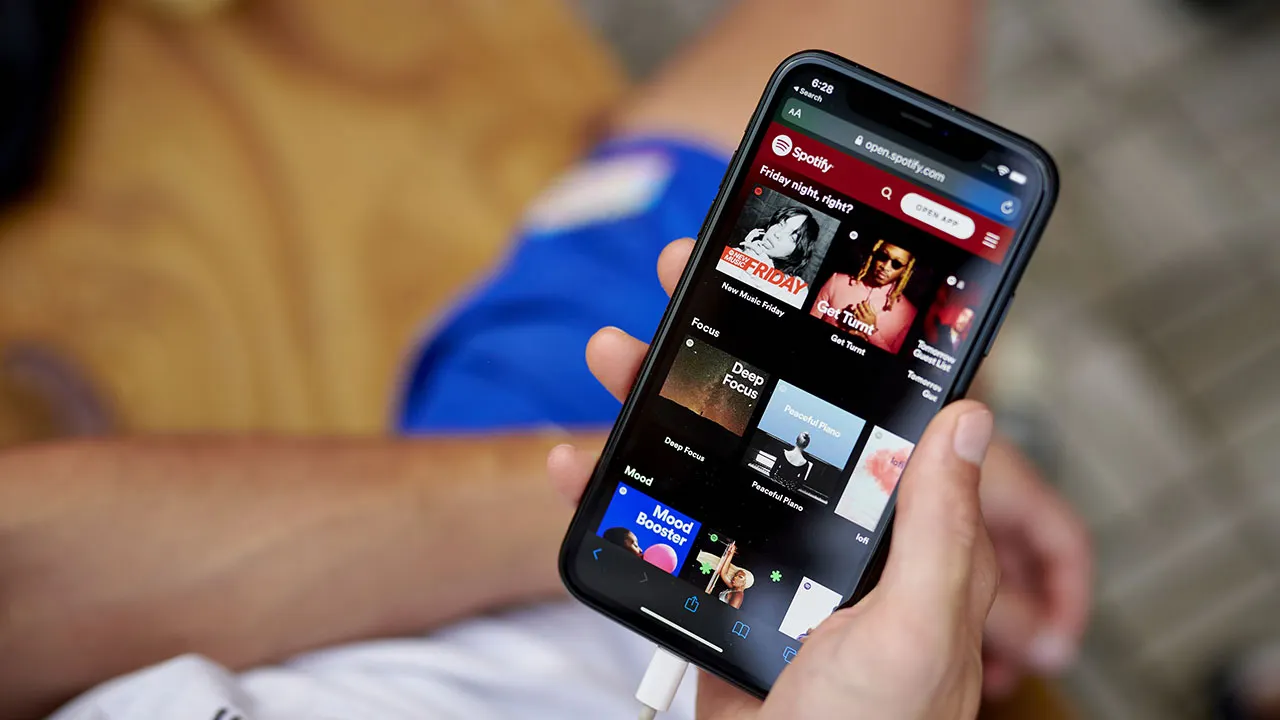
The Spotify website on a smartphone arranged in the Brooklyn borough of New York, US, on Friday, July 22, 2022. (Gabby Jones/Bloomberg via Getty Images / Getty Images)
This historic milestone has enabled more artists to earn six figures annually from Spotify alone, with independent artists and labels accounting for half of all royalties. In his announcement, Hellman also outlined new focus areas and products, including initiatives to enhance discoverability in a saturated market, combat AI exploitation against artists, and generate ticket sales for live performances.
| Ticker | Security | Last | Change | Change % |
|---|---|---|---|---|
| SPOT | SPOTIFY TECHNOLOGY SA | 511.60 | -1.29 | -0.25% |
“Our number one priority is to help more new music and new artists cut through the noise and form real connections with fans,” Hellman remarked. “With over 100,000 new songs released daily, competing against the entire history of recorded music, emerging artists face an unprecedented challenge in building the early fanbase every successful career needs.”
THE WEEKND’S NYC PENTHOUSE, WHERE HE ONCE LIVED WITH MODEL BELLA HADID, HITS MARKET FOR $35M

Spotify’s Charlie Hellman speaks onstage during Spotify Investor Day at Spring Studios on March 15, 2018, in New York City. (Ilya S. Savenok/Getty Images for Spotify / Getty Images)
To safeguard artists’ identities amid a surge in AI-generated content, Spotify announced plans to update its verification and song credit systems. “AI is being exploited by bad actors to flood streaming services with low-quality slop to game the system and attempt to divert royalties away from authentic artists,” Hellman explained. “We’re going to introduce changes to the systems for artist verification, song credits, and protecting artist identity.”

A musician and sound engineer mixing a new album inside a boutique recording studio. (iStock / iStock)
GET FOX BUSINESS ON THE GO BY CLICKING HERE
Additionally, the music platform is set to launch SongDNA, allowing fans to see who worked on a song; roll out new tools aimed at converting listeners into ticket buyers; and introduce human music editors to balance algorithmic playlist recommendations.
Check out what’s clicking on FoxBusiness.com.
Spotify announced on Wednesday that it now accounts for approximately one-third of the recorded music industry’s revenue, solidifying its status as the world’s largest music streaming service.
The company highlighted that it has made the largest single-year payout to the music industry by any retailer, with revenue doubling since 2017. “Today, Spotify accounts for roughly 30% of recorded music revenue,” stated Head of Music Charlie Hellman. “Last year, our payouts grew by more than 10%, while other industry income sources grew by closer to 4%, making Spotify the primary driver of industry revenue growth in 2025.”
Hellman noted that Spotify has paid out over $11 billion to the music industry, marking the largest annual payment ever from any retailer, bringing the total payouts to nearly $70 billion.
JOE JONAS’ FORMER LA HOME HITS THE MARKET FOR NEARLY $4M
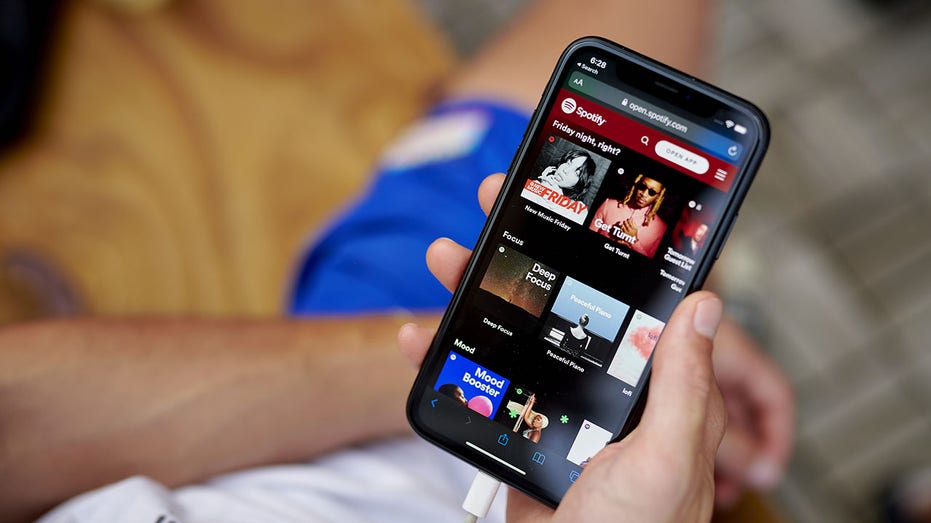
The Spotify website on a smartphone arranged in the Brooklyn borough of New York, US, on Friday, July 22, 2022. (Gabby Jones/Bloomberg via Getty Images / Getty Images)
This historic milestone has enabled more artists to earn six figures annually from Spotify alone, with independent artists and labels accounting for half of all royalties. In his announcement, Hellman also outlined new focus areas and products, including initiatives to enhance discoverability in a saturated market, combat AI exploitation against artists, and generate ticket sales for live performances.
| Ticker | Security | Last | Change | Change % |
|---|---|---|---|---|
| SPOT | SPOTIFY TECHNOLOGY SA | 511.60 | -1.29 | -0.25% |
“Our number one priority is to help more new music and new artists cut through the noise and form real connections with fans,” Hellman remarked. “With over 100,000 new songs released daily, competing against the entire history of recorded music, emerging artists face an unprecedented challenge in building the early fanbase every successful career needs.”
THE WEEKND’S NYC PENTHOUSE, WHERE HE ONCE LIVED WITH MODEL BELLA HADID, HITS MARKET FOR $35M
Spotify’s Charlie Hellman speaks onstage during Spotify Investor Day at Spring Studios on March 15, 2018, in New York City. (Ilya S. Savenok/Getty Images for Spotify / Getty Images)
To safeguard artists’ identities amid a surge in AI-generated content, Spotify announced plans to update its verification and song credit systems. “AI is being exploited by bad actors to flood streaming services with low-quality slop to game the system and attempt to divert royalties away from authentic artists,” Hellman explained. “We’re going to introduce changes to the systems for artist verification, song credits, and protecting artist identity.”
A musician and sound engineer mixing a new album inside a boutique recording studio. (iStock / iStock)
GET FOX BUSINESS ON THE GO BY CLICKING HERE
Additionally, the music platform is set to launch SongDNA, allowing fans to see who worked on a song; roll out new tools aimed at converting listeners into ticket buyers; and introduce human music editors to balance algorithmic playlist recommendations.