WTW Study Reveals Flood Losses in Southeast Asia Expected to Increase Tenfold
Losses associated with flooding in Southeast Asia are projected to increase dramatically, potentially reaching up to ten times current figures in the coming years. This alarming forecast is attributed to the rise of extreme weather events, as reported by Willis Towers Watson Plc.
Recent assessments indicate that significant flooding events in the region could lead to economic losses exceeding $10 billion. This marks a stark contrast to the $1 to $2 billion range that has been typical over the past decade. These findings are detailed in the Natural Catastrophe Review 2026 published by the insurance broker.
According to Srivatsan Vijayaraghavan, a senior research fellow at the National University of Singapore, and Daniel Bannister, the weather and climate risks research lead at Willis Research Network, “Warmer oceans, shifting formation zones, and greater track sensitivity mean that past patterns are becoming less reliable guides to future risk.”
The end of last year witnessed three tropical cyclones wreaking havoc from Sri Lanka to Indonesia, resulting in over 1,300 fatalities and at least $20 billion in damages. Countries in Southeast Asia are consistently ranked among the most vulnerable to such disasters, with the Philippines, Myanmar, and Vietnam identified as some of the top ten nations most affected by climate change in 2024, according to Germanwatch, an independent human rights organization.
“Risk-layered disaster financing, which combines public, private, and parametric solutions, is becoming essential for safeguarding long-term resilience,” stated Christopher Au, head of the APAC Climate Risk Centre at WTW. “These strategies can help reduce volatility, support faster recovery, and strengthen financial stability across Southeast Asia’s most disaster-prone economies.”
Following the devastation caused by Super Typhoon Yagi in 2024, researchers at the National University of Singapore conducted climate sensitivity tests. Their findings revealed that warming oceans are likely to intensify storms, with even minor temperature fluctuations capable of drastically altering storm trajectories, as noted in the WTW report.
While climate change is recognized as a significant factor exacerbating the impact of recent floods, scientists and analysts have cautioned that issues such as deforestation, inadequate flood defenses, and insufficient funding for disaster resilience further amplify the damages incurred.
In additional findings, the WTW report highlighted that natural catastrophes resulted in over $100 billion in insured losses in 2025. This figure represents a decrease of $40 billion compared to 2024, primarily due to the absence of hurricanes making landfall in the United States. Nevertheless, last year marked the sixth occasion in which catastrophe losses surpassed the $100 billion threshold.
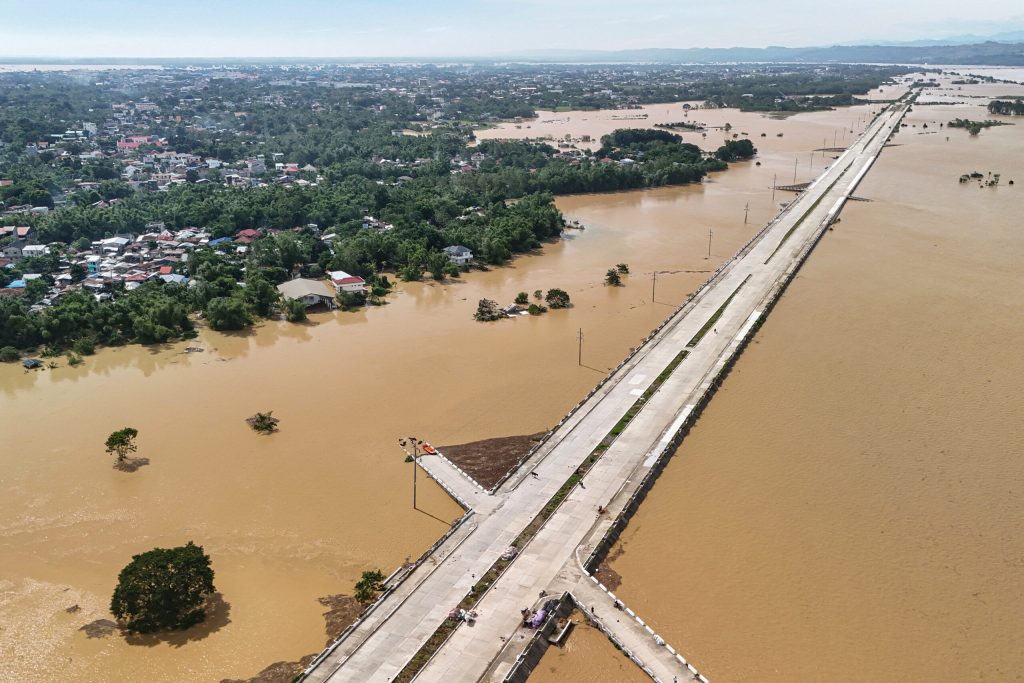
Photograph: Flooding in the Philippines. Photo credit: John Dimain/Getty Images
Related:
Copyright 2026 Bloomberg.
Topics
Profit Loss
Flood
Interested in Flood?
Get automatic alerts for this topic.
Losses associated with flooding in Southeast Asia are projected to increase dramatically, potentially reaching up to ten times current figures in the coming years. This alarming forecast is attributed to the rise of extreme weather events, as reported by Willis Towers Watson Plc.
Recent assessments indicate that significant flooding events in the region could lead to economic losses exceeding $10 billion. This marks a stark contrast to the $1 to $2 billion range that has been typical over the past decade. These findings are detailed in the Natural Catastrophe Review 2026 published by the insurance broker.
According to Srivatsan Vijayaraghavan, a senior research fellow at the National University of Singapore, and Daniel Bannister, the weather and climate risks research lead at Willis Research Network, “Warmer oceans, shifting formation zones, and greater track sensitivity mean that past patterns are becoming less reliable guides to future risk.”
The end of last year witnessed three tropical cyclones wreaking havoc from Sri Lanka to Indonesia, resulting in over 1,300 fatalities and at least $20 billion in damages. Countries in Southeast Asia are consistently ranked among the most vulnerable to such disasters, with the Philippines, Myanmar, and Vietnam identified as some of the top ten nations most affected by climate change in 2024, according to Germanwatch, an independent human rights organization.
“Risk-layered disaster financing, which combines public, private, and parametric solutions, is becoming essential for safeguarding long-term resilience,” stated Christopher Au, head of the APAC Climate Risk Centre at WTW. “These strategies can help reduce volatility, support faster recovery, and strengthen financial stability across Southeast Asia’s most disaster-prone economies.”
Following the devastation caused by Super Typhoon Yagi in 2024, researchers at the National University of Singapore conducted climate sensitivity tests. Their findings revealed that warming oceans are likely to intensify storms, with even minor temperature fluctuations capable of drastically altering storm trajectories, as noted in the WTW report.
While climate change is recognized as a significant factor exacerbating the impact of recent floods, scientists and analysts have cautioned that issues such as deforestation, inadequate flood defenses, and insufficient funding for disaster resilience further amplify the damages incurred.
In additional findings, the WTW report highlighted that natural catastrophes resulted in over $100 billion in insured losses in 2025. This figure represents a decrease of $40 billion compared to 2024, primarily due to the absence of hurricanes making landfall in the United States. Nevertheless, last year marked the sixth occasion in which catastrophe losses surpassed the $100 billion threshold.
Photograph: Flooding in the Philippines. Photo credit: John Dimain/Getty Images
Related:
Copyright 2026 Bloomberg.
Topics
Profit Loss
Flood
Interested in Flood?
Get automatic alerts for this topic.