US to Transfer Seized Tanker to Venezuela, According to Officials

The United States has been engaged in a prolonged initiative to seize oil tankers associated with Venezuela, successfully apprehending seven vessels since late last year. This operation highlights the ongoing tensions surrounding Venezuela’s oil industry and the U.S. government’s efforts to exert control over it.
Officials, who requested anonymity, have confirmed that the vessel recently handed over to Venezuelan authorities is the Panama-flagged supertanker M/T Sophia. However, the reasons behind the tanker’s return remain undisclosed.
Many of the tankers linked to Venezuela, including those under Western sanctions or part of the so-called shadow fleet, were constructed over 20 years ago. Experts warn that these aging vessels pose significant hazards to shipping due to their lack of safety certification and inadequate insurance.
The U.S. Coast Guard, which oversees interdiction and seizure operations, has not yet responded to requests for comment regarding the ongoing situation. Similarly, the Venezuelan communications ministry, responsible for handling all press inquiries for the government, has also remained silent.
The M/T Sophia was carrying oil when it was intercepted on January 7 by the Coast Guard and U.S. military forces. At that time, the administration described the Sophia as a “stateless, sanctioned dark fleet motor tanker,” emphasizing its controversial status.
One source involved in the operation was uncertain whether the Sophia still contained oil on board, raising questions about the vessel’s current condition and contents.
Former President Trump has directed his foreign policy in Latin America towards Venezuela, initially aiming to oust President Nicolas Maduro from power. After diplomatic efforts failed, Trump ordered U.S. forces to conduct a daring overnight raid on January 3 to capture Maduro and his wife.
Since then, Trump has articulated plans for the U.S. to control Venezuela’s oil resources indefinitely, with ambitions to revitalize the country’s deteriorating oil industry through a proposed $100 billion investment.
Earlier this month, the M/T Sophia and another seized tanker were spotted near Puerto Rico, indicating ongoing U.S. operations in the region.
Many of the Venezuela-linked tankers seized are not only under Western sanctions but also lack the necessary safety certifications and insurance, posing risks to maritime safety.
In the event of a collision or oil spill, establishing insurance claims or liability becomes exceedingly challenging, if not impossible, according to sources from the shipping and insurance industries.
In a related development, Dubai-based GMS has applied for a U.S. license to purchase and dismantle ships seized by the U.S. government that are linked to Venezuelan oil trading.
(Reporting by Idrees Ali and Phil Stewart; editing by Chris Reese, Rod Nickel, and Cynthia Osterman)
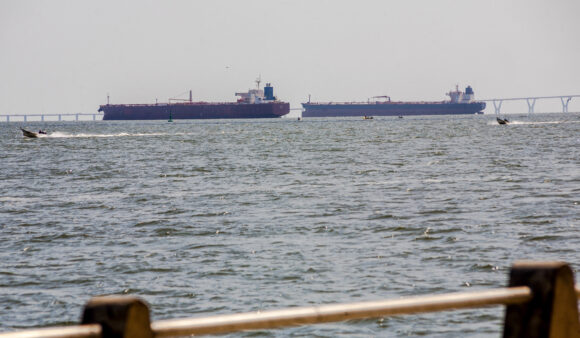
Photograph: Two crude oil tankers near Maracaibo, Zulia state, Venezuela. Photo credit: Alejandro Paredes/AFP/Getty Images
Related:
The United States has been engaged in a prolonged initiative to seize oil tankers associated with Venezuela, successfully apprehending seven vessels since late last year. This operation highlights the ongoing tensions surrounding Venezuela’s oil industry and the U.S. government’s efforts to exert control over it.
Officials, who requested anonymity, have confirmed that the vessel recently handed over to Venezuelan authorities is the Panama-flagged supertanker M/T Sophia. However, the reasons behind the tanker’s return remain undisclosed.
Many of the tankers linked to Venezuela, including those under Western sanctions or part of the so-called shadow fleet, were constructed over 20 years ago. Experts warn that these aging vessels pose significant hazards to shipping due to their lack of safety certification and inadequate insurance.
The U.S. Coast Guard, which oversees interdiction and seizure operations, has not yet responded to requests for comment regarding the ongoing situation. Similarly, the Venezuelan communications ministry, responsible for handling all press inquiries for the government, has also remained silent.
The M/T Sophia was carrying oil when it was intercepted on January 7 by the Coast Guard and U.S. military forces. At that time, the administration described the Sophia as a “stateless, sanctioned dark fleet motor tanker,” emphasizing its controversial status.
One source involved in the operation was uncertain whether the Sophia still contained oil on board, raising questions about the vessel’s current condition and contents.
Former President Trump has directed his foreign policy in Latin America towards Venezuela, initially aiming to oust President Nicolas Maduro from power. After diplomatic efforts failed, Trump ordered U.S. forces to conduct a daring overnight raid on January 3 to capture Maduro and his wife.
Since then, Trump has articulated plans for the U.S. to control Venezuela’s oil resources indefinitely, with ambitions to revitalize the country’s deteriorating oil industry through a proposed $100 billion investment.
Earlier this month, the M/T Sophia and another seized tanker were spotted near Puerto Rico, indicating ongoing U.S. operations in the region.
Many of the Venezuela-linked tankers seized are not only under Western sanctions but also lack the necessary safety certifications and insurance, posing risks to maritime safety.
In the event of a collision or oil spill, establishing insurance claims or liability becomes exceedingly challenging, if not impossible, according to sources from the shipping and insurance industries.
In a related development, Dubai-based GMS has applied for a U.S. license to purchase and dismantle ships seized by the U.S. government that are linked to Venezuelan oil trading.
(Reporting by Idrees Ali and Phil Stewart; editing by Chris Reese, Rod Nickel, and Cynthia Osterman)
Photograph: Two crude oil tankers near Maracaibo, Zulia state, Venezuela. Photo credit: Alejandro Paredes/AFP/Getty Images
Related: