New Prospects for Private Flood Insurers Amid NFIP’s Upcoming Lapse
The clock is ticking once again on the National Flood Insurance Program (NFIP). This crucial program, part of the federal funding package, is set to expire at midnight on January 30. If Congress fails to reach a compromise on several key issues, particularly funding for the Department of Homeland Security, the NFIP will be among several agencies facing a lapse.
 A lapse in the program would halt the sale and renewal of new federal flood insurance policies. While the Federal Emergency Management Agency (FEMA), which administers the NFIP, will still process claims using available funds, the implications for homeowners could be severe.
The NFIP was reauthorized until the end of this month following a 43-day government shutdown that ended in mid-November 2025. Fortunately, reports suggest that bipartisan discussions are underway, with both Republicans and Democrats potentially moving toward a budget deal that would reauthorize the NFIP once again. Since 2017, the program has been reauthorized over 30 times. Its most recent reauthorization came in March 2025, shortly after FEMA borrowed $2 billion from the U.S. Treasury to cover claims from hurricanes Helene and Milton in 2024. At that time, FEMA noted that losses from these hurricanes had depleted the NFIP’s funds generated from premiums.
Related: FEMA to Borrow $2B to Pay Flood Claims After Hurricanes Helene and Milton
Before the government shutdown last October, various organizations representing the insurance industry urged Congress to take action on the NFIP, advocating for a longer-term reauthorization. “Americans deserve certainty and stability in the flood insurance marketplace so that they can protect their homes, businesses, and loved ones,” the organizations stated in a letter to congressional leaders. Signatories included the American Property Casualty Insurance Association, National Association of Mutual Insurance Companies, and several others.
The Private Insurance Option
Following the October shutdown, AM Best, an insurance industry rating agency, identified an opportunity for private flood insurers. Currently, the NFIP holds approximately 4.7 million policies covering residential properties, amounting to about $1.3 trillion in coverage. Advances in rating plans and analytics have enabled private insurers to underwrite risks more effectively. A decade ago, private insurers accounted for about 13% of the market; by 2024, that share had risen to around 27%, often with better loss ratios than the NFIP.

Trevor Burgess, CEO of Neptune Flood, shared insights with Insurance Journal about how the last NFIP lapse allowed Neptune to meet the needs of the American public. “It also provided an opportunity for us to onboard agents who had never considered alternatives to the NFIP,” he noted, emphasizing that agents require no specialized training to offer private flood insurance.
Burgess highlighted the rapid evolution of the private flood insurance marketplace. Until recently, banks could not accept private flood insurance as an alternative to the NFIP, which is mandatory for homeowners in designated flood zones with mortgages. According to the National Association of Realtors (NAR), about 1,400 property sales daily are affected if the NFIP lapses.
“Agents who previously relied solely on the NFIP are now questioning its reliability,” Burgess stated. The last shutdown could have further benefited private flood insurers, but banking regulators waived the requirement for flood insurance during hurricane season. Homeowners were expected to secure insurance once the NFIP reopened, but enforcement fell to banks, often after property closings.
“The market has evolved enough that private flood is ready, willing, and able to fill the gap,” Burgess asserted. Neptune processes 20,000 quotes daily, achieving a 95% pricing success rate. With over 275,000 customers, Neptune utilizes artificial intelligence for underwriting, eliminating the need for human underwriters. The company offers better policy terms, including temporary living expenses, with limits reaching up to $7 million, far exceeding the NFIP’s $250,000 cap.
“Every quote undergoes our algorithms for risk selection and pricing,” Burgess explained. “We’re not limited to low-risk areas; we operate in high-risk flood zones across the country.” He claims that consumers save money with Neptune 65% of the time, while 30% find Neptune policies more expensive, and the remainder may not qualify.
Related: Americans Are Moving Out of Flood-Prone Neighborhoods
A View From Both Sides
Mark Damico, president and COO of Torrent Technologies, which supports NFIP carriers and offers private flood insurance, noted a significant shift from NFIP to private insurance. “This trend has been ongoing, but we observed an acceleration during the last lapse,” he remarked.

Damico explained that Torrent prepares for potential shutdowns by billing out 90 days in advance and placing pending applications in “hiatus mode.” When the program reopens, there’s often a rush for applications. “We ensure agents know that private options remain available, and we’ve seen an increase in sales,” he added.
Agents play a crucial role in consumer behavior, with some excelling at providing alternative risk management. However, many still prefer the familiarity of the NFIP, despite its complexities. “Selling NFIP can be cumbersome for agents,” Damico noted, highlighting the differences in product offerings, such as living expenses and coverage for basement contents.
Damico also pointed out that private insurance can be more cost-effective 60% of the time, with new players entering the market and traditional providers increasing capacity. Creativity in product offerings is becoming a competitive advantage for the private sector. Torrent has introduced a new product designed to meet consumer needs with lower costs and limits.
“The risk is increasing, not decreasing,” Damico warned, citing the rise in inland flooding due to climate change. Currently, 96% of homes in the U.S. lack flood coverage, underscoring the urgent need to close the flood insurance gap and better protect homeowners.
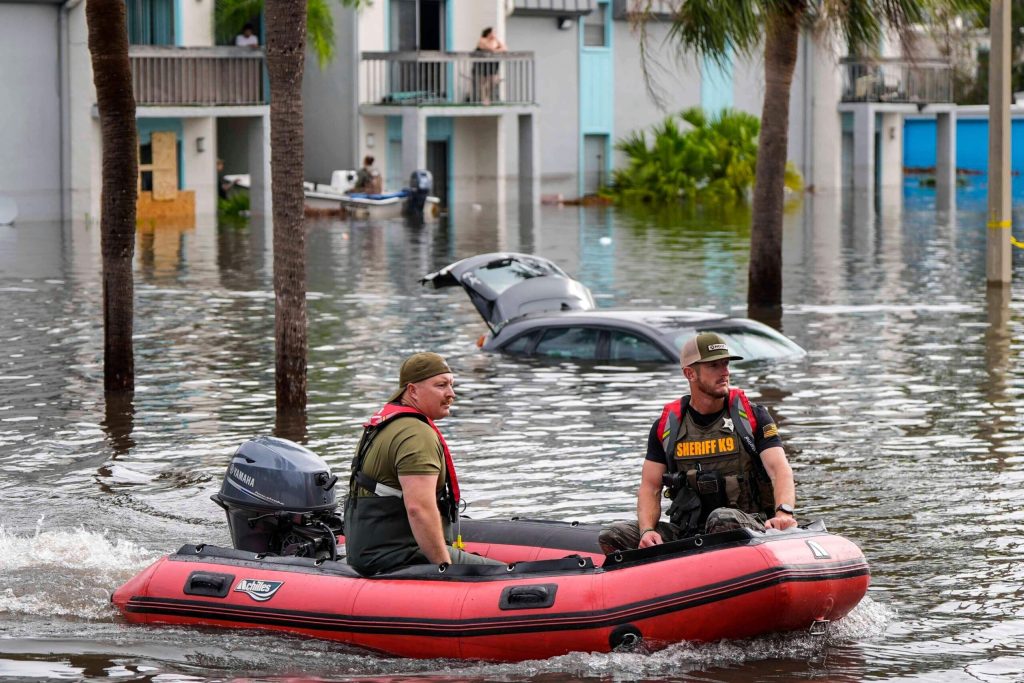
Photo: A water rescue boat moves in floodwaters at an apartment complex in the aftermath of Hurricane Milton, Oct. 10, 2024, in Clearwater, Fla. (AP Photo/Mike Stewart, File)
The clock is ticking once again on the National Flood Insurance Program (NFIP). This crucial program, part of the federal funding package, is set to expire at midnight on January 30. If Congress fails to reach a compromise on several key issues, particularly funding for the Department of Homeland Security, the NFIP will be among several agencies facing a lapse.
A lapse in the program would halt the sale and renewal of new federal flood insurance policies. While the Federal Emergency Management Agency (FEMA), which administers the NFIP, will still process claims using available funds, the implications for homeowners could be severe.
The NFIP was reauthorized until the end of this month following a 43-day government shutdown that ended in mid-November 2025. Fortunately, reports suggest that bipartisan discussions are underway, with both Republicans and Democrats potentially moving toward a budget deal that would reauthorize the NFIP once again. Since 2017, the program has been reauthorized over 30 times. Its most recent reauthorization came in March 2025, shortly after FEMA borrowed $2 billion from the U.S. Treasury to cover claims from hurricanes Helene and Milton in 2024. At that time, FEMA noted that losses from these hurricanes had depleted the NFIP’s funds generated from premiums.
Related: FEMA to Borrow $2B to Pay Flood Claims After Hurricanes Helene and Milton
Before the government shutdown last October, various organizations representing the insurance industry urged Congress to take action on the NFIP, advocating for a longer-term reauthorization. “Americans deserve certainty and stability in the flood insurance marketplace so that they can protect their homes, businesses, and loved ones,” the organizations stated in a letter to congressional leaders. Signatories included the American Property Casualty Insurance Association, National Association of Mutual Insurance Companies, and several others.
The Private Insurance Option
Following the October shutdown, AM Best, an insurance industry rating agency, identified an opportunity for private flood insurers. Currently, the NFIP holds approximately 4.7 million policies covering residential properties, amounting to about $1.3 trillion in coverage. Advances in rating plans and analytics have enabled private insurers to underwrite risks more effectively. A decade ago, private insurers accounted for about 13% of the market; by 2024, that share had risen to around 27%, often with better loss ratios than the NFIP.
Trevor Burgess, CEO of Neptune Flood, shared insights with Insurance Journal about how the last NFIP lapse allowed Neptune to meet the needs of the American public. “It also provided an opportunity for us to onboard agents who had never considered alternatives to the NFIP,” he noted, emphasizing that agents require no specialized training to offer private flood insurance.
Burgess highlighted the rapid evolution of the private flood insurance marketplace. Until recently, banks could not accept private flood insurance as an alternative to the NFIP, which is mandatory for homeowners in designated flood zones with mortgages. According to the National Association of Realtors (NAR), about 1,400 property sales daily are affected if the NFIP lapses.
“Agents who previously relied solely on the NFIP are now questioning its reliability,” Burgess stated. The last shutdown could have further benefited private flood insurers, but banking regulators waived the requirement for flood insurance during hurricane season. Homeowners were expected to secure insurance once the NFIP reopened, but enforcement fell to banks, often after property closings.
“The market has evolved enough that private flood is ready, willing, and able to fill the gap,” Burgess asserted. Neptune processes 20,000 quotes daily, achieving a 95% pricing success rate. With over 275,000 customers, Neptune utilizes artificial intelligence for underwriting, eliminating the need for human underwriters. The company offers better policy terms, including temporary living expenses, with limits reaching up to $7 million, far exceeding the NFIP’s $250,000 cap.
“Every quote undergoes our algorithms for risk selection and pricing,” Burgess explained. “We’re not limited to low-risk areas; we operate in high-risk flood zones across the country.” He claims that consumers save money with Neptune 65% of the time, while 30% find Neptune policies more expensive, and the remainder may not qualify.
Related: Americans Are Moving Out of Flood-Prone Neighborhoods
A View From Both Sides
Mark Damico, president and COO of Torrent Technologies, which supports NFIP carriers and offers private flood insurance, noted a significant shift from NFIP to private insurance. “This trend has been ongoing, but we observed an acceleration during the last lapse,” he remarked.
Damico explained that Torrent prepares for potential shutdowns by billing out 90 days in advance and placing pending applications in “hiatus mode.” When the program reopens, there’s often a rush for applications. “We ensure agents know that private options remain available, and we’ve seen an increase in sales,” he added.
Agents play a crucial role in consumer behavior, with some excelling at providing alternative risk management. However, many still prefer the familiarity of the NFIP, despite its complexities. “Selling NFIP can be cumbersome for agents,” Damico noted, highlighting the differences in product offerings, such as living expenses and coverage for basement contents.
Damico also pointed out that private insurance can be more cost-effective 60% of the time, with new players entering the market and traditional providers increasing capacity. Creativity in product offerings is becoming a competitive advantage for the private sector. Torrent has introduced a new product designed to meet consumer needs with lower costs and limits.
“The risk is increasing, not decreasing,” Damico warned, citing the rise in inland flooding due to climate change. Currently, 96% of homes in the U.S. lack flood coverage, underscoring the urgent need to close the flood insurance gap and better protect homeowners.
Photo: A water rescue boat moves in floodwaters at an apartment complex in the aftermath of Hurricane Milton, Oct. 10, 2024, in Clearwater, Fla. (AP Photo/Mike Stewart, File)