China Unveils $29 Billion Capital Boost for Major Insurers
China is considering the sale of hundreds of billions of yuan in special government bonds aimed at recapitalizing some of its largest insurers. This move is intended to strengthen the major players in a sector that is currently under pressure to consolidate.
The proposed bond sale is expected to raise approximately 200 billion yuan (around $29 billion) to support the recapitalization of these insurers. According to sources familiar with the matter, the proceeds will be directed towards state-controlled firms, including China Life Insurance Group Co., the People’s Insurance Co. Group of China Ltd., and China Taiping Insurance Group Co.
This initiative marks the first instance where Beijing has utilized special bonds to inject capital into insurers, a strategy previously reserved for bolstering large state-owned banks. An announcement regarding this plan could come as early as the first quarter of the year, as indicated by one of the sources.
Additionally, the government plans to infuse 300 billion yuan into Industrial and Commercial Bank of China Ltd. and Agricultural Bank of China Ltd. This follows a similar bond sale from the previous year that helped recapitalize several major state-owned lenders, including Bank of China Ltd. and Bank of Communications Co.
Neither the National Financial Regulatory Administration, PICC, Taiping, ICBC, nor AgriBank responded immediately to requests for comment, while China Life declined to provide any statements.
The proposal signifies an expansion in China’s approach to using special government debt to fortify its largest insurers. These firms are now expected to assist regulators in managing riskier smaller peers. Furthermore, this capital injection will bolster the financial standing of companies that were compelled to invest in stocks during Beijing’s efforts to stabilize the markets last year.
It is important to note that the plan is still under discussion and may undergo changes, according to the sources.
Recent reports indicate that more than two-thirds of the 173 insurers that disclosed third-quarter results experienced a decline in solvency ratios compared to the previous quarter. The profitability of the sector has been adversely affected by low interest rates and heightened competition.
While the leading state-backed insurers remain adequately capitalized, they are facing increasing pressure to enhance their stock holdings. This comes at a time when new accounting regulations amplify the effects of market volatility on profitability, compounded by falling interest rates that negatively impact investment returns. Insurers are currently preparing to report their capital requirement plans to the finance ministry.
Last year, the government indicated that it would guide state-backed large insurers to allocate 30% of new premiums into domestic shares, aiming to inject more long-term capital into the stock market. This suggests that these firms could contribute an estimated 1.2 trillion yuan in additional cash to the market over the next three years, according to a report from Guotai Junan Securities Co.
China’s benchmark CSI 300 Index has seen a rally over the past two calendar years following a three-year decline. Insurance stocks have also joined this upward trend, with China Life’s listed unit trading at around a 10-year high in Hong Kong, while China Taiping’s listed entity is nearing a seven-year high.
Chinese banks, including ICBC and AgriBank, have been grappling with declining profits in recent years, as Beijing’s push for low-cost lending to support the economy has pressured net interest margins. Although the top state banks maintain capital levels that exceed regulatory requirements, stronger buffers would enable them to extend more loans and enhance provisions for bad debt.
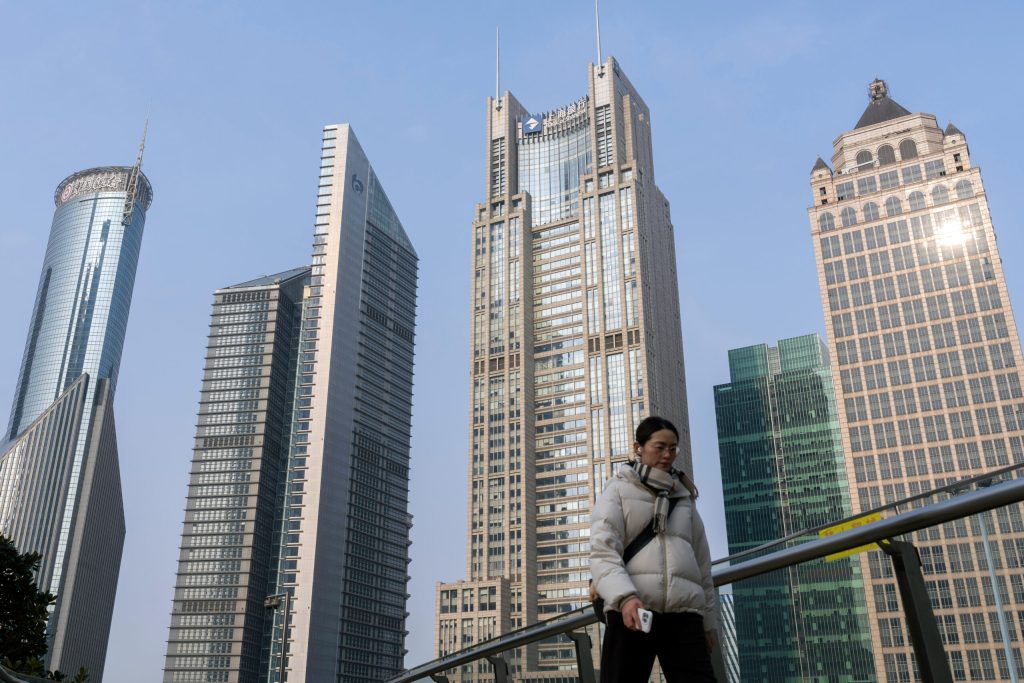
Photograph: A pedestrian in front of buildings in the Lujiazui financial district in Shanghai, China; photo credit: Raul Ariano/Bloomberg
Copyright 2026 Bloomberg.
Interested in Carriers?
Get automatic alerts for this topic.
China is considering the sale of hundreds of billions of yuan in special government bonds aimed at recapitalizing some of its largest insurers. This move is intended to strengthen the major players in a sector that is currently under pressure to consolidate.
The proposed bond sale is expected to raise approximately 200 billion yuan (around $29 billion) to support the recapitalization of these insurers. According to sources familiar with the matter, the proceeds will be directed towards state-controlled firms, including China Life Insurance Group Co., the People’s Insurance Co. Group of China Ltd., and China Taiping Insurance Group Co.
This initiative marks the first instance where Beijing has utilized special bonds to inject capital into insurers, a strategy previously reserved for bolstering large state-owned banks. An announcement regarding this plan could come as early as the first quarter of the year, as indicated by one of the sources.
Additionally, the government plans to infuse 300 billion yuan into Industrial and Commercial Bank of China Ltd. and Agricultural Bank of China Ltd. This follows a similar bond sale from the previous year that helped recapitalize several major state-owned lenders, including Bank of China Ltd. and Bank of Communications Co.
Neither the National Financial Regulatory Administration, PICC, Taiping, ICBC, nor AgriBank responded immediately to requests for comment, while China Life declined to provide any statements.
The proposal signifies an expansion in China’s approach to using special government debt to fortify its largest insurers. These firms are now expected to assist regulators in managing riskier smaller peers. Furthermore, this capital injection will bolster the financial standing of companies that were compelled to invest in stocks during Beijing’s efforts to stabilize the markets last year.
It is important to note that the plan is still under discussion and may undergo changes, according to the sources.
Recent reports indicate that more than two-thirds of the 173 insurers that disclosed third-quarter results experienced a decline in solvency ratios compared to the previous quarter. The profitability of the sector has been adversely affected by low interest rates and heightened competition.
While the leading state-backed insurers remain adequately capitalized, they are facing increasing pressure to enhance their stock holdings. This comes at a time when new accounting regulations amplify the effects of market volatility on profitability, compounded by falling interest rates that negatively impact investment returns. Insurers are currently preparing to report their capital requirement plans to the finance ministry.
Last year, the government indicated that it would guide state-backed large insurers to allocate 30% of new premiums into domestic shares, aiming to inject more long-term capital into the stock market. This suggests that these firms could contribute an estimated 1.2 trillion yuan in additional cash to the market over the next three years, according to a report from Guotai Junan Securities Co.
China’s benchmark CSI 300 Index has seen a rally over the past two calendar years following a three-year decline. Insurance stocks have also joined this upward trend, with China Life’s listed unit trading at around a 10-year high in Hong Kong, while China Taiping’s listed entity is nearing a seven-year high.
Chinese banks, including ICBC and AgriBank, have been grappling with declining profits in recent years, as Beijing’s push for low-cost lending to support the economy has pressured net interest margins. Although the top state banks maintain capital levels that exceed regulatory requirements, stronger buffers would enable them to extend more loans and enhance provisions for bad debt.
Photograph: A pedestrian in front of buildings in the Lujiazui financial district in Shanghai, China; photo credit: Raul Ariano/Bloomberg
Copyright 2026 Bloomberg.
Interested in Carriers?
Get automatic alerts for this topic.