Oregon Sees Decline in Workers’ Comp Claims for Disabled Workers in 2024
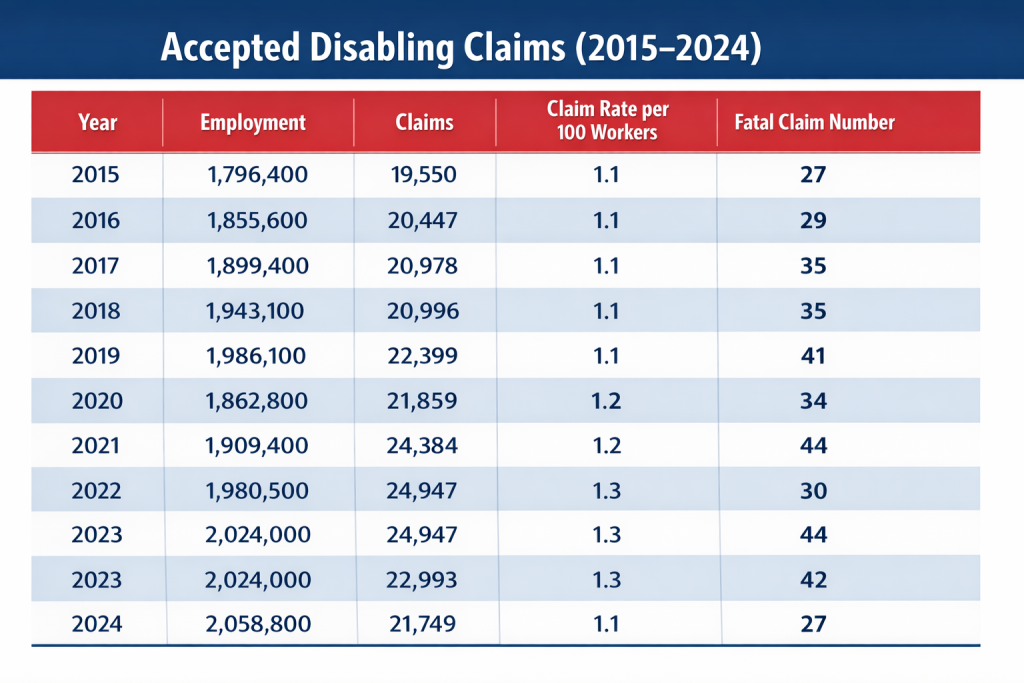
Oregon has seen a notable decline in accepted disabling workers’ compensation claims for the year 2024, despite a rise in statewide employment. According to the latest data from the state’s Department of Consumer and Business Services, the Oregon Workers’ Compensation Division recorded 21,749 accepted disabling claims last year, which is a decrease of 1,244 claims compared to 2023. During the same timeframe, employment in Oregon increased by 34,800 workers, resulting in a consistent claim rate of 1.1 claims per 100 workers.
In addition to the overall decline in claims, fatal claims also saw a significant drop, falling from 42 in 2023 to just 27 in 2024. This trend reflects a broader improvement in workplace safety across various sectors.
The sectors contributing the most to disabling claims include healthcare, government, manufacturing, retail, and transportation. Notably, sprains, strains, and tears accounted for over half of all reported injuries, with back injuries alone leading to 3,552 claims. The data indicates that overexertion was the primary cause of these injuries, followed closely by same-level falls and struck-by incidents.
Among various occupations, transportation and material-moving workers filed the highest number of claims, totaling 4,254 cases. This statistic highlights the risks associated with these roles, which often involve physical labor and demanding conditions.
Private-sector employees represented a significant majority, accounting for 86.7% of all accepted disabling claims. Interestingly, workers in their first year on the job made up 40% of claims where tenure data was available. The age range of claimants varied widely, from 14 to 90 years old, with an average age of 41. Additionally, male workers submitted 61% of all disabling claims, indicating a gender disparity in workplace injuries.
Topics
Claims
Workers’ Compensation
Oregon
Was this article valuable?
Here are more articles you may enjoy.
Interested in Claims?
Get automatic alerts for this topic.
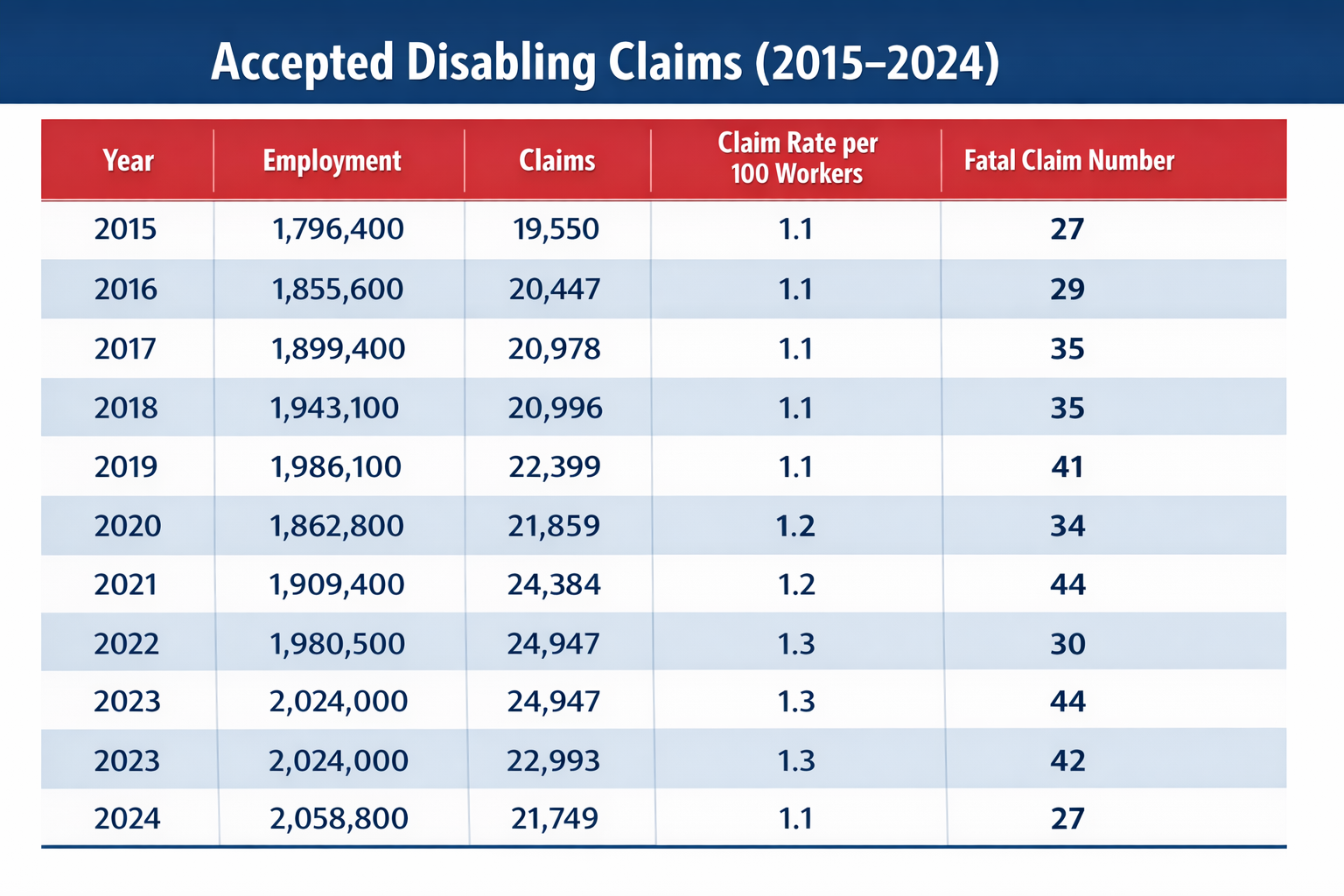
Oregon has seen a notable decline in accepted disabling workers’ compensation claims for the year 2024, despite a rise in statewide employment. According to the latest data from the state’s Department of Consumer and Business Services, the Oregon Workers’ Compensation Division recorded 21,749 accepted disabling claims last year, which is a decrease of 1,244 claims compared to 2023. During the same timeframe, employment in Oregon increased by 34,800 workers, resulting in a consistent claim rate of 1.1 claims per 100 workers.
In addition to the overall decline in claims, fatal claims also saw a significant drop, falling from 42 in 2023 to just 27 in 2024. This trend reflects a broader improvement in workplace safety across various sectors.
The sectors contributing the most to disabling claims include healthcare, government, manufacturing, retail, and transportation. Notably, sprains, strains, and tears accounted for over half of all reported injuries, with back injuries alone leading to 3,552 claims. The data indicates that overexertion was the primary cause of these injuries, followed closely by same-level falls and struck-by incidents.
Among various occupations, transportation and material-moving workers filed the highest number of claims, totaling 4,254 cases. This statistic highlights the risks associated with these roles, which often involve physical labor and demanding conditions.
Private-sector employees represented a significant majority, accounting for 86.7% of all accepted disabling claims. Interestingly, workers in their first year on the job made up 40% of claims where tenure data was available. The age range of claimants varied widely, from 14 to 90 years old, with an average age of 41. Additionally, male workers submitted 61% of all disabling claims, indicating a gender disparity in workplace injuries.
Topics
Claims
Workers’ Compensation
Oregon
Was this article valuable?
Here are more articles you may enjoy.
Interested in Claims?
Get automatic alerts for this topic.