Florida Committees Endorse MGA and Limitations on Litigation Funding Bills
Florida’s legislative committees have recently approved two significant bills that could reshape the landscape of property-casualty insurance in the state. One bill aims to impose restrictions on litigation financing, while the other seeks to enhance transparency regarding insurers’ payments to managing general agencies.
However, the future of these bills in both chambers remains uncertain.
Senate Bill 1396, which passed the Senate Judiciary Committee with a vote of 8 to 2, proposes several key changes. It would prevent third-party lawsuit funding firms from influencing the direction of legal proceedings, restrict financiers from claiming a larger share of awards than what is recovered by plaintiffs, and ban the securitization or assignment of litigation financing agreements.

Introduced by state Sen. Colleen Burton, R-Winter Haven, the bill also mandates that any financing agreements be disclosed in litigation if a foreign entity or sovereign wealth fund is involved, although the specific terms of these agreements would remain confidential.
If both chambers pass the bill and it is signed into law, it would take effect on July 1. Currently, the bill is awaiting action in the Senate Rules Committee, while a similar House bill is still in committee. Notably, legislatures in at least eight other states have enacted various limits on third-party lawsuit financiers over the past two years.
In a related development, the Florida House Commerce Committee has advanced House Bill 1399, introduced by Rep. Kimberly Berfield, R-Clearwater. This bill would require property insurers in Florida to provide documentation to regulators demonstrating that payments to affiliates are “fair and reasonable.”
Under this legislation, affiliated companies must register with the Florida Office of Insurance Regulation (OIR), which will be responsible for reviewing dividend payments and asset transfers to these affiliates. Additionally, agreements between insurers and their affiliates would need to have a maximum duration of three years.
Insurers would also be required to notify the OIR at least 30 days prior to making capital transfers to affiliates. The OIR would have the authority to reject these agreements or mandate refunds to carriers if they are deemed not to be in the insurer’s best interest, according to an analysis of the bill.
The issue of payments to affiliates, particularly managing general agencies (MGAs), has sparked considerable debate in Florida over recent years. Several Democrats in the House have argued that these transfers have depleted some carriers’ reserve funds, leading to insolvencies. Reports from Tampa and Miami have labeled this practice as “profit-shifting.”
Florida insurance advocates contend that MGAs serve a legitimate purpose in managing business for carriers. Paul Handerhan, president of the Federal Association for Insurance Reform, emphasized last year that MGAs are already subject to stringent regulations by the OIR, and that some lawmakers may have misunderstood their role.
HB 1399 has been placed on a special-order calendar in the House and could be up for a floor vote as early as next week. However, lobbyists have expressed skepticism about its chances of passing in the Senate.
Top photo: The Florida Capitol building (AdobeStock)
Related: Florida Report on MGAs Fell Through the Cracks, Commissioners Say
Topics
Lawsuits
Mergers & Acquisitions
Florida
Insurance Wholesale
Interested in Insurance Wholesale?
Get automatic alerts for this topic.
Florida’s legislative committees have recently approved two significant bills that could reshape the landscape of property-casualty insurance in the state. One bill aims to impose restrictions on litigation financing, while the other seeks to enhance transparency regarding insurers’ payments to managing general agencies.
However, the future of these bills in both chambers remains uncertain.
Senate Bill 1396, which passed the Senate Judiciary Committee with a vote of 8 to 2, proposes several key changes. It would prevent third-party lawsuit funding firms from influencing the direction of legal proceedings, restrict financiers from claiming a larger share of awards than what is recovered by plaintiffs, and ban the securitization or assignment of litigation financing agreements.
Introduced by state Sen. Colleen Burton, R-Winter Haven, the bill also mandates that any financing agreements be disclosed in litigation if a foreign entity or sovereign wealth fund is involved, although the specific terms of these agreements would remain confidential.
If both chambers pass the bill and it is signed into law, it would take effect on July 1. Currently, the bill is awaiting action in the Senate Rules Committee, while a similar House bill is still in committee. Notably, legislatures in at least eight other states have enacted various limits on third-party lawsuit financiers over the past two years.
In a related development, the Florida House Commerce Committee has advanced House Bill 1399, introduced by Rep. Kimberly Berfield, R-Clearwater. This bill would require property insurers in Florida to provide documentation to regulators demonstrating that payments to affiliates are “fair and reasonable.”
Under this legislation, affiliated companies must register with the Florida Office of Insurance Regulation (OIR), which will be responsible for reviewing dividend payments and asset transfers to these affiliates. Additionally, agreements between insurers and their affiliates would need to have a maximum duration of three years.
Insurers would also be required to notify the OIR at least 30 days prior to making capital transfers to affiliates. The OIR would have the authority to reject these agreements or mandate refunds to carriers if they are deemed not to be in the insurer’s best interest, according to an analysis of the bill.
The issue of payments to affiliates, particularly managing general agencies (MGAs), has sparked considerable debate in Florida over recent years. Several Democrats in the House have argued that these transfers have depleted some carriers’ reserve funds, leading to insolvencies. Reports from Tampa and Miami have labeled this practice as “profit-shifting.”
Florida insurance advocates contend that MGAs serve a legitimate purpose in managing business for carriers. Paul Handerhan, president of the Federal Association for Insurance Reform, emphasized last year that MGAs are already subject to stringent regulations by the OIR, and that some lawmakers may have misunderstood their role.
HB 1399 has been placed on a special-order calendar in the House and could be up for a floor vote as early as next week. However, lobbyists have expressed skepticism about its chances of passing in the Senate.
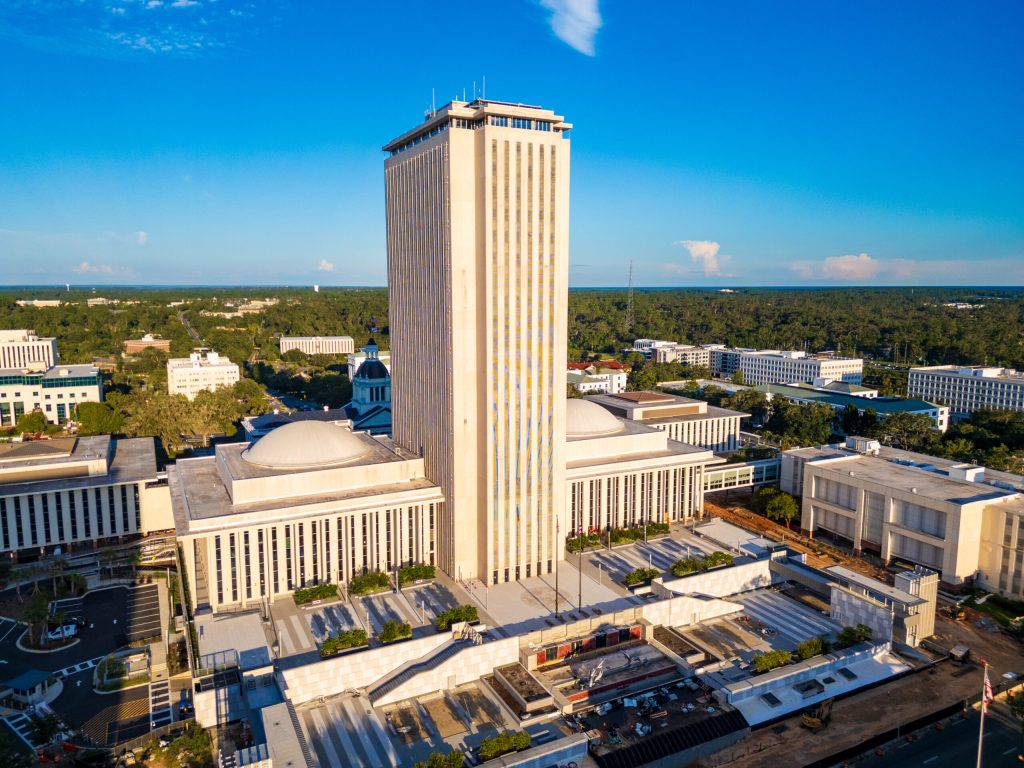
Top photo: The Florida Capitol building (AdobeStock)
Related: Florida Report on MGAs Fell Through the Cracks, Commissioners Say
Topics
Lawsuits
Mergers & Acquisitions
Florida
Insurance Wholesale
Interested in Insurance Wholesale?
Get automatic alerts for this topic.