Florida Cold Snap Harms Citrus Harvest and Challenges Power Supply Systems
Florida has recently faced a harsh cold snap that has severely impacted the state’s citrus crops, prompting local utilities to urge residents to conserve electricity.
According to the National Weather Service, freeze warnings and cold weather advisories are in effect for a significant portion of the state. Jacksonville recorded a low of 22°F (-6°C) and Orlando dropped to 24°F on Sunday, both setting new daily records. Meanwhile, Tampa experienced a low of 29°F, just two degrees shy of its record.
“There was significant damage to the remaining oranges to be picked in central Florida,” stated Jim Roemer, a meteorologist and publisher of the WeatherWealth newsletter. “Many key areas were well below 28 degrees for over four hours between Sunday and this morning.”
The citrus industry in Florida was already grappling with the long-term effects of greening disease, which is spread by an invasive pest and causes premature fruit drop. The U.S. Department of Agriculture has forecasted that this season’s orange juice harvest will be the smallest since 1930. Roemer noted that the extreme cold may have caused permanent damage to some trees, as temperatures remained below 24°F for an extended period.
Trevor Murphy, a citrus grower in Highlands County, reported finding ice and slush in his fruit. He expressed concern, stating, “There will be heavy leaf loss from the frost damage, and some of the young trees we’ve planted over the past few months probably won’t make it. It’ll be a few days until we start seeing leaf and fruit drop.”
As a result of the cold snap, orange juice futures markets plummeted by as much as 12%, marking the largest intraday decline since 2010.
Despite the challenges, growers had prepared by using water sprayers to help insulate the oranges. Some unharvested fruits were mature enough to be salvaged, according to Judy Ganes, president of J. Ganes Consulting. She added, “They need to get the oranges off the trees and processed before the oranges go soft and rot, so a freeze followed by a rapid warm-up is more challenging than a lingering cold.”
The cold weather has also put a strain on power resources across the South. Duke Energy Corp. requested that customers in Florida and North Carolina conserve electricity on Monday morning to help prevent outages. The U.S. Department of Energy has informed seven Florida utilities that they can activate additional power plants to meet the increased demand as the cold persists.
According to David Roth, a senior branch forecaster at the Weather Prediction Center, the worst of the cold in Florida should ease after Tuesday. The unusual weather has already led to reports of snow flurries in Tampa and Fort Myers over the weekend.
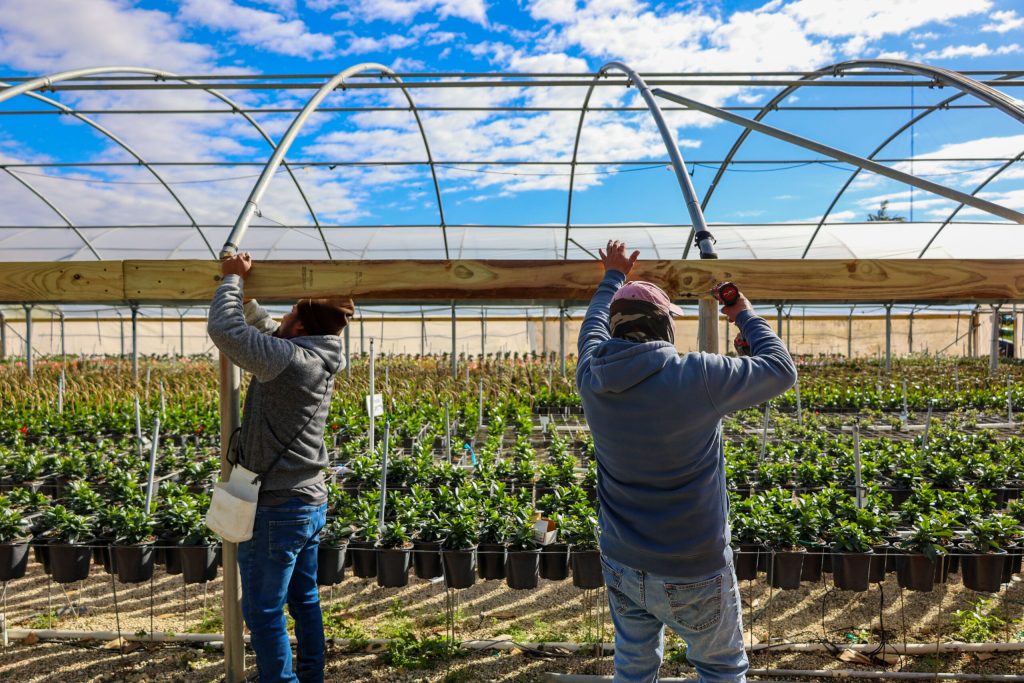
Photo: Workers install frames to hang protective fabric around plants ahead of cold weather in Miami on Jan. 29. (Zak Bennett/Bloomberg)
Copyright 2026 Bloomberg.
Topics
Florida
Agribusiness
Interested in Agribusiness?
Get automatic alerts for this topic.
Florida has recently faced a harsh cold snap that has severely impacted the state’s citrus crops, prompting local utilities to urge residents to conserve electricity.
According to the National Weather Service, freeze warnings and cold weather advisories are in effect for a significant portion of the state. Jacksonville recorded a low of 22°F (-6°C) and Orlando dropped to 24°F on Sunday, both setting new daily records. Meanwhile, Tampa experienced a low of 29°F, just two degrees shy of its record.
“There was significant damage to the remaining oranges to be picked in central Florida,” stated Jim Roemer, a meteorologist and publisher of the WeatherWealth newsletter. “Many key areas were well below 28 degrees for over four hours between Sunday and this morning.”
The citrus industry in Florida was already grappling with the long-term effects of greening disease, which is spread by an invasive pest and causes premature fruit drop. The U.S. Department of Agriculture has forecasted that this season’s orange juice harvest will be the smallest since 1930. Roemer noted that the extreme cold may have caused permanent damage to some trees, as temperatures remained below 24°F for an extended period.
Trevor Murphy, a citrus grower in Highlands County, reported finding ice and slush in his fruit. He expressed concern, stating, “There will be heavy leaf loss from the frost damage, and some of the young trees we’ve planted over the past few months probably won’t make it. It’ll be a few days until we start seeing leaf and fruit drop.”
As a result of the cold snap, orange juice futures markets plummeted by as much as 12%, marking the largest intraday decline since 2010.
Despite the challenges, growers had prepared by using water sprayers to help insulate the oranges. Some unharvested fruits were mature enough to be salvaged, according to Judy Ganes, president of J. Ganes Consulting. She added, “They need to get the oranges off the trees and processed before the oranges go soft and rot, so a freeze followed by a rapid warm-up is more challenging than a lingering cold.”
The cold weather has also put a strain on power resources across the South. Duke Energy Corp. requested that customers in Florida and North Carolina conserve electricity on Monday morning to help prevent outages. The U.S. Department of Energy has informed seven Florida utilities that they can activate additional power plants to meet the increased demand as the cold persists.
According to David Roth, a senior branch forecaster at the Weather Prediction Center, the worst of the cold in Florida should ease after Tuesday. The unusual weather has already led to reports of snow flurries in Tampa and Fort Myers over the weekend.
Photo: Workers install frames to hang protective fabric around plants ahead of cold weather in Miami on Jan. 29. (Zak Bennett/Bloomberg)
Copyright 2026 Bloomberg.
Topics
Florida
Agribusiness
Interested in Agribusiness?
Get automatic alerts for this topic.