Good News on Heart Health

When it comes to heart health, some pieces of advice have stood the test of time and continue to form the bedrock of approaches: eat well and exercise, for instance. However, as science evolves, researchers continually learn and add new pieces to the heart health puzzle. The good news? Both doctors and patients now have access to innovative tools that can significantly enhance heart health.
A modern-day stethoscope
The stethoscope has been a standard piece of medical care since its invention over 200 years ago. It has evolved from a rudimentary paper tube to a horn-shaped instrument, and more recently, to contemporary versions like the recording stethoscope introduced in 1999. Now, doctors have developed a stethoscope integrated with artificial intelligence, which promises to be a game changer.
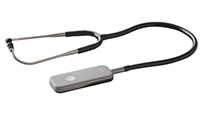
In just 15 seconds, this new AI-led stethoscope can detect up to three heart conditions: heart failure, heart-valve disease, and abnormal heart rhythms. The instrument analyzes minute changes in heartbeat and blood flow while simultaneously taking a rapid ECG. With this advanced tool, doctors can now identify these heart conditions earlier than ever, leading to timely treatment and improved outcomes. “For patients, as clinicians adopt this new technology, this could mean earlier identification of silent valve disease or rhythm problems, leading to confirmatory testing and more timely treatment,” explains Christopher R. deFilippi, MD, a cardiologist at the University of Maryland Medical Center in Baltimore.
GLP-1s may offer cardioprotective effects
You can’t go far without hearing about the new class of weight loss drugs, with nearly one in five adults currently using one. While GLP-1s like Ozempic and Wegovy have a proven track record in aiding weight loss, researchers are discovering that they also provide protection against heart attacks and strokes. This has been confirmed for both types of weight-loss drugs, tirzepatide and semaglutide. Compared to the commonly prescribed diabetes drug sitagliptin, GLP-1s have been shown to afford patients an 18 percent reduction in the risk of heart attack or stroke.
Even more encouraging, researchers at Mass General Brigham found that the cardiovascular benefits of GLP-1s kick in relatively early. While the exact mechanism behind this positive impact on cardiovascular health remains unclear, the researchers recommend further studies to better understand it. In a world increasingly embracing GLP-1s, the added cardiovascular benefits are certainly welcome news.
A new blood pressure drug
For many patients with high blood pressure, standard therapy often falls short. The New England Journal of Medicine reported on a new drug called baxdrostat, which may be tailor-made for this population. Baxdrostat is an aldosterone synthase inhibitor, and a recent large clinical trial demonstrated its effectiveness in lowering blood pressure in patients whose hypertension remained uncontrolled despite traditional treatment methods.
“Importantly, baxdrostat isn’t yet approved for routine clinical use, but in December 2025, AstraZeneca announced that the FDA accepted its new drug application under priority review,” notes deFilippi.
While diet and exercise remain the gold standard for heart health and should always be the first line of defense, ongoing research is expanding the arsenal of tools available to patients seeking additional support.
Want more good news for health? Staying healthy can be easier than ever just by using your phone! Check out our session on Mobile Health Apps on February 21! Details are here.
YOUR TURN
Have you tried any of these new solutions for heart issues? If not, would you consider them? Share your thoughts in the comments!
 Amanda Loudin is a Maryland-based freelancer specializing in health and science content. Her work has appeared in The New York Times, The Washington Post, National Geographic, Fortune, and many other outlets. When not writing, you can find her out running, hiking, or biking.
When it comes to heart health, some pieces of advice have stood the test of time and continue to form the bedrock of approaches: eat well and exercise, for instance. However, as science evolves, researchers continually learn and add new pieces to the heart health puzzle. The good news? Both doctors and patients now have access to innovative tools that can significantly enhance heart health.
A modern-day stethoscope
The stethoscope has been a standard piece of medical care since its invention over 200 years ago. It has evolved from a rudimentary paper tube to a horn-shaped instrument, and more recently, to contemporary versions like the recording stethoscope introduced in 1999. Now, doctors have developed a stethoscope integrated with artificial intelligence, which promises to be a game changer.
In just 15 seconds, this new AI-led stethoscope can detect up to three heart conditions: heart failure, heart-valve disease, and abnormal heart rhythms. The instrument analyzes minute changes in heartbeat and blood flow while simultaneously taking a rapid ECG. With this advanced tool, doctors can now identify these heart conditions earlier than ever, leading to timely treatment and improved outcomes. “For patients, as clinicians adopt this new technology, this could mean earlier identification of silent valve disease or rhythm problems, leading to confirmatory testing and more timely treatment,” explains Christopher R. deFilippi, MD, a cardiologist at the University of Maryland Medical Center in Baltimore.
GLP-1s may offer cardioprotective effects
You can’t go far without hearing about the new class of weight loss drugs, with nearly one in five adults currently using one. While GLP-1s like Ozempic and Wegovy have a proven track record in aiding weight loss, researchers are discovering that they also provide protection against heart attacks and strokes. This has been confirmed for both types of weight-loss drugs, tirzepatide and semaglutide. Compared to the commonly prescribed diabetes drug sitagliptin, GLP-1s have been shown to afford patients an 18 percent reduction in the risk of heart attack or stroke.
Even more encouraging, researchers at Mass General Brigham found that the cardiovascular benefits of GLP-1s kick in relatively early. While the exact mechanism behind this positive impact on cardiovascular health remains unclear, the researchers recommend further studies to better understand it. In a world increasingly embracing GLP-1s, the added cardiovascular benefits are certainly welcome news.
A new blood pressure drug
For many patients with high blood pressure, standard therapy often falls short. The New England Journal of Medicine reported on a new drug called baxdrostat, which may be tailor-made for this population. Baxdrostat is an aldosterone synthase inhibitor, and a recent large clinical trial demonstrated its effectiveness in lowering blood pressure in patients whose hypertension remained uncontrolled despite traditional treatment methods.
“Importantly, baxdrostat isn’t yet approved for routine clinical use, but in December 2025, AstraZeneca announced that the FDA accepted its new drug application under priority review,” notes deFilippi.
While diet and exercise remain the gold standard for heart health and should always be the first line of defense, ongoing research is expanding the arsenal of tools available to patients seeking additional support.
Want more good news for health? Staying healthy can be easier than ever just by using your phone! Check out our session on Mobile Health Apps on February 21! Details are here.
YOUR TURN
Have you tried any of these new solutions for heart issues? If not, would you consider them? Share your thoughts in the comments!
Amanda Loudin is a Maryland-based freelancer specializing in health and science content. Her work has appeared in The New York Times, The Washington Post, National Geographic, Fortune, and many other outlets. When not writing, you can find her out running, hiking, or biking.