Florida Senate President Confirms No Major Insurance Reforms This Year; Committee Moves Forward with 5 Minor Adjustments
Three weeks into the 2026 Florida legislative session, with bill deadlines approaching, Florida Senate President Ben Albritton expressed his expectation that no major changes will occur in Florida’s property insurance laws this year.
The rationale behind this outlook is the landmark legislation passed in 2022 and 2023, which has effectively addressed the significant issues that previously led to soaring insurance premiums across the state. Albritton noted that these statutes have curtailed the “thousands of frivolous lawsuits” that once plagued property insurance claims. This sentiment has been echoed by other lawmakers, regulators, and representatives from the insurance industry, all of whom have voiced low expectations for substantial legislative changes this year.
As a citrus farmer, Albritton anticipates that Florida property insurers will continue to reduce rates in the coming months and years. He also emphasized the importance of scrutinizing carriers’ rate requests and profit levels, stating that Florida law restricts excessive profits by insurance companies.
“With the tort relief, and no storms this year, I expect we’ll see more relief on rates coming,” he remarked. “We’re moving in a great direction.”
Albritton’s insights are reflected in the committee actions thus far in the session, which began on January 13 and will conclude on March 13. The House of Representatives is currently reviewing a bill aimed at increasing regulation and transparency regarding carriers’ financial arrangements with affiliated companies, including managing general agents. However, this bill is not anticipated to pass in the Senate.
Additionally, a bill intended to limit the influence of litigation financiers is expected to pass in the Senate but may face challenges in the House.
Despite Albritton’s predictions, the Florida Senate Banking and Insurance Committee unanimously passed several relatively minor insurance-related bills on Wednesday:
SB 1706, sponsored by Sen. Jason Pizzo, aims to restrict the My Safe Florida Condominium Pilot program to less-affluent condo associations and owners. This two-year-old program offers matching grants for condominiums that implement wind-mitigation measures to reduce hurricane impacts and insurance claims, in exchange for premium discounts. Pizzo’s bill would limit these grants to condos built before 2008 that are 80% owner-occupied by individuals whose income is at or below 80% of the area median income. The committee approved the measure without opposition.
SB 1452, introduced by Sen. Keith Truenow, seeks to expand eligibility for the My Safe Florida Home program. Similar to the condo program, this initiative provides grant funding for wind mitigation in single-family homes. Recent inspections and appraisals had misclassified some detached homes as condos, rendering them ineligible for grants. Truenow’s bill clarifies that detached homes of three stories or less may qualify for a full range of improvements, including roof replacements. The bill also addresses other areas, such as adjusters and insurance agents, requiring public adjusters to respond to insureds within 14 days of receiving written communications. The committee passed the bill with a 10-0 vote. A bill analysis can be viewed here.
SB 618, also sponsored by Truenow, would permit insurance carriers to charge excess rates for up to 20% of their workers’ compensation policies, an increase from the current limit of 10%. Mark Askins, CEO of BrightFund, noted that this change would provide employers in high-risk classifications with greater flexibility, as the current limitation often forces them into the assigned-risk market, which can lead to higher comp rates even after re-entering the voluntary market. The bill was approved unanimously.
SB 990, proposed by Sen. Tom Leek, would allow protected-cell captive insurance companies in Florida. These cells, which are popular in several states, enable corporations to benefit from captive insurance coverage without the full expense of establishing a standalone captive insurance company. Leek’s bill specifies that protected-cell captives would be permitted to insure only certain types of risk. The committee passed the bill with a 10-0 vote.
SB 158, introduced by Sen. Shevrin Jones, mandates that agents selling pet insurance complete two hours of continuing education courses every two years. Additionally, insurers will be required to provide a summary of key policy features to pet owners and submit annual reports to the Florida Office of Insurance Regulation.
Related: Florida Approves 6.9% Average Cut in Workers’ Comp Rates But Roofers Are Worried
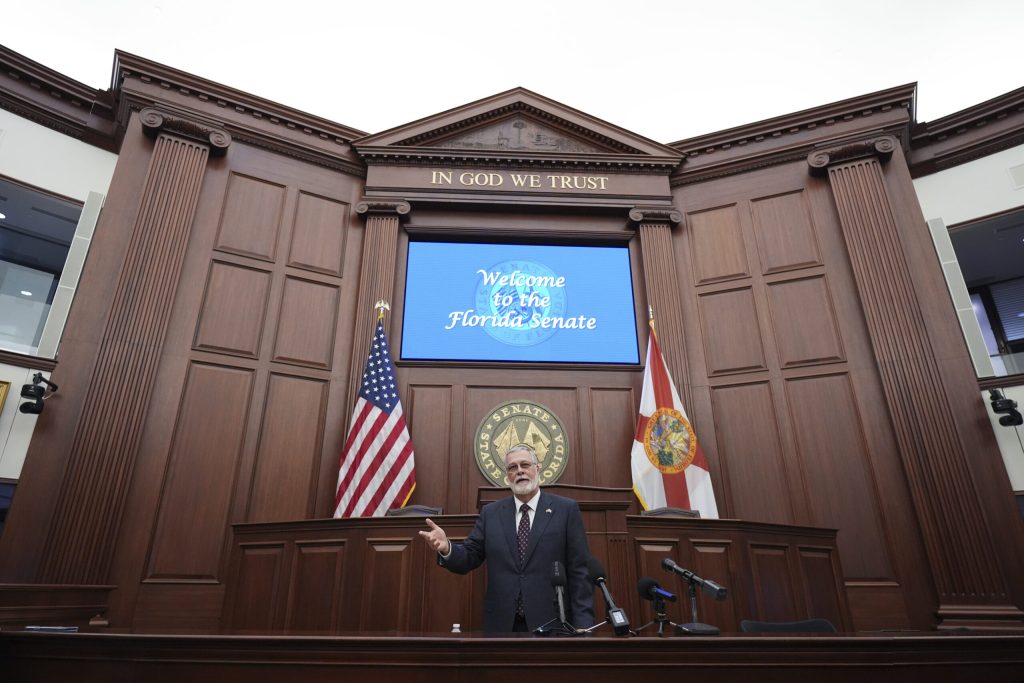
Top photo: Albritton at the Senate in 2025. (AP Photo/Rebecca Blackwell)
Interested in Politics?
Get automatic alerts for this topic.
Three weeks into the 2026 Florida legislative session, with bill deadlines approaching, Florida Senate President Ben Albritton expressed his expectation that no major changes will occur in Florida’s property insurance laws this year.
The rationale behind this outlook is the landmark legislation passed in 2022 and 2023, which has effectively addressed the significant issues that previously led to soaring insurance premiums across the state. Albritton noted that these statutes have curtailed the “thousands of frivolous lawsuits” that once plagued property insurance claims. This sentiment has been echoed by other lawmakers, regulators, and representatives from the insurance industry, all of whom have voiced low expectations for substantial legislative changes this year.
As a citrus farmer, Albritton anticipates that Florida property insurers will continue to reduce rates in the coming months and years. He also emphasized the importance of scrutinizing carriers’ rate requests and profit levels, stating that Florida law restricts excessive profits by insurance companies.
“With the tort relief, and no storms this year, I expect we’ll see more relief on rates coming,” he remarked. “We’re moving in a great direction.”
Albritton’s insights are reflected in the committee actions thus far in the session, which began on January 13 and will conclude on March 13. The House of Representatives is currently reviewing a bill aimed at increasing regulation and transparency regarding carriers’ financial arrangements with affiliated companies, including managing general agents. However, this bill is not anticipated to pass in the Senate.
Additionally, a bill intended to limit the influence of litigation financiers is expected to pass in the Senate but may face challenges in the House.
Despite Albritton’s predictions, the Florida Senate Banking and Insurance Committee unanimously passed several relatively minor insurance-related bills on Wednesday:
SB 1706, sponsored by Sen. Jason Pizzo, aims to restrict the My Safe Florida Condominium Pilot program to less-affluent condo associations and owners. This two-year-old program offers matching grants for condominiums that implement wind-mitigation measures to reduce hurricane impacts and insurance claims, in exchange for premium discounts. Pizzo’s bill would limit these grants to condos built before 2008 that are 80% owner-occupied by individuals whose income is at or below 80% of the area median income. The committee approved the measure without opposition.
SB 1452, introduced by Sen. Keith Truenow, seeks to expand eligibility for the My Safe Florida Home program. Similar to the condo program, this initiative provides grant funding for wind mitigation in single-family homes. Recent inspections and appraisals had misclassified some detached homes as condos, rendering them ineligible for grants. Truenow’s bill clarifies that detached homes of three stories or less may qualify for a full range of improvements, including roof replacements. The bill also addresses other areas, such as adjusters and insurance agents, requiring public adjusters to respond to insureds within 14 days of receiving written communications. The committee passed the bill with a 10-0 vote. A bill analysis can be viewed here.
SB 618, also sponsored by Truenow, would permit insurance carriers to charge excess rates for up to 20% of their workers’ compensation policies, an increase from the current limit of 10%. Mark Askins, CEO of BrightFund, noted that this change would provide employers in high-risk classifications with greater flexibility, as the current limitation often forces them into the assigned-risk market, which can lead to higher comp rates even after re-entering the voluntary market. The bill was approved unanimously.
SB 990, proposed by Sen. Tom Leek, would allow protected-cell captive insurance companies in Florida. These cells, which are popular in several states, enable corporations to benefit from captive insurance coverage without the full expense of establishing a standalone captive insurance company. Leek’s bill specifies that protected-cell captives would be permitted to insure only certain types of risk. The committee passed the bill with a 10-0 vote.
SB 158, introduced by Sen. Shevrin Jones, mandates that agents selling pet insurance complete two hours of continuing education courses every two years. Additionally, insurers will be required to provide a summary of key policy features to pet owners and submit annual reports to the Florida Office of Insurance Regulation.
Related: Florida Approves 6.9% Average Cut in Workers’ Comp Rates But Roofers Are Worried
Top photo: Albritton at the Senate in 2025. (AP Photo/Rebecca Blackwell)
Interested in Politics?
Get automatic alerts for this topic.