Unveiling the Toxic Legacy of Georgia’s Multibillion-Dollar Carpet Empire
Bob Shaw, the CEO of the world’s largest carpet company, faced off against executives from the chemical giant 3M, holding up a carpet sample emblazoned with the Scotchgard logo. “That’s not a logo,” he exclaimed, “that’s a target.” This confrontation occurred in 2000, shortly after 3M announced it would reformulate Scotchgard due to mounting pressure from the Environmental Protection Agency (EPA) over health and environmental concerns.
For decades, carpet manufacturers like Shaw Industries had relied on Scotchgard, releasing its chemical components into the environment on a massive scale. Shaw Industries, which originated as a family firm in Dalton, Georgia, had grown into a billion-dollar enterprise. “I got 15 million of these out in the marketplace,” Shaw lamented to the 3M executives. “What am I supposed to do about that?” A 3M executive admitted he didn’t know, prompting Shaw to throw the sample at him and storm out.

The answer to Shaw’s dilemma mirrored the broader industry response. Carpet manufacturers continued to use closely related chemical alternatives for years, despite scientific studies and warnings from regulators about their accumulation in human blood and potential health risks. Customers demanded stain resistance, and nothing performed better than the family of chemicals known as PFAS.
A lack of stringent state and federal regulations allowed carpet companies to legally switch between various stain-resistant products. Meanwhile, Dalton’s local public utility, responsible for ensuring safe drinking water, held private meetings with carpet executives that effectively shielded them from oversight.
Year after year, chemicals from manufacturing processes flowed into the water supply, contaminating a river system that serves hundreds of thousands in Georgia and eastern Alabama. The pollution was so severe that researchers identified the region as a PFAS hotspot. Today, these “forever chemicals” are found in water, soil, and even in the dust where children play.
Residents like Dolly Baker, who lives downstream from Dalton’s carpet plants, have learned that their blood contains alarmingly high levels of PFAS. “I feel like there’s a blanket over me, smothering me that I can’t get out from under,” she expressed, feeling trapped by the situation.
Investigations by news outlets such as The Atlanta Journal-Constitution and The Associated Press have uncovered how the economic engine of northwest Georgia has contaminated the area and neighboring states. Cities in Alabama are struggling to remove PFAS from their drinking water, while in South Carolina, The Post and Courier traced the discovery of forever chemicals to a river near a Shaw factory.
The full story of Georgia’s power structures prioritizing industry over public health is gradually emerging through interviews and court records. These documents reveal how carpet companies benefited from regulatory inaction, allowing them to continue using harmful chemicals while the mills continued to operate.
Pointing Fingers in a Company Town
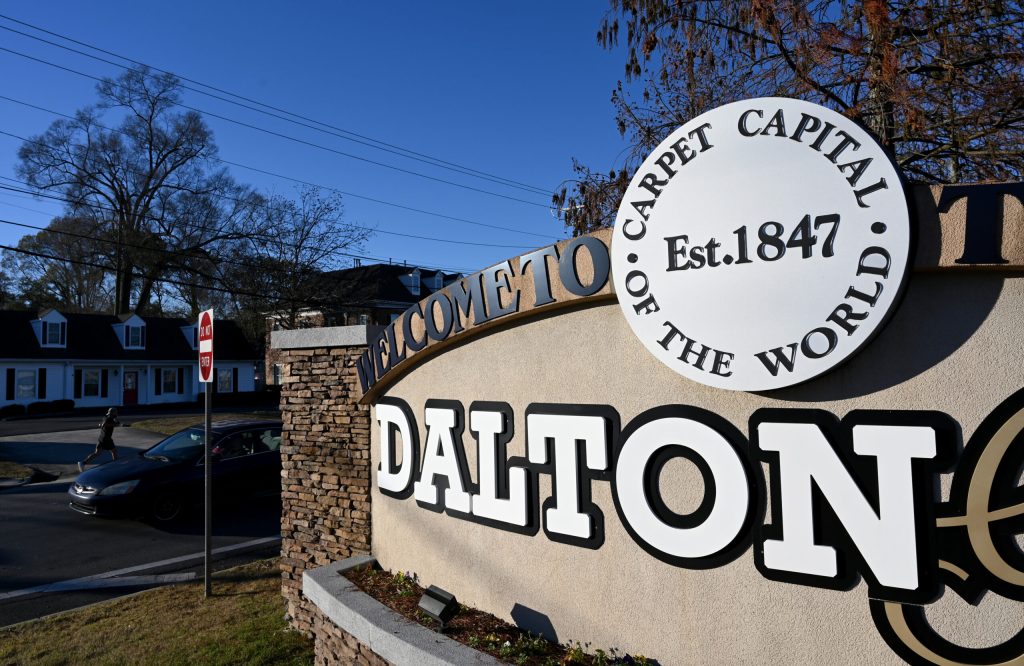
Dalton, known as the “Carpet Capital of the World,” has a long history of textile manufacturing. The durability of PFAS, which makes them effective for stain resistance, also allows them to persist in the environment, posing risks to human health. Nearly all Americans have some level of PFAS in their blood, with carpet manufacturers being among the largest consumers of these chemicals.
Despite the known risks, carpet executives have long insisted they are not to blame. They argue that 3M and DuPont assured them their products were safe, even as internal studies revealed the dangers. Shaw and Mohawk Industries both claimed they complied with regulations and ceased using PFAS in U.S. carpet production in 2019.
In interviews, Shaw executives maintained that they acted in good faith, working diligently to phase out PFAS as suitable alternatives became available. “Hindsight is 20/20,” remarked Kellie Ballew, Shaw’s vice president of environmental affairs. “I don’t think we can call into question our intentions.”
As the situation worsens, communities are left feeling betrayed, fearing for their drinking water and health. In Washington, both Republicans and Democrats have been slow to act. Under President Biden, the EPA established the first national drinking water standards for PFAS, while the Trump administration had previously rolled back regulations.
Georgia’s regulatory framework has done little to scrutinize PFAS, relying heavily on self-reporting from industries. The Georgia Environmental Protection Division has stated it “relies on the expertise of” the EPA, leaving local communities vulnerable.
As carpet makers struggle to eliminate PFAS, the region has seen a surge in lawsuits, with hundreds of millions of dollars at stake. The people of northwest Georgia are caught in a public health and economic crisis that remains largely unaddressed.
The Creek Ran Blood Red
Lisa Martin, a former planning manager at Mohawk Industries, witnessed the creek beside the mill run red with dye. On her first day in 2005, she felt uneasy as the dye runoff transformed the water. “At a gut level, you know it’s not right,” she recalled, but the industry’s culture normalized such practices.
Martin’s experience reflects the broader issues within the carpet industry, where chemical runoff was routine. Both Shaw and Mohawk have sent PFAS-laden wastewater through local treatment plants that failed to remove these harmful substances. The Conasauga River, which flows through the region, has become a significant source of PFAS contamination.
Despite the mounting evidence, the carpet industry has resisted scrutiny. In 2006, researchers from the University of Georgia found PFAS levels in the Conasauga to be among the highest ever recorded. This prompted renewed attention from the EPA, which began to investigate the sources of pollution.
As the situation continues to evolve, residents like Dolly Baker and the Jackson family grapple with the long-term health implications of PFAS exposure. With testing revealing alarmingly high levels of these chemicals in their blood, the community faces an uncertain future.
“They’ve poisoned us,” Faye Jackson lamented, reflecting the deep sense of betrayal felt by many in the region.
As the carpet industry faces increasing scrutiny and legal challenges, the people of northwest Georgia are left to navigate the consequences of decades of contamination. The fight for accountability and clean water continues, but the path forward remains fraught with challenges.
This story is part of an investigative collaboration with The Atlanta Journal-Constitution, FRONTLINE (PBS), The Post and Courier, and AL.com, supported by the AP’s Local Investigative Reporting Program and FRONTLINE’s Local Journalism Initiative.
Watch the documentary “Contaminated: The Carpet Industry’s Toxic Legacy” at pbs.org/frontline.
Topics
Georgia
Bob Shaw, the CEO of the world’s largest carpet company, faced off against executives from the chemical giant 3M, holding up a carpet sample emblazoned with the Scotchgard logo. “That’s not a logo,” he exclaimed, “that’s a target.” This confrontation occurred in 2000, shortly after 3M announced it would reformulate Scotchgard due to mounting pressure from the Environmental Protection Agency (EPA) over health and environmental concerns.
For decades, carpet manufacturers like Shaw Industries had relied on Scotchgard, releasing its chemical components into the environment on a massive scale. Shaw Industries, which originated as a family firm in Dalton, Georgia, had grown into a billion-dollar enterprise. “I got 15 million of these out in the marketplace,” Shaw lamented to the 3M executives. “What am I supposed to do about that?” A 3M executive admitted he didn’t know, prompting Shaw to throw the sample at him and storm out.
The answer to Shaw’s dilemma mirrored the broader industry response. Carpet manufacturers continued to use closely related chemical alternatives for years, despite scientific studies and warnings from regulators about their accumulation in human blood and potential health risks. Customers demanded stain resistance, and nothing performed better than the family of chemicals known as PFAS.
A lack of stringent state and federal regulations allowed carpet companies to legally switch between various stain-resistant products. Meanwhile, Dalton’s local public utility, responsible for ensuring safe drinking water, held private meetings with carpet executives that effectively shielded them from oversight.
Year after year, chemicals from manufacturing processes flowed into the water supply, contaminating a river system that serves hundreds of thousands in Georgia and eastern Alabama. The pollution was so severe that researchers identified the region as a PFAS hotspot. Today, these “forever chemicals” are found in water, soil, and even in the dust where children play.
Residents like Dolly Baker, who lives downstream from Dalton’s carpet plants, have learned that their blood contains alarmingly high levels of PFAS. “I feel like there’s a blanket over me, smothering me that I can’t get out from under,” she expressed, feeling trapped by the situation.
Investigations by news outlets such as The Atlanta Journal-Constitution and The Associated Press have uncovered how the economic engine of northwest Georgia has contaminated the area and neighboring states. Cities in Alabama are struggling to remove PFAS from their drinking water, while in South Carolina, The Post and Courier traced the discovery of forever chemicals to a river near a Shaw factory.
The full story of Georgia’s power structures prioritizing industry over public health is gradually emerging through interviews and court records. These documents reveal how carpet companies benefited from regulatory inaction, allowing them to continue using harmful chemicals while the mills continued to operate.
Pointing Fingers in a Company Town
Dalton, known as the “Carpet Capital of the World,” has a long history of textile manufacturing. The durability of PFAS, which makes them effective for stain resistance, also allows them to persist in the environment, posing risks to human health. Nearly all Americans have some level of PFAS in their blood, with carpet manufacturers being among the largest consumers of these chemicals.
Despite the known risks, carpet executives have long insisted they are not to blame. They argue that 3M and DuPont assured them their products were safe, even as internal studies revealed the dangers. Shaw and Mohawk Industries both claimed they complied with regulations and ceased using PFAS in U.S. carpet production in 2019.
In interviews, Shaw executives maintained that they acted in good faith, working diligently to phase out PFAS as suitable alternatives became available. “Hindsight is 20/20,” remarked Kellie Ballew, Shaw’s vice president of environmental affairs. “I don’t think we can call into question our intentions.”
As the situation worsens, communities are left feeling betrayed, fearing for their drinking water and health. In Washington, both Republicans and Democrats have been slow to act. Under President Biden, the EPA established the first national drinking water standards for PFAS, while the Trump administration had previously rolled back regulations.
Georgia’s regulatory framework has done little to scrutinize PFAS, relying heavily on self-reporting from industries. The Georgia Environmental Protection Division has stated it “relies on the expertise of” the EPA, leaving local communities vulnerable.
As carpet makers struggle to eliminate PFAS, the region has seen a surge in lawsuits, with hundreds of millions of dollars at stake. The people of northwest Georgia are caught in a public health and economic crisis that remains largely unaddressed.
The Creek Ran Blood Red
Lisa Martin, a former planning manager at Mohawk Industries, witnessed the creek beside the mill run red with dye. On her first day in 2005, she felt uneasy as the dye runoff transformed the water. “At a gut level, you know it’s not right,” she recalled, but the industry’s culture normalized such practices.
Martin’s experience reflects the broader issues within the carpet industry, where chemical runoff was routine. Both Shaw and Mohawk have sent PFAS-laden wastewater through local treatment plants that failed to remove these harmful substances. The Conasauga River, which flows through the region, has become a significant source of PFAS contamination.
Despite the mounting evidence, the carpet industry has resisted scrutiny. In 2006, researchers from the University of Georgia found PFAS levels in the Conasauga to be among the highest ever recorded. This prompted renewed attention from the EPA, which began to investigate the sources of pollution.
As the situation continues to evolve, residents like Dolly Baker and the Jackson family grapple with the long-term health implications of PFAS exposure. With testing revealing alarmingly high levels of these chemicals in their blood, the community faces an uncertain future.
“They’ve poisoned us,” Faye Jackson lamented, reflecting the deep sense of betrayal felt by many in the region.
As the carpet industry faces increasing scrutiny and legal challenges, the people of northwest Georgia are left to navigate the consequences of decades of contamination. The fight for accountability and clean water continues, but the path forward remains fraught with challenges.
This story is part of an investigative collaboration with The Atlanta Journal-Constitution, FRONTLINE (PBS), The Post and Courier, and AL.com, supported by the AP’s Local Investigative Reporting Program and FRONTLINE’s Local Journalism Initiative.
Watch the documentary “Contaminated: The Carpet Industry’s Toxic Legacy” at pbs.org/frontline.
Topics
Georgia