Elon Musk Reveals SpaceX’s New Focus on Moon Missions Ahead of Mars Exploration
O’Leary Ventures chairman Kevin O’Leary discusses Elon Musk’s merger of xAI and SpaceX into a major technology giant worth over $1 trillion on ‘The Bottom Line.’
Elon Musk announced on Sunday that SpaceX is redirecting its near-term focus from Mars to the ambitious goal of constructing a “self-growing city” on the moon. This shift is motivated by faster timelines and strategic urgency.
“For those unaware, SpaceX has already shifted focus to building a self-growing city on the Moon, as we can potentially achieve that in less than 10 years, whereas Mars would take 20+ years,” Musk stated in a post on X.
He emphasized that the mission of SpaceX remains unchanged: to extend consciousness and life as we know it to the stars. Musk believes the moon serves as a more practical testing ground due to its proximity to Earth.
SPACEX ACQUIRES XAI IN RECORD-SETTING DEAL VALUED AT OVER $1T
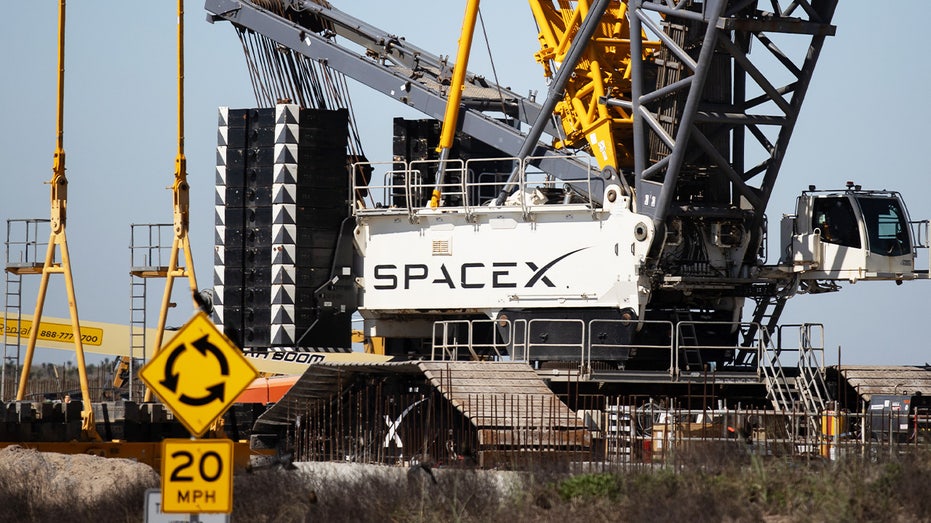
A crane, marked by the SpaceX logo, sits near the Starbase launch site in Cameron County, Texas, on February 6, 2026. (Reginald Mathalone/NurPhoto via Getty Images)
“It is only possible to travel to Mars when the planets align every 26 months (six month trip time), whereas we can launch to the Moon every 10 days (2 day trip time). This means we can iterate much faster to complete a Moon city than a Mars city,” Musk explained.
While Musk confirmed that SpaceX still aims to settle Mars, he indicated that this goal would be pursued on a longer timeline. MUSK CONFIRMS SPACEX SUCCESS IN PREVENTING RUSSIAN MILITARY FROM ACCESSING STOLEN STARLINK UNITS
“That said, SpaceX will also strive to build a Mars city and begin doing so in about 5 to 7 years, but the overriding priority is securing the future of civilization and the Moon is faster,” Musk added.
These comments align with a recent Wall Street Journal report indicating that SpaceX has informed investors of its intention to prioritize lunar missions before attempting a Mars landing, with an uncrewed moon mission targeted for March 2027.
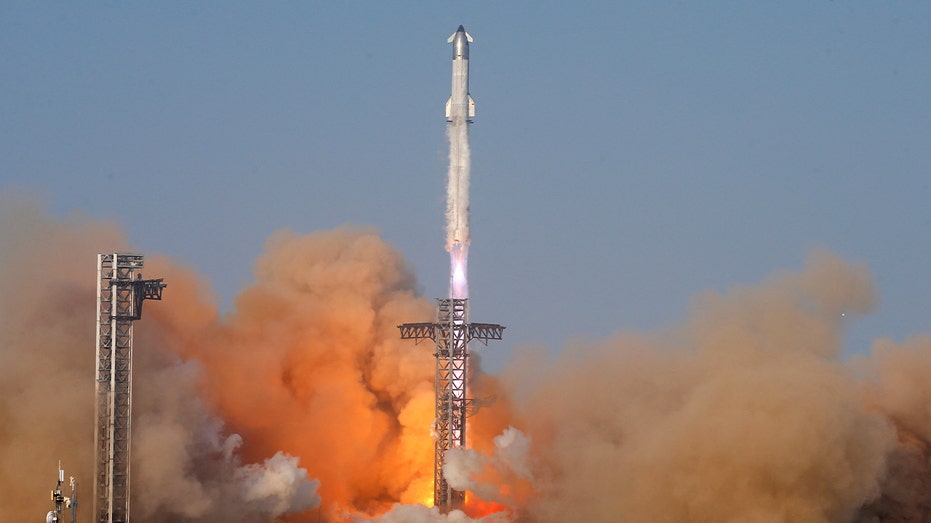
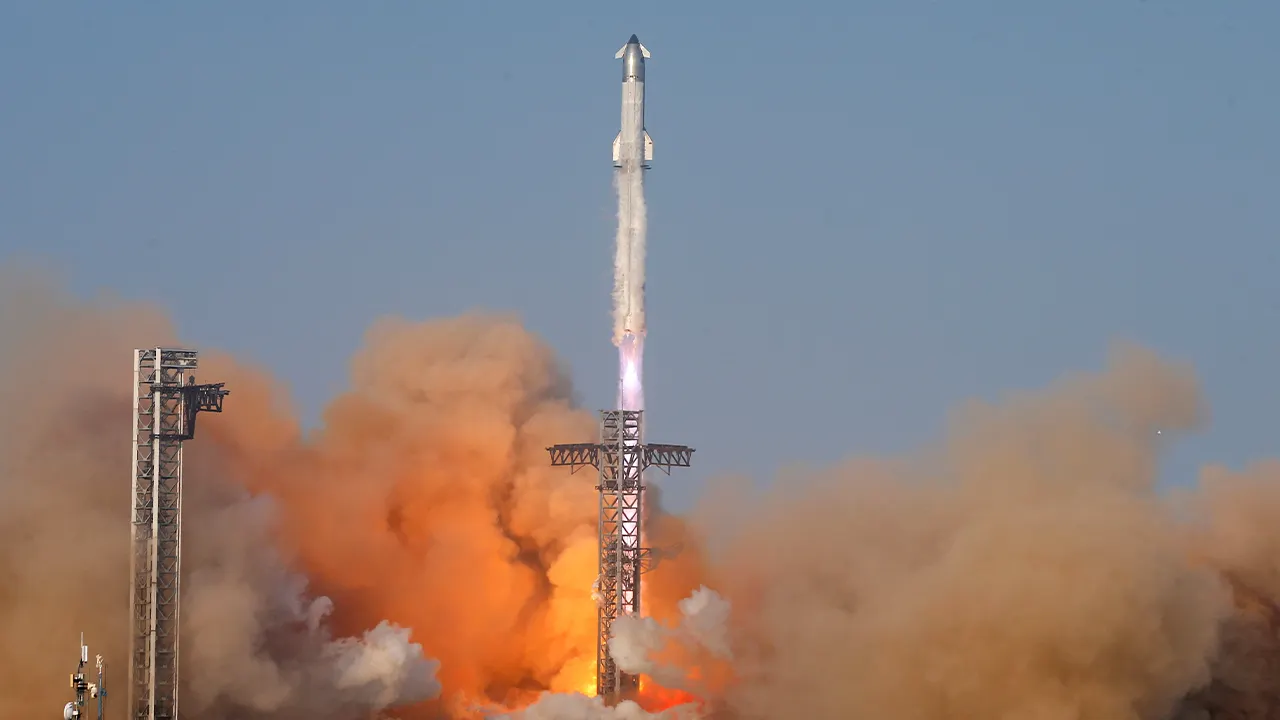
SpaceX’s next-generation Starship spacecraft atop its Super Heavy booster is launched on its ninth test at the company’s launch pad in Starbase, Texas, May 27, 2025. (REUTERS/Joe Skipper)
This pivot signifies a significant departure from Musk’s previous focus on Mars as SpaceX’s primary destination. Just last year, Musk had stated that the company aimed to launch an uncrewed Mars mission by the end of 2026. “No, we’re going straight to Mars. The Moon is a distraction,” he had tweeted in January of the previous year.
Musk is known for setting ambitious timelines for major projects, including electric vehicles and self-driving technology, which have often faced delays. The renewed emphasis on lunar exploration comes amid increasing competition from China, as the U.S. aims to return humans to the lunar surface this decade. Notably, humans have not visited the moon since NASA’s Apollo 17 mission in 1972.

Musk has a long record of setting ambitious timelines for major projects. (Brendan Smialowski/AFP via Getty Images)
These remarks come amid significant financial and strategic changes at SpaceX. Recently, Musk revealed that SpaceX had acquired the artificial intelligence company xAI, which he also leads, in a deal valuing SpaceX at $1 trillion and xAI at $250 billion.
Supporters of this acquisition argue that it could enhance SpaceX’s long-term plans for space-based data centers, which Musk claims could be more energy-efficient than their Earth-based counterparts as the demand for AI computing power escalates.
Additionally, SpaceX is gearing up for a potential public offering later this year, which could raise as much as $50 billion, potentially making it the largest IPO in history.
CLICK HERE TO GET FOX BUSINESS ON THE GO
On Monday, Musk responded to a user on X, stating that NASA will account for less than 5% of SpaceX’s revenue this year, despite the company’s crucial role in NASA’s Artemis moon program, which includes a $4 billion contract to land astronauts on the lunar surface using Starship.
“The vast majority of SpaceX revenue is the commercial Starlink system,” Musk noted.
Reuters contributed to this report.
O’Leary Ventures chairman Kevin O’Leary discusses Elon Musk’s merger of xAI and SpaceX into a major technology giant worth over $1 trillion on ‘The Bottom Line.’
Elon Musk announced on Sunday that SpaceX is redirecting its near-term focus from Mars to the ambitious goal of constructing a “self-growing city” on the moon. This shift is motivated by faster timelines and strategic urgency.
“For those unaware, SpaceX has already shifted focus to building a self-growing city on the Moon, as we can potentially achieve that in less than 10 years, whereas Mars would take 20+ years,” Musk stated in a post on X.
He emphasized that the mission of SpaceX remains unchanged: to extend consciousness and life as we know it to the stars. Musk believes the moon serves as a more practical testing ground due to its proximity to Earth.
SPACEX ACQUIRES XAI IN RECORD-SETTING DEAL VALUED AT OVER $1T
A crane, marked by the SpaceX logo, sits near the Starbase launch site in Cameron County, Texas, on February 6, 2026. (Reginald Mathalone/NurPhoto via Getty Images)
“It is only possible to travel to Mars when the planets align every 26 months (six month trip time), whereas we can launch to the Moon every 10 days (2 day trip time). This means we can iterate much faster to complete a Moon city than a Mars city,” Musk explained.
While Musk confirmed that SpaceX still aims to settle Mars, he indicated that this goal would be pursued on a longer timeline. MUSK CONFIRMS SPACEX SUCCESS IN PREVENTING RUSSIAN MILITARY FROM ACCESSING STOLEN STARLINK UNITS
“That said, SpaceX will also strive to build a Mars city and begin doing so in about 5 to 7 years, but the overriding priority is securing the future of civilization and the Moon is faster,” Musk added.
These comments align with a recent Wall Street Journal report indicating that SpaceX has informed investors of its intention to prioritize lunar missions before attempting a Mars landing, with an uncrewed moon mission targeted for March 2027.
SpaceX’s next-generation Starship spacecraft atop its Super Heavy booster is launched on its ninth test at the company’s launch pad in Starbase, Texas, May 27, 2025. (REUTERS/Joe Skipper)
This pivot signifies a significant departure from Musk’s previous focus on Mars as SpaceX’s primary destination. Just last year, Musk had stated that the company aimed to launch an uncrewed Mars mission by the end of 2026. “No, we’re going straight to Mars. The Moon is a distraction,” he had tweeted in January of the previous year.
Musk is known for setting ambitious timelines for major projects, including electric vehicles and self-driving technology, which have often faced delays. The renewed emphasis on lunar exploration comes amid increasing competition from China, as the U.S. aims to return humans to the lunar surface this decade. Notably, humans have not visited the moon since NASA’s Apollo 17 mission in 1972.
Musk has a long record of setting ambitious timelines for major projects. (Brendan Smialowski/AFP via Getty Images)
These remarks come amid significant financial and strategic changes at SpaceX. Recently, Musk revealed that SpaceX had acquired the artificial intelligence company xAI, which he also leads, in a deal valuing SpaceX at $1 trillion and xAI at $250 billion.
Supporters of this acquisition argue that it could enhance SpaceX’s long-term plans for space-based data centers, which Musk claims could be more energy-efficient than their Earth-based counterparts as the demand for AI computing power escalates.
Additionally, SpaceX is gearing up for a potential public offering later this year, which could raise as much as $50 billion, potentially making it the largest IPO in history.
CLICK HERE TO GET FOX BUSINESS ON THE GO
On Monday, Musk responded to a user on X, stating that NASA will account for less than 5% of SpaceX’s revenue this year, despite the company’s crucial role in NASA’s Artemis moon program, which includes a $4 billion contract to land astronauts on the lunar surface using Starship.
“The vast majority of SpaceX revenue is the commercial Starlink system,” Musk noted.
Reuters contributed to this report.