Innovative Approaches to Teaching Personal Finance in High Schools

The Course Correction panelists discuss why it’s so great that more and more young people are making the effort to learn more about finances on Course Correction: Next Gen Financial Freedom.
High schools across the United States are increasingly adopting innovative methods to teach students about personal finance. This shift aims to enhance students’ understanding of finance and investing, equipping them with essential skills for their future.
Financial literacy has become a focal point for policymakers, with nearly 30 states implementing laws that require high school students to complete a personal finance course. An analysis by the Center for Financial Literacy at Champlain College predicts that by 2031, 29 states and the District of Columbia will mandate personal finance courses as a graduation requirement.
By that time, approximately 73% of public high school students—around 11.3 million—will be required to take a “grade A” personal finance course. This designation refers to a one-semester course that includes at least 60 hours of personal finance instruction per academic year.

High school students participate in a lesson with their teacher. (Getty Images)
Currently, only 11% of public high school students—around 1.7 million—are subject to such requirements. However, by 2025, this number is expected to rise to over 2.3 million students, representing about 15% of the nation’s public school population.
As these educational mandates come into effect, educators are exploring practical ways to provide students with real-world financial experiences. This hands-on approach helps students understand how saving and investing works.
A report by The Wall Street Journal highlighted a unique program at the all-girls Ethel Walker School in Connecticut. Here, students take a personal finance class during their sophomore year, where they advise the school on how to invest approximately $1,000 from its $44 million endowment.
Students track their chosen investments—be it stocks, bonds, mutual funds, or exchange-traded funds (ETFs)—until graduation. They can switch investments if they incur losses after a year, as reported by the Journal.

American flags on the floor at the New York Stock Exchange in New York, on Aug. 18, 2025. (Michael Nagle/Bloomberg via Getty Images / Getty Images)
Since the project’s inception, the school has achieved positive returns, with investments made by 2025 graduates mirroring the overall market’s 28.3% growth from October 2023 to May 2025. Profits are reinvested into the school’s endowment, and students with the best-performing investments receive modest rewards.
The Journal also reported that the school’s personal finance curriculum covers tax education, requiring students to pass the IRS’ basic tax-preparer exam by their junior year. This certification enables them to assist low- and moderate-income families through the IRS’ Volunteer Income Tax Assistance program.
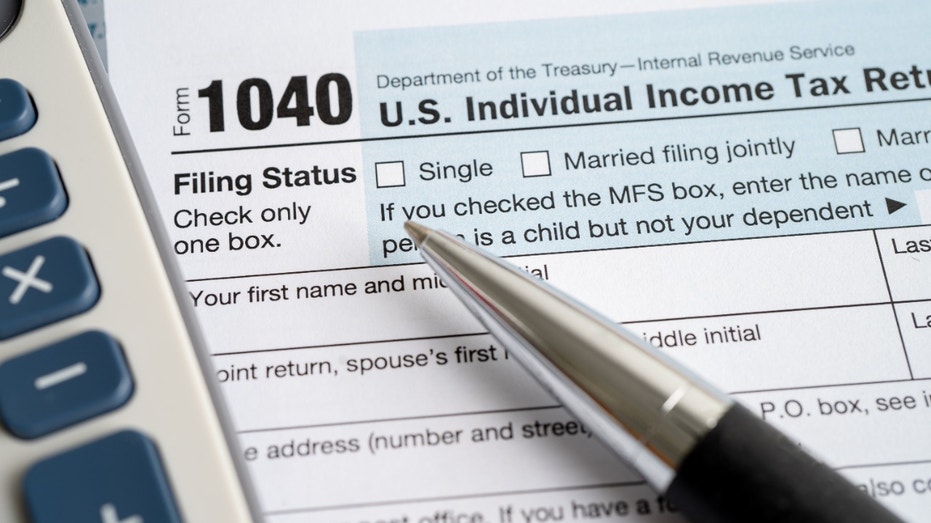
A blank 1040 tax return form from the IRS. (iStock / iStock)
HERE’S HOW MUCH TRUMP ACCOUNT BALANCES COULD GROW OVER TIME
Another institution highlighted in the Journal’s report is the Da Vinci Communications public charter school in El Segundo, California. This school mandates personal finance courses through the senior year, covering essential topics such as saving strategies, health insurance, and the risks associated with auto loans.
The curriculum emphasizes the importance of long-term savings, encouraging students to open a Roth IRA as soon as they turn 18. This proactive approach allows them to save income earned from part-time jobs during high school, rather than waiting until they embark on their careers.
The Course Correction panelists discuss why it’s so great that more and more young people are making the effort to learn more about finances on Course Correction: Next Gen Financial Freedom.
High schools across the United States are increasingly adopting innovative methods to teach students about personal finance. This shift aims to enhance students’ understanding of finance and investing, equipping them with essential skills for their future.
Financial literacy has become a focal point for policymakers, with nearly 30 states implementing laws that require high school students to complete a personal finance course. An analysis by the Center for Financial Literacy at Champlain College predicts that by 2031, 29 states and the District of Columbia will mandate personal finance courses as a graduation requirement.
By that time, approximately 73% of public high school students—around 11.3 million—will be required to take a “grade A” personal finance course. This designation refers to a one-semester course that includes at least 60 hours of personal finance instruction per academic year.
High school students participate in a lesson with their teacher. (Getty Images)
Currently, only 11% of public high school students—around 1.7 million—are subject to such requirements. However, by 2025, this number is expected to rise to over 2.3 million students, representing about 15% of the nation’s public school population.
As these educational mandates come into effect, educators are exploring practical ways to provide students with real-world financial experiences. This hands-on approach helps students understand how saving and investing works.
A report by The Wall Street Journal highlighted a unique program at the all-girls Ethel Walker School in Connecticut. Here, students take a personal finance class during their sophomore year, where they advise the school on how to invest approximately $1,000 from its $44 million endowment.
Students track their chosen investments—be it stocks, bonds, mutual funds, or exchange-traded funds (ETFs)—until graduation. They can switch investments if they incur losses after a year, as reported by the Journal.
American flags on the floor at the New York Stock Exchange in New York, on Aug. 18, 2025. (Michael Nagle/Bloomberg via Getty Images / Getty Images)
Since the project’s inception, the school has achieved positive returns, with investments made by 2025 graduates mirroring the overall market’s 28.3% growth from October 2023 to May 2025. Profits are reinvested into the school’s endowment, and students with the best-performing investments receive modest rewards.
The Journal also reported that the school’s personal finance curriculum covers tax education, requiring students to pass the IRS’ basic tax-preparer exam by their junior year. This certification enables them to assist low- and moderate-income families through the IRS’ Volunteer Income Tax Assistance program.
A blank 1040 tax return form from the IRS. (iStock / iStock)
HERE’S HOW MUCH TRUMP ACCOUNT BALANCES COULD GROW OVER TIME
Another institution highlighted in the Journal’s report is the Da Vinci Communications public charter school in El Segundo, California. This school mandates personal finance courses through the senior year, covering essential topics such as saving strategies, health insurance, and the risks associated with auto loans.
The curriculum emphasizes the importance of long-term savings, encouraging students to open a Roth IRA as soon as they turn 18. This proactive approach allows them to save income earned from part-time jobs during high school, rather than waiting until they embark on their careers.