Greece and Malta Reluctant to Support EU’s Ban on Russian Oil Services
Greece and Malta have emerged as significant obstacles to a European Union proposal aimed at replacing the existing Russian oil price cap with a ban on essential shipping services. This development was highlighted during an EU ambassadors’ meeting on Monday, where the bloc’s latest sanctions package was discussed.
During the meeting, representatives from both southern European nations voiced their concerns regarding the potential impact of this shift on Europe’s shipping industry and energy prices. Sources familiar with the discussions, who spoke on condition of anonymity, indicated that Greece and Malta sought clarifications on proposals to impose sanctions on foreign ports handling Russian oil. They also raised questions about tightening oversight on ship sellers to prevent vessels from being incorporated into Moscow’s fleet.
A spokesperson for the Greek government declined to comment on the matter. In contrast, Nestor Laiviera, a spokesperson for the Maltese government in Brussels, stated that Malta is actively participating in technical discussions to ensure that any eventual outcome is practical and implementable.
Last week, the European Commission, the EU’s executive arm, proposed this significant change, suggesting a ban on the services necessary for transporting Russian oil as a replacement for the existing price cap. This proposal, which primarily targets insurance and transport providers, reflects the ongoing challenges faced by the price cap in effectively limiting Moscow’s oil revenue. It forms the centerpiece of the EU’s 20th sanctions package, which is a response to Russia’s full-scale invasion of Ukraine, now entering its fifth year.
The implementation of this measure is contingent upon the support of the Group of Seven (G7) nations, which collectively established the price cap at the end of 2022. However, the current stance of the United States regarding this proposed change remains unclear. Notably, the EU had previously enacted a ban on many services prior to the introduction of the price cap.
Read More: EU Commission Proposes Further Sanctions on Russian Oil Trade and Financial Services
In a related development, the EU is contemplating lifting sanctions on two Chinese banks after receiving commitments from Beijing concerning its support for Russia’s war against Ukraine. The two banks, Heihe Rural Commercial Bank and Heilongjiang Suifenhe Rural Commercial Bank, were sanctioned last August, prompting retaliatory actions from Beijing against two smaller banks in the EU.
China continues to play a crucial role as Russia’s primary wartime enabler, supplying Moscow with essential materials for weapon production. The EU’s latest sanctions package includes proposals to target several companies in China and other regions that are allegedly providing critical components for Russia’s military efforts. Additionally, it aims to sanction cryptocurrency operators and a select number of banks in Central Asia and Laos that are believed to be assisting Moscow in evading sanctions.
Moreover, the EU has proposed utilizing its anti-circumvention tool for the first time, which would prohibit the export of machine tools and certain radio equipment to Kyrgyzstan. However, Germany has expressed concerns that this could negatively affect bilateral relations with the country. As an alternative, there are discussions about implementing quotas based on pre-war trade data instead of a complete ban.
A spokesperson for the German government refrained from commenting, referring to earlier statements made on Monday. “We coordinate these matters confidentially within the European framework as part of the EU sanctions,” stated Foreign Ministry spokesman Josef Hinterseher during a press briefing.
The new sanctions proposal also encompasses export restrictions exceeding €360 million ($429 million) on goods such as rubber and chemicals, along with import bans valued at over half a billion euros, including several metals and a quota on ammonia imports.
It is important to note that EU sanctions require unanimous approval from all member states and may undergo changes before final adoption. The bloc aims to finalize this sanctions package by the end of February.
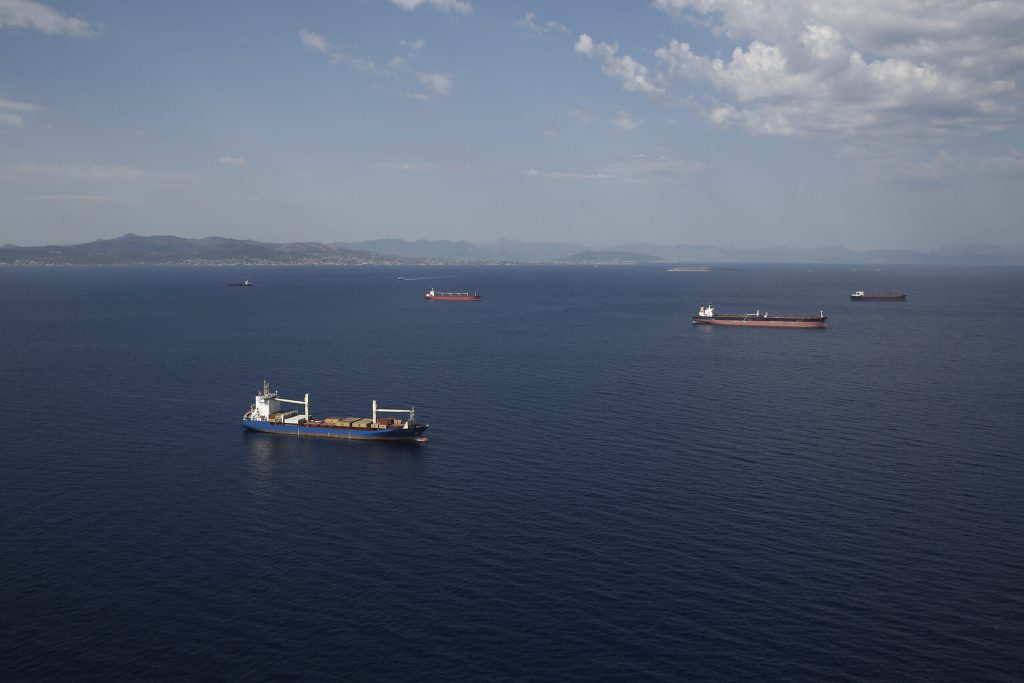
Photograph: Oil tankers and container ships off the coast of Athens. Photo credit: Simon Dawson/Bloomberg
Related:
Copyright 2026 Bloomberg.
Interested in Energy?
Get automatic alerts for this topic.
Greece and Malta have emerged as significant obstacles to a European Union proposal aimed at replacing the existing Russian oil price cap with a ban on essential shipping services. This development was highlighted during an EU ambassadors’ meeting on Monday, where the bloc’s latest sanctions package was discussed.
During the meeting, representatives from both southern European nations voiced their concerns regarding the potential impact of this shift on Europe’s shipping industry and energy prices. Sources familiar with the discussions, who spoke on condition of anonymity, indicated that Greece and Malta sought clarifications on proposals to impose sanctions on foreign ports handling Russian oil. They also raised questions about tightening oversight on ship sellers to prevent vessels from being incorporated into Moscow’s fleet.
A spokesperson for the Greek government declined to comment on the matter. In contrast, Nestor Laiviera, a spokesperson for the Maltese government in Brussels, stated that Malta is actively participating in technical discussions to ensure that any eventual outcome is practical and implementable.
Last week, the European Commission, the EU’s executive arm, proposed this significant change, suggesting a ban on the services necessary for transporting Russian oil as a replacement for the existing price cap. This proposal, which primarily targets insurance and transport providers, reflects the ongoing challenges faced by the price cap in effectively limiting Moscow’s oil revenue. It forms the centerpiece of the EU’s 20th sanctions package, which is a response to Russia’s full-scale invasion of Ukraine, now entering its fifth year.
The implementation of this measure is contingent upon the support of the Group of Seven (G7) nations, which collectively established the price cap at the end of 2022. However, the current stance of the United States regarding this proposed change remains unclear. Notably, the EU had previously enacted a ban on many services prior to the introduction of the price cap.
Read More: EU Commission Proposes Further Sanctions on Russian Oil Trade and Financial Services
In a related development, the EU is contemplating lifting sanctions on two Chinese banks after receiving commitments from Beijing concerning its support for Russia’s war against Ukraine. The two banks, Heihe Rural Commercial Bank and Heilongjiang Suifenhe Rural Commercial Bank, were sanctioned last August, prompting retaliatory actions from Beijing against two smaller banks in the EU.
China continues to play a crucial role as Russia’s primary wartime enabler, supplying Moscow with essential materials for weapon production. The EU’s latest sanctions package includes proposals to target several companies in China and other regions that are allegedly providing critical components for Russia’s military efforts. Additionally, it aims to sanction cryptocurrency operators and a select number of banks in Central Asia and Laos that are believed to be assisting Moscow in evading sanctions.
Moreover, the EU has proposed utilizing its anti-circumvention tool for the first time, which would prohibit the export of machine tools and certain radio equipment to Kyrgyzstan. However, Germany has expressed concerns that this could negatively affect bilateral relations with the country. As an alternative, there are discussions about implementing quotas based on pre-war trade data instead of a complete ban.
A spokesperson for the German government refrained from commenting, referring to earlier statements made on Monday. “We coordinate these matters confidentially within the European framework as part of the EU sanctions,” stated Foreign Ministry spokesman Josef Hinterseher during a press briefing.
The new sanctions proposal also encompasses export restrictions exceeding €360 million ($429 million) on goods such as rubber and chemicals, along with import bans valued at over half a billion euros, including several metals and a quota on ammonia imports.
It is important to note that EU sanctions require unanimous approval from all member states and may undergo changes before final adoption. The bloc aims to finalize this sanctions package by the end of February.
Photograph: Oil tankers and container ships off the coast of Athens. Photo credit: Simon Dawson/Bloomberg
Related:
Copyright 2026 Bloomberg.
Interested in Energy?
Get automatic alerts for this topic.