Canadian Airlines Halt Cuba Flights Amid Imminent Jet Fuel Shortage
On Monday, Canadian airlines announced the suspension of flights to Cuba amid warnings from the island nation about a dwindling jet fuel supply. This situation has arisen as the U.S. tightens its grip on Cuba’s oil supply by blocking shipments from Venezuela.
Air Canada, the largest airline in Canada, issued a statement indicating that aviation fuel is expected to be unavailable at airports starting Tuesday. Government notices have cautioned that the fuel supply is likely to be unreliable.
In addition to Air Canada, smaller carriers such as WestJet and Air Transat have also canceled flights due to the anticipated fuel shortages. The shortfall is projected to last from February 10 through March 11, as indicated in a notice to pilots released late Sunday. This announcement comes just two days after Cuban officials claimed that air travel would not be affected by a fuel rationing plan introduced on Friday.
The Cuban Aviation Corporation (ECNA) released a brief statement on Monday morning, shortly after the pilots’ notice, but did not address the fuel shortage or the flight cancellations. “We continue working tirelessly to ensure the safety, fluidity, and order of the airspace, supporting airline operations and ensuring that aviation in Cuba maintains the levels of reliability that characterize us,” ECNA stated.
The Cuban government has yet to respond to requests for further comment.
Refueling Stops
In light of the fuel restrictions, Spanish airline Air Europa announced it would make a refueling stop at Santo Domingo Airport in the Dominican Republic as part of its Madrid–Havana–Madrid route starting Tuesday. Fuel shortages are not a new issue for Cuba, which has faced supply challenges for years. Many airlines have already developed contingency plans to manage these situations.
Previous crises have led carriers to refuel in nearby countries such as Panama, the Bahamas, the Dominican Republic, and even the U.S.
Montreal-based Air Canada has announced plans to send empty flights to Cuba in the coming days to bring home approximately 3,000 customers. The airline will also carry extra fuel for the return journey and may make refueling stops as needed.
WestJet has begun an orderly wind-down of its Cuban operations, effective Monday, which includes flights to assist customers returning to Canada. Similarly, Air Transat has suspended all flights to Cuba until the end of April and is organizing repatriation flights for its customers.
Travelers in Cuba expressed concern over the recent developments. “Today it’s one thing, and tomorrow it’s another,” remarked Benigno Gonzalez, a Cuban at Havana’s Jose Marti International Airport, who was dropping off his daughter for a flight to Mexico. “This will hurt everyone who travels.”
Despite the situation, an early morning Copa Airlines flight to Panama departed on time from Havana, and several American Airlines flights were scheduled to arrive later in the day, according to airport officials.
U.S. carriers such as American Airlines, Southwest Airlines, and Delta Air Lines, which operate flights to Cuba from nearby Florida, reported no current impact on their operations. They confirmed that their aircraft have sufficient fuel for their upcoming trips.
Venezuela Import Problem
Cuba has historically depended on Venezuela for much of its jet fuel. However, the Caribbean nation has not received any crude or refined products from its primary ally since mid-December, when the U.S. moved to block Venezuela’s exports. U.S. President Donald Trump has pledged that Cuba will receive no more oil from Venezuela and has threatened tariffs on any nation supplying fuel to Cuba, effectively cutting off the island’s aviation gas supply.
In December, Venezuela’s state oil company PDVSA loaded an 80,000-barrel cargo of jet fuel for Cuba, but the tanker never departed due to the strict U.S. blockade. The vessel, which has been transporting Venezuelan fuel to Cuba since last year, discharged the jet fuel at a PDVSA-operated port last week and loaded approximately 150,000 barrels of gasoline instead. As of Monday, the vessel had not yet set sail, and its intended destination remains unclear.
(Reporting by Dave Sherwood in Havana and Allison Lampert in Montreal; additional reporting by David Shepardson in Washington, Rajesh Kumar Singh in Chicago, and Marianna Parraga in Houston and Hyunsu Yim; editing by Nick Zieminski, Kevin Liffey, and Jamie Freed)
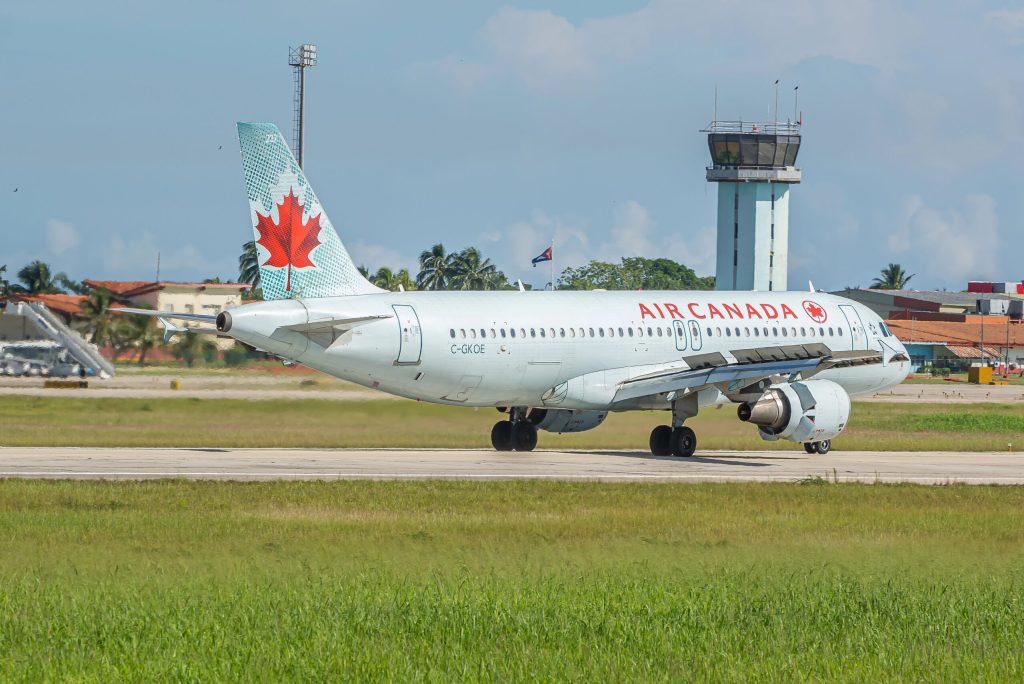
Photograph: Air Canada Airlines at Varadero, Cuba airport in 2021; photo credit: Depositphotos
On Monday, Canadian airlines announced the suspension of flights to Cuba amid warnings from the island nation about a dwindling jet fuel supply. This situation has arisen as the U.S. tightens its grip on Cuba’s oil supply by blocking shipments from Venezuela.
Air Canada, the largest airline in Canada, issued a statement indicating that aviation fuel is expected to be unavailable at airports starting Tuesday. Government notices have cautioned that the fuel supply is likely to be unreliable.
In addition to Air Canada, smaller carriers such as WestJet and Air Transat have also canceled flights due to the anticipated fuel shortages. The shortfall is projected to last from February 10 through March 11, as indicated in a notice to pilots released late Sunday. This announcement comes just two days after Cuban officials claimed that air travel would not be affected by a fuel rationing plan introduced on Friday.
The Cuban Aviation Corporation (ECNA) released a brief statement on Monday morning, shortly after the pilots’ notice, but did not address the fuel shortage or the flight cancellations. “We continue working tirelessly to ensure the safety, fluidity, and order of the airspace, supporting airline operations and ensuring that aviation in Cuba maintains the levels of reliability that characterize us,” ECNA stated.
The Cuban government has yet to respond to requests for further comment.
Refueling Stops
In light of the fuel restrictions, Spanish airline Air Europa announced it would make a refueling stop at Santo Domingo Airport in the Dominican Republic as part of its Madrid–Havana–Madrid route starting Tuesday. Fuel shortages are not a new issue for Cuba, which has faced supply challenges for years. Many airlines have already developed contingency plans to manage these situations.
Previous crises have led carriers to refuel in nearby countries such as Panama, the Bahamas, the Dominican Republic, and even the U.S.
Montreal-based Air Canada has announced plans to send empty flights to Cuba in the coming days to bring home approximately 3,000 customers. The airline will also carry extra fuel for the return journey and may make refueling stops as needed.
WestJet has begun an orderly wind-down of its Cuban operations, effective Monday, which includes flights to assist customers returning to Canada. Similarly, Air Transat has suspended all flights to Cuba until the end of April and is organizing repatriation flights for its customers.
Travelers in Cuba expressed concern over the recent developments. “Today it’s one thing, and tomorrow it’s another,” remarked Benigno Gonzalez, a Cuban at Havana’s Jose Marti International Airport, who was dropping off his daughter for a flight to Mexico. “This will hurt everyone who travels.”
Despite the situation, an early morning Copa Airlines flight to Panama departed on time from Havana, and several American Airlines flights were scheduled to arrive later in the day, according to airport officials.
U.S. carriers such as American Airlines, Southwest Airlines, and Delta Air Lines, which operate flights to Cuba from nearby Florida, reported no current impact on their operations. They confirmed that their aircraft have sufficient fuel for their upcoming trips.
Venezuela Import Problem
Cuba has historically depended on Venezuela for much of its jet fuel. However, the Caribbean nation has not received any crude or refined products from its primary ally since mid-December, when the U.S. moved to block Venezuela’s exports. U.S. President Donald Trump has pledged that Cuba will receive no more oil from Venezuela and has threatened tariffs on any nation supplying fuel to Cuba, effectively cutting off the island’s aviation gas supply.
In December, Venezuela’s state oil company PDVSA loaded an 80,000-barrel cargo of jet fuel for Cuba, but the tanker never departed due to the strict U.S. blockade. The vessel, which has been transporting Venezuelan fuel to Cuba since last year, discharged the jet fuel at a PDVSA-operated port last week and loaded approximately 150,000 barrels of gasoline instead. As of Monday, the vessel had not yet set sail, and its intended destination remains unclear.
(Reporting by Dave Sherwood in Havana and Allison Lampert in Montreal; additional reporting by David Shepardson in Washington, Rajesh Kumar Singh in Chicago, and Marianna Parraga in Houston and Hyunsu Yim; editing by Nick Zieminski, Kevin Liffey, and Jamie Freed)
Photograph: Air Canada Airlines at Varadero, Cuba airport in 2021; photo credit: Depositphotos