Florida Insurance Executives, Directors, and Stockholders: The Importance of Fingerprints and Background Checks
In a significant move for consumer protection, Florida’s House panel has approved a comprehensive bill that mandates background checks and fingerprinting for insurance company officers, employees, board members, and stockholders. This legislation, known as Bill 1263, is sponsored by state Rep. Linda Chaney, R-St. Petersburg.
The bill empowers the Office of Insurance Regulation (OIR) to require insurers and prospective insurers to submit full sets of fingerprints to a state law enforcement agency. These background checks will serve as a tool for the OIR to deny or revoke the certificates of authority for insurance carriers, as outlined in the legislation.
“The Legislature finds that criminal activity of insurers poses a particular danger to the residents of this state,” the bill states. Although Chaney did not specify any instances of criminal activity by insurers, she emphasized that the measure is fundamentally about consumer protection.
“We don’t want insurance companies or any of the management authority to have, maybe, some unsavory background where they were not financially responsible,” Chaney remarked during the subcommittee meeting, which was streamed on The Florida Channel.
Notably, a 2002 Florida law already prohibits insurance companies from hiring officers and directors who held management positions at insolvent carriers for at least two years following the insolvency. Florida regulators have made headlines in their efforts to enforce this provision in recent years.
In addition to the background checks, Chaney’s bill would expand the OIR’s authority in several ways. It would enable the office to issue cease-and-desist orders against insurance firms that are not properly licensed in Florida. According to a legislative analysis, “The authority to issue a cease and desist extends to any person who aids and abets in the violation of the Florida Insurance Code.”
Furthermore, the measure mandates that auto insurers utilize only those hurricane loss models approved by the Florida Commission on Hurricane Loss Projection Methodology when filing for rate changes. Currently, auto insurance companies are exempt from using standard hurricane loss models, which raises concerns about rate appropriateness.
“You can have a small, independent, fringe auto company come in with their own model and set rates according to that,” Chaney explained. “And OIR doesn’t really have a way to analyze whether those are appropriate rates…”
Additionally, the bill requires property insurers to offer a minimum level of premium discounts for home construction techniques that exceed Florida Building Code requirements. This provision aims to incentivize better building practices in the state.
The committee approved the bill without opposition, but it still faces at least one more committee hearing in the House. Notably, no companion bill has been filed in the Senate, which could impact the likelihood of the measure becoming law this year.
Chaney has also introduced a second bill, HB 1265, which would exempt the National Association of Insurance Commissioners from providing deposition testimony in Florida litigation. However, concerns were raised regarding the scope of this exemption and its potential impact on discovery in insurance lawsuits. Chaney has agreed to revise the wording in response to these concerns.
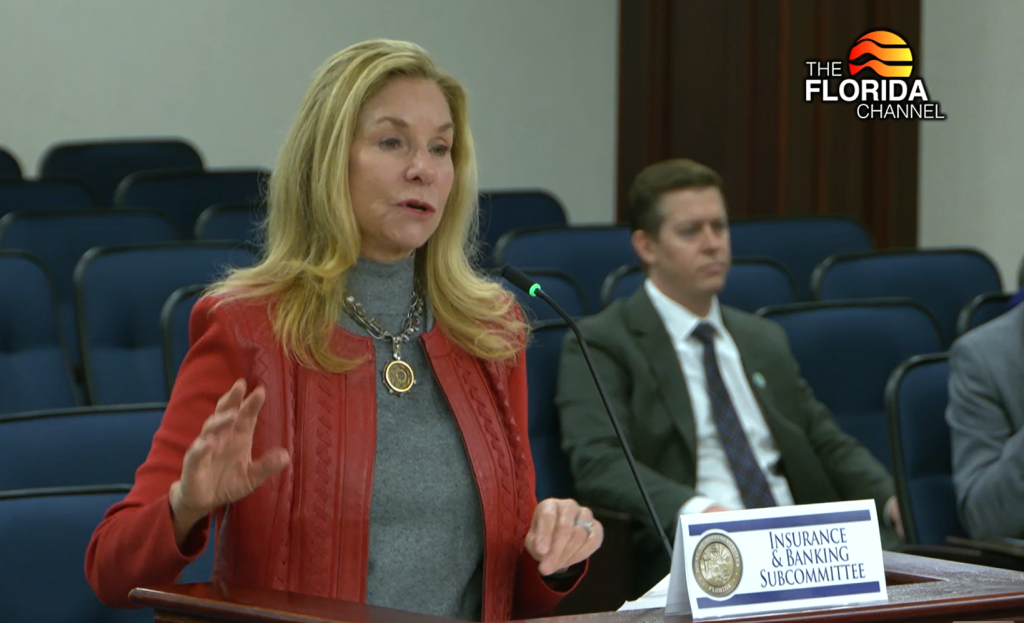
Photo: Chaney at Wednesday’s subcommittee hearing. (The Florida Channel)
Topics
Florida
The most important insurance news, in your inbox every business day.
Get the insurance industry’s trusted newsletter
In a significant move for consumer protection, Florida’s House panel has approved a comprehensive bill that mandates background checks and fingerprinting for insurance company officers, employees, board members, and stockholders. This legislation, known as Bill 1263, is sponsored by state Rep. Linda Chaney, R-St. Petersburg.
The bill empowers the Office of Insurance Regulation (OIR) to require insurers and prospective insurers to submit full sets of fingerprints to a state law enforcement agency. These background checks will serve as a tool for the OIR to deny or revoke the certificates of authority for insurance carriers, as outlined in the legislation.
“The Legislature finds that criminal activity of insurers poses a particular danger to the residents of this state,” the bill states. Although Chaney did not specify any instances of criminal activity by insurers, she emphasized that the measure is fundamentally about consumer protection.
“We don’t want insurance companies or any of the management authority to have, maybe, some unsavory background where they were not financially responsible,” Chaney remarked during the subcommittee meeting, which was streamed on The Florida Channel.
Notably, a 2002 Florida law already prohibits insurance companies from hiring officers and directors who held management positions at insolvent carriers for at least two years following the insolvency. Florida regulators have made headlines in their efforts to enforce this provision in recent years.
In addition to the background checks, Chaney’s bill would expand the OIR’s authority in several ways. It would enable the office to issue cease-and-desist orders against insurance firms that are not properly licensed in Florida. According to a legislative analysis, “The authority to issue a cease and desist extends to any person who aids and abets in the violation of the Florida Insurance Code.”
Furthermore, the measure mandates that auto insurers utilize only those hurricane loss models approved by the Florida Commission on Hurricane Loss Projection Methodology when filing for rate changes. Currently, auto insurance companies are exempt from using standard hurricane loss models, which raises concerns about rate appropriateness.
“You can have a small, independent, fringe auto company come in with their own model and set rates according to that,” Chaney explained. “And OIR doesn’t really have a way to analyze whether those are appropriate rates…”
Additionally, the bill requires property insurers to offer a minimum level of premium discounts for home construction techniques that exceed Florida Building Code requirements. This provision aims to incentivize better building practices in the state.
The committee approved the bill without opposition, but it still faces at least one more committee hearing in the House. Notably, no companion bill has been filed in the Senate, which could impact the likelihood of the measure becoming law this year.
Chaney has also introduced a second bill, HB 1265, which would exempt the National Association of Insurance Commissioners from providing deposition testimony in Florida litigation. However, concerns were raised regarding the scope of this exemption and its potential impact on discovery in insurance lawsuits. Chaney has agreed to revise the wording in response to these concerns.
Photo: Chaney at Wednesday’s subcommittee hearing. (The Florida Channel)
Topics
Florida
The most important insurance news, in your inbox every business day.
Get the insurance industry’s trusted newsletter