Chevron Handles First Venezuelan Oil Shipment Post-Maduro Capture
FOX Business’ Lauren Simonetti joins ‘Mornings with Maria’ to discuss Chevron beginning the collection and processing of Venezuelan oil.
Chevron has commenced processing its first Venezuelan oil shipment since the U.S. capture of Nicolás Maduro in Caracas last month. This shipment is transforming heavy, tar-like crude into gasoline, diesel, and jet fuel for American consumers.
Andy Walz, President of Downstream, Midstream & Chemicals at Chevron, shared insights during an exclusive interview with FOX Business. “We’ve been [in Venezuela] for a long time, and it looks like things are starting to go better for both the Venezuelan people and I would say for the American people too,” he stated. He emphasized that the influx of oil to U.S. refineries, such as those in Pascagoula, will help drive down costs.
FOX Business’ Lauren Simonetti speaks with Chevron Global Refining President Andy Walz as the company processes oil from Venezuela on ‘The Big Money Show.’
“That oil is going to be cheaper, it’s closer, and it’s going to help these refineries run the way they were designed, so I think it’s a really good thing,” Walz added. His remarks mark one of the first public acknowledgments by Chevron regarding the processing of Venezuelan crude in U.S. refineries under renewed sanctioned operations.
AMERICAN ENERGY DOMINANCE GIVES US THE POWER TO FEND OFF ENEMIES AND RESCUE VENEZUELA
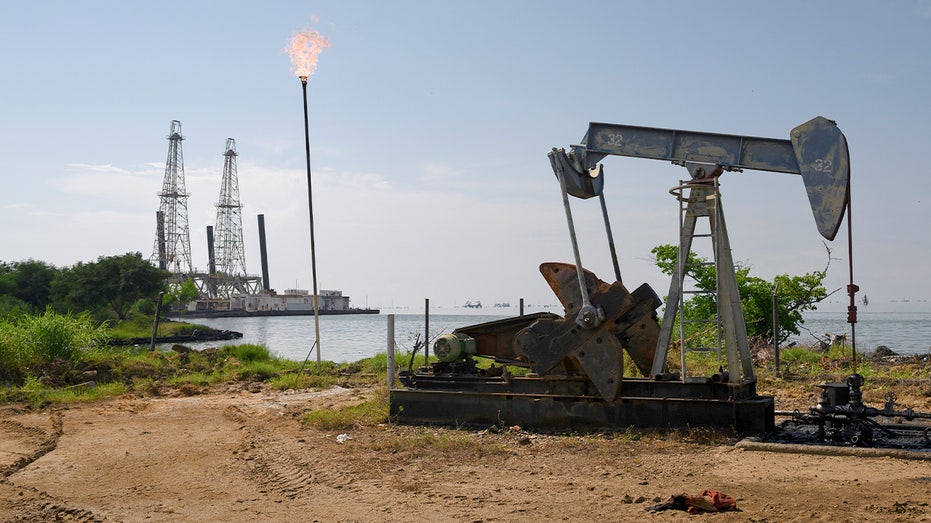
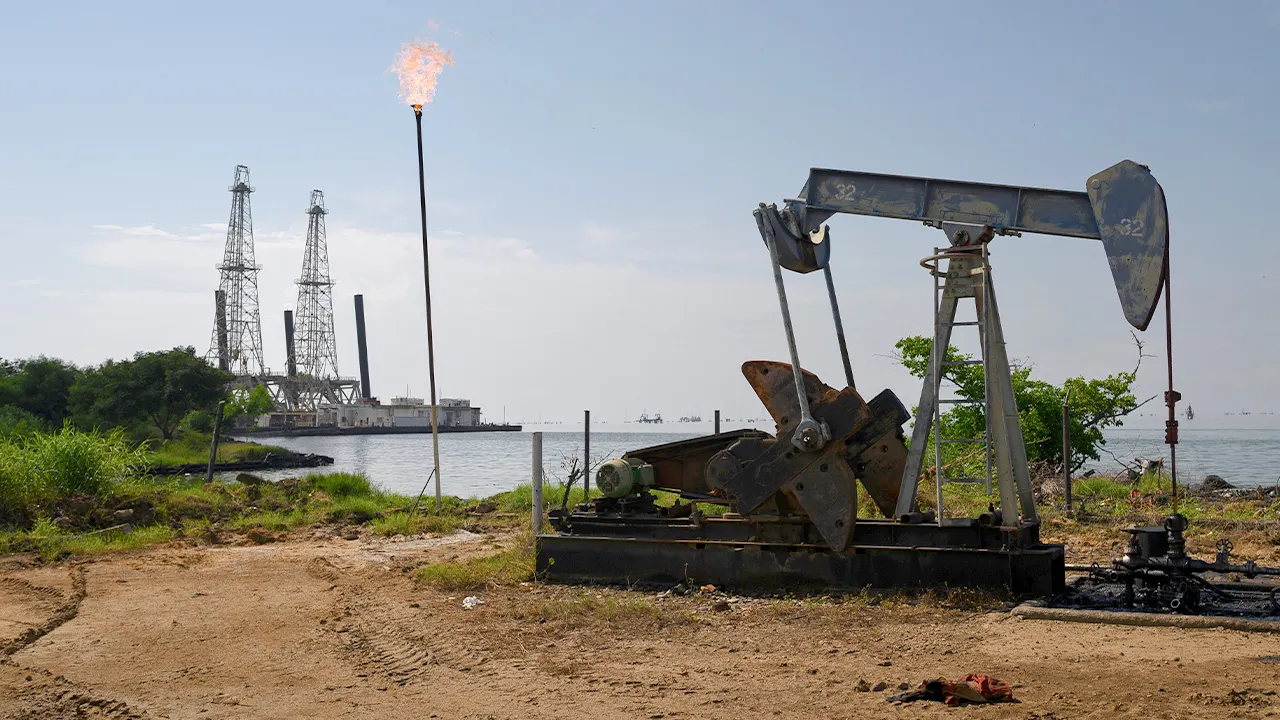
A Petroleos de Venezuela SA (PDVSA) oil pumpjack on Lake Maracaibo in Cabimas, Zulia state, Venezuela on Nov. 17, 2023. (Gabby Oraa/Bloomberg/Getty Images / Getty Images)
FOX Business was granted exclusive access inside Chevron’s facility in Pascagoula, Mississippi, where correspondent Lauren Simonetti reported on the distillation units processing Venezuelan oil that arrived weeks ago. Currently, the refinery processes about 50,000 barrels per day of Venezuelan crude, with Chevron indicating the potential to increase this to another 100,000 barrels per day as more shipments arrive.
Chevron’s Pascagoula refinery is one of the few U.S. Gulf Coast facilities equipped to handle heavy sour crude like that from Venezuela. Other complex refineries capable of this include those in New Orleans, Lake Charles, Port Arthur, Houston, and Corpus Christi.
VENEZUELA RELEASES ALL KNOWN AMERICAN DETAINEES FOLLOWING MADURO CAPTURE AND GOVERNMENT TAKEOVER
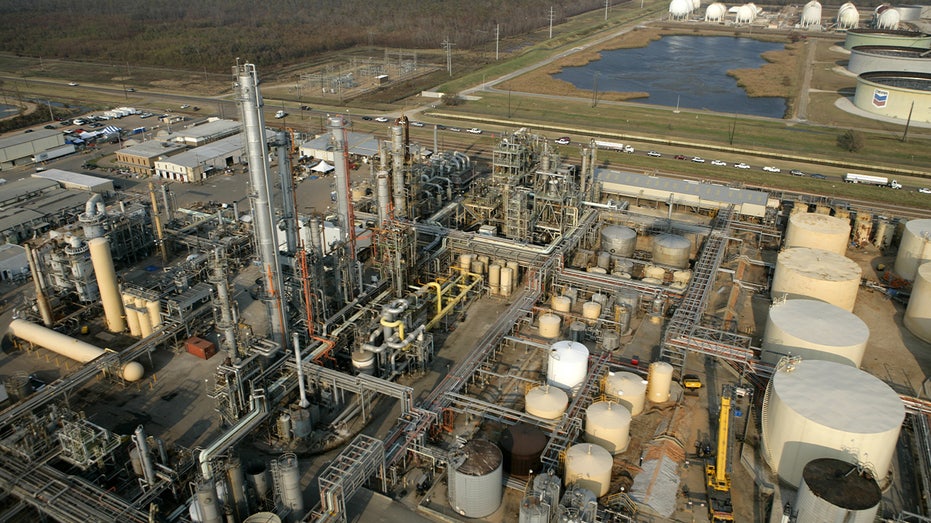
The Pascagoula Chevron Refinery. Then-President George W. Bush visited the refinery shortly after Hurricane Katrina on Sept. 15, 2005. (Brooks Kraft LLC/Corbis via Getty Images / Getty Images)
The refinery benefits from its ability to bring Venezuelan oil directly into its harbor, which eliminates the need for offloading to smaller ships or relying on offshore pipelines. “It’s a pretty efficient system,” Walz noted, pointing to a large ship in the background. “This refinery runs 300,000 [total] barrels a day, so you’ve got to have ships showing up here all the time, and it’s really convenient to have it close, but it’s also important, and it’s a better way to run your operation.”
Chevron CEO Mike Wirth recently highlighted the company’s expansion of Venezuelan operations, emphasizing its long-standing presence and growth in output under current sanctioned authorization. “We’ve been there for most of the last 100 years. We’ve got an important partner in the development and growth of Venezuela,” Wirth stated. He also mentioned that production has increased from 50,000 barrels a day to 250,000, with the potential for a further 50% growth in the next 18 to 24 months.
GET FOX BUSINESS ON THE GO BY CLICKING HERE
The American Petroleum Institute CEO Mike Sommers discusses plans to drill Venezuelan oil and Texas’ new gas power project on ‘Varney & Co.’
“We’re being repaid debt that we’re owed, and others that have left have had more difficulty with that,” Wirth concluded.
With this renewed focus on Venezuelan oil, Chevron is poised to play a significant role in both the U.S. energy landscape and the economic recovery of Venezuela.
FOX Business’ Lauren Simonetti joins ‘Mornings with Maria’ to discuss Chevron beginning the collection and processing of Venezuelan oil.
Chevron has commenced processing its first Venezuelan oil shipment since the U.S. capture of Nicolás Maduro in Caracas last month. This shipment is transforming heavy, tar-like crude into gasoline, diesel, and jet fuel for American consumers.
Andy Walz, President of Downstream, Midstream & Chemicals at Chevron, shared insights during an exclusive interview with FOX Business. “We’ve been [in Venezuela] for a long time, and it looks like things are starting to go better for both the Venezuelan people and I would say for the American people too,” he stated. He emphasized that the influx of oil to U.S. refineries, such as those in Pascagoula, will help drive down costs.
FOX Business’ Lauren Simonetti speaks with Chevron Global Refining President Andy Walz as the company processes oil from Venezuela on ‘The Big Money Show.’
“That oil is going to be cheaper, it’s closer, and it’s going to help these refineries run the way they were designed, so I think it’s a really good thing,” Walz added. His remarks mark one of the first public acknowledgments by Chevron regarding the processing of Venezuelan crude in U.S. refineries under renewed sanctioned operations.
AMERICAN ENERGY DOMINANCE GIVES US THE POWER TO FEND OFF ENEMIES AND RESCUE VENEZUELA
A Petroleos de Venezuela SA (PDVSA) oil pumpjack on Lake Maracaibo in Cabimas, Zulia state, Venezuela on Nov. 17, 2023. (Gabby Oraa/Bloomberg/Getty Images / Getty Images)
FOX Business was granted exclusive access inside Chevron’s facility in Pascagoula, Mississippi, where correspondent Lauren Simonetti reported on the distillation units processing Venezuelan oil that arrived weeks ago. Currently, the refinery processes about 50,000 barrels per day of Venezuelan crude, with Chevron indicating the potential to increase this to another 100,000 barrels per day as more shipments arrive.
Chevron’s Pascagoula refinery is one of the few U.S. Gulf Coast facilities equipped to handle heavy sour crude like that from Venezuela. Other complex refineries capable of this include those in New Orleans, Lake Charles, Port Arthur, Houston, and Corpus Christi.
VENEZUELA RELEASES ALL KNOWN AMERICAN DETAINEES FOLLOWING MADURO CAPTURE AND GOVERNMENT TAKEOVER
The Pascagoula Chevron Refinery. Then-President George W. Bush visited the refinery shortly after Hurricane Katrina on Sept. 15, 2005. (Brooks Kraft LLC/Corbis via Getty Images / Getty Images)
The refinery benefits from its ability to bring Venezuelan oil directly into its harbor, which eliminates the need for offloading to smaller ships or relying on offshore pipelines. “It’s a pretty efficient system,” Walz noted, pointing to a large ship in the background. “This refinery runs 300,000 [total] barrels a day, so you’ve got to have ships showing up here all the time, and it’s really convenient to have it close, but it’s also important, and it’s a better way to run your operation.”
Chevron CEO Mike Wirth recently highlighted the company’s expansion of Venezuelan operations, emphasizing its long-standing presence and growth in output under current sanctioned authorization. “We’ve been there for most of the last 100 years. We’ve got an important partner in the development and growth of Venezuela,” Wirth stated. He also mentioned that production has increased from 50,000 barrels a day to 250,000, with the potential for a further 50% growth in the next 18 to 24 months.
GET FOX BUSINESS ON THE GO BY CLICKING HERE
The American Petroleum Institute CEO Mike Sommers discusses plans to drill Venezuelan oil and Texas’ new gas power project on ‘Varney & Co.’
“We’re being repaid debt that we’re owed, and others that have left have had more difficulty with that,” Wirth concluded.
With this renewed focus on Venezuelan oil, Chevron is poised to play a significant role in both the U.S. energy landscape and the economic recovery of Venezuela.