São Paulo Confronts Climate Paradox: Tackling Drought and Flood Challenges
São Paulo, one of the world’s largest metropolitan areas with a population of 21 million, is currently facing its most significant climate-induced stress test in over a decade. The city is grappling with a deadly combination of flash floods and a severe drought.
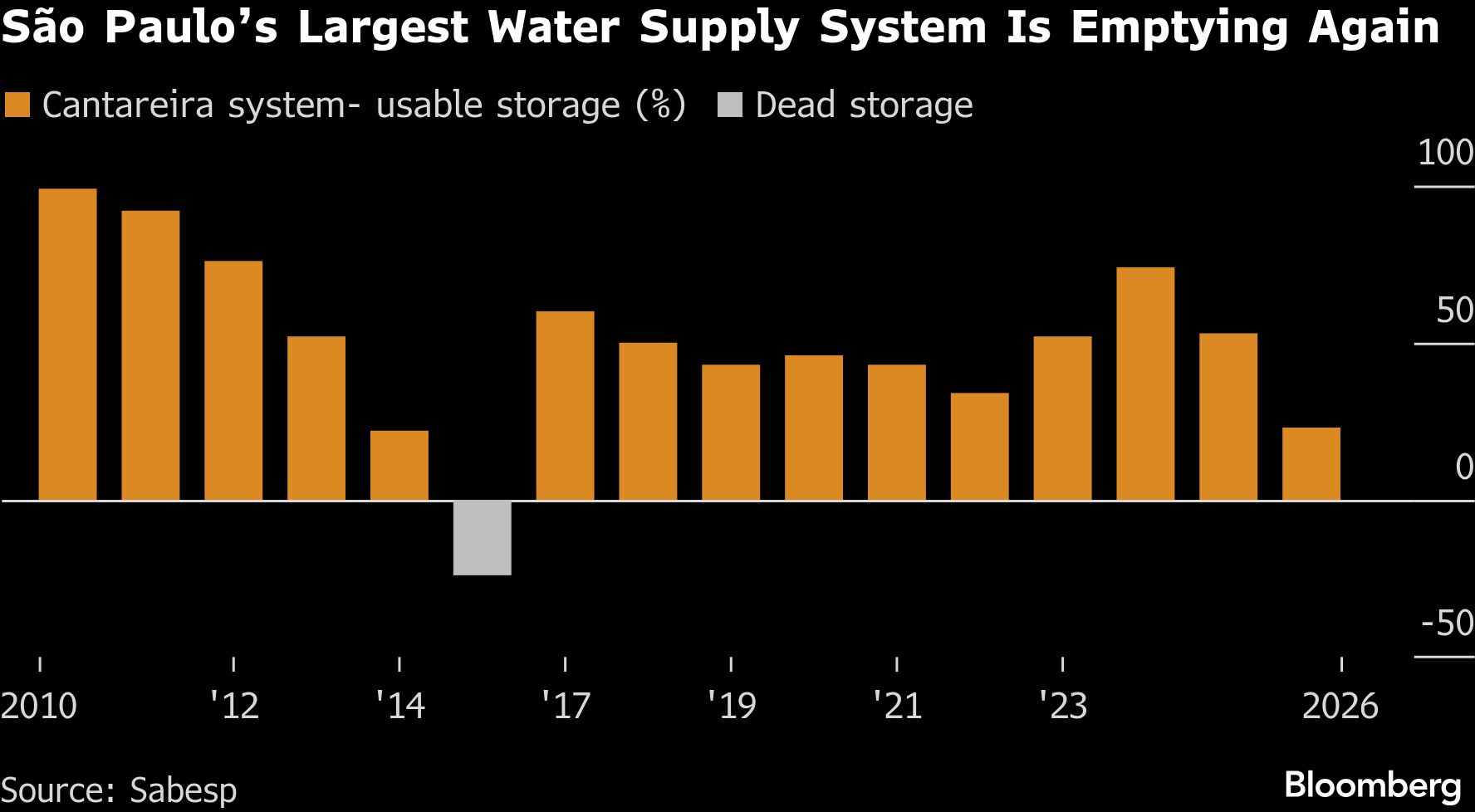
The water levels in the region’s largest reservoir network are alarmingly low, hovering at just 32%. This is the lowest level since the catastrophic water crisis of 2014-2015, and it is expected to decline further as the dry season approaches. Recently, São Paulo has been hit by intense storms that have tragically resulted in the deaths of four individuals, including an elderly couple whose car was swept away by rushing waters.
“What’s behind all of this is climate change, driven not only by global warming and greenhouse gas emissions but also by land use changes,” explained Marcelo Seluchi, a meteorologist from Brazil’s National Center for Monitoring and Early Warning of Natural Disasters (Cemaden).
Data from Cemaden reveals that precipitation levels across much of Brazil have been declining since the 1960s, coinciding with widespread deforestation in central Brazil and the Amazon. “A forested area evaporates four times more water than pasture,” Seluchi noted. “This moisture is crucial for generating rain, along with that which comes from the ocean.”
Rising temperatures also contribute to the crisis, as warmer air can hold more moisture. This saturated atmosphere releases significantly larger amounts of water during rainfall, leading to intense downpours and flash flooding.
The current crisis in São Paulo is reminiscent of the historic drought over a decade ago, which nearly crippled water supplies for Brazil’s economic powerhouse, home to about 10% of the country’s population. During that period, the Cantareira reservoir system faced restrictions for nearly 600 days, affecting millions. Many neighborhoods received water only two to three days a week due to rotating cuts, forcing residents to rely on water trucks. The most impoverished areas suffered the most, where water tanks were considered a luxury.
The previous crisis impacted various sectors, from restaurants to factories, some of which had to halt production. Many businesses and residential complexes resorted to drilling their own wells. Drought-related losses in 2014 alone reached $5 billion, making it the world’s fifth-costliest natural disaster that year, according to a report by insurer Munich Re.
Today, parts of the city are experiencing similar challenges. Pedro Facchini, who owns a burger shop on the iconic Paulista Avenue, notes that water is cut off at 10 p.m. daily, but his business continues to operate for another hour and a half. He cannot install a water tank due to the restaurant’s location inside a gallery.
“On days when I can’t store water to wash dishes, I have to stop serving and lose revenue,” Facchini lamented.
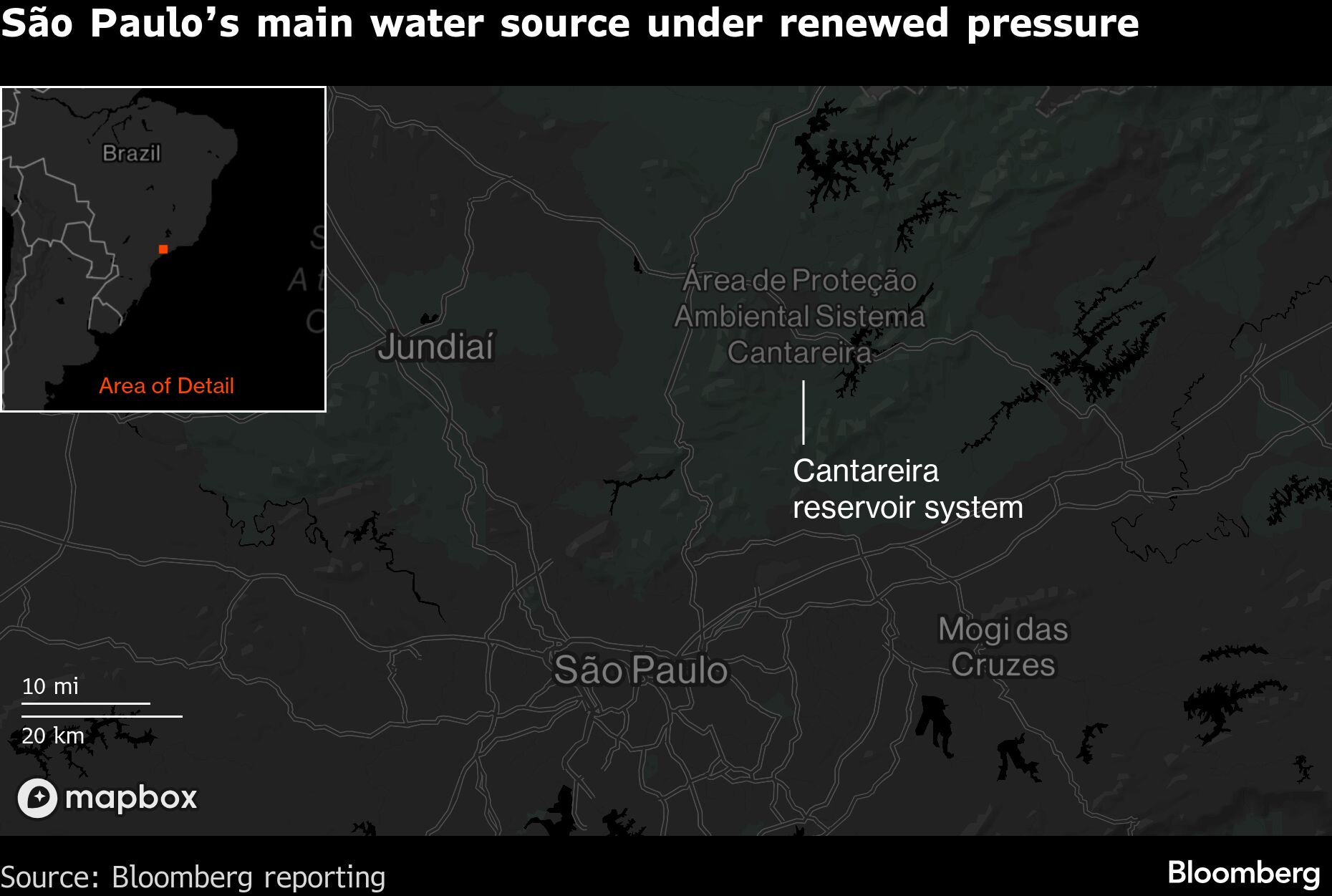
Cemaden estimates that the Cantareira system, which provides water for up to 9 million people, will face restrictions for the remainder of the year. If rainfall remains insufficient, Sabesp, Latin America’s largest water utility, may have to resort to using sediment-filled pools below the pipes, a measure first implemented during the 2014-2015 crisis.
Even when it does rain in São Paulo, there’s no assurance that more water will be collected, as the Cantareira system is located far from the city. Last week, the state government initiated a campaign across television, radio, and social media urging residents to take shorter showers and fix water leaks, reminding them that “even when it rains, sometimes not a single drop reaches the reservoirs.”
The city’s extensive paved surfaces exacerbate the risk of flooding when heavy rains occur. Recently, severe storms caused flash flooding, rendering several streets impassable and forcing thousands attending pre-Carnival celebrations to wade through floodwaters.
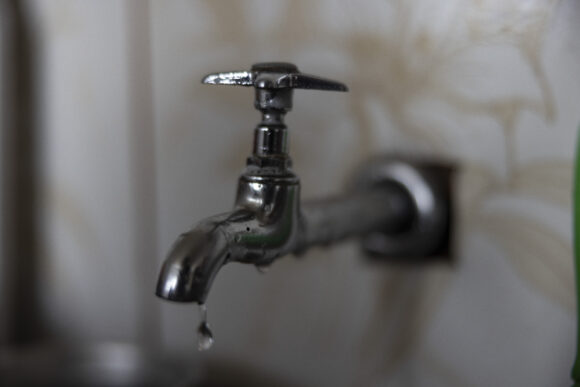
Since August, São Paulo’s utilities regulator has instructed Sabesp to reduce nighttime water pressure to limit losses from the system’s extensive underground leaks. The effects are most acutely felt in poorer neighborhoods and higher-elevation areas like Paulista Avenue, where taps often run weak or dry.
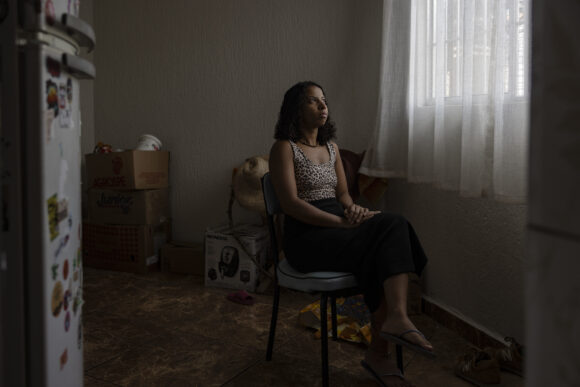
Ilana Ori, a student and climate activist from the city’s eastern outskirts, has resorted to heating water on the stove for bucket baths for weeks. Although her house has a water tank, it isn’t connected to the bathroom.
“The water usually stops flowing around 9:30 p.m., but there have been days with no supply at all,” she shared. “Rather than imposing measures that impact the poorest, authorities should support the most vulnerable and curb water use by the most privileged.”
Sabesp announced in October plans to install water tanks free of charge in low-income homes lacking proper storage. However, Ori stated she was unaware of the program and knew no one who had benefited from it.
According to Samanta Souza, Sabesp’s director of institutional relations and sustainability, the utility has invested in various infrastructure projects to alleviate water shortages since the last crisis. These include a connection to the Paraiba do Sul river basin, which helps replenish the Cantareira, and the establishment of the São Lourenco system, now the seventh water supply source for São Paulo.
As a result, more water is available than in the past, Souza asserted. “It’s as if our glass of water is larger today than it was in 2014,” she said. “We are prepared to face a situation like 2014.”
Sabesp, which was privatized in 2024, plans to invest nearly $1 billion in improving equipment over the next two years and to accelerate reforestation efforts to create a green belt around Cantareira. To address the chronic issue of water loss, the utility is replacing aging infrastructure and installing 4 million smart meters that allow for hourly consumption monitoring via a mobile app to detect leaks more efficiently.
São Paulo state’s public utilities regulator is closely monitoring the situation. Luz Adriana Cuartas, a researcher at Cemaden, argues that a rationing scheme should have been implemented since December. The integrated metropolitan system, which encompasses all seven sources, is currently operating at about 43% of capacity.
“When conditions become extremely critical, the most responsible course of action is to operate the system as if the worst-case scenario were already in effect,” she advised, “to prevent it from happening.”
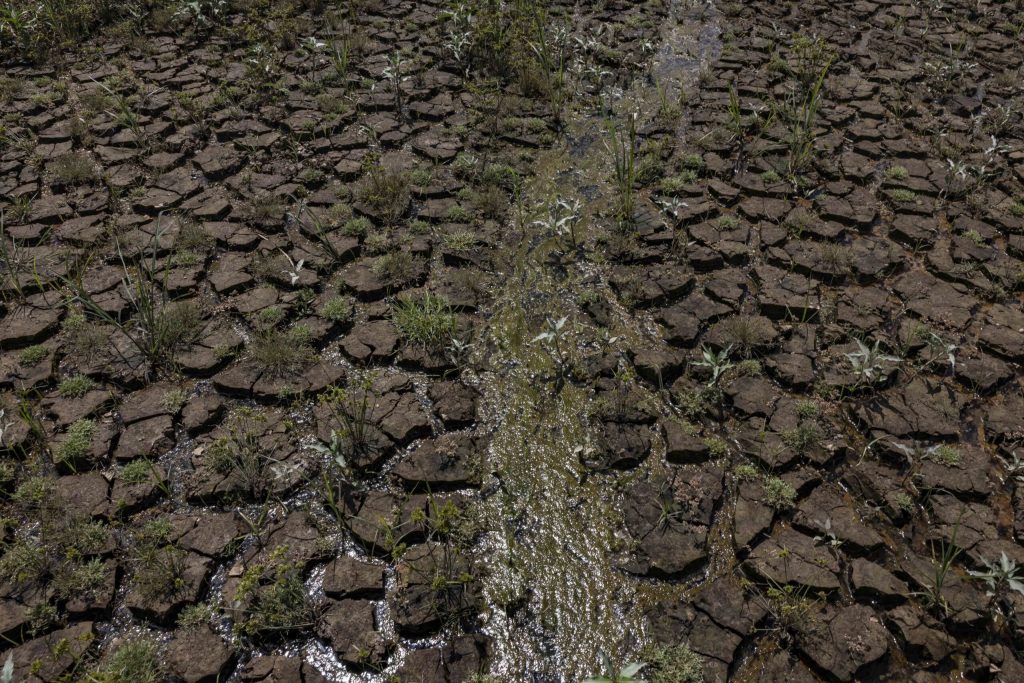
Photograph: Dry land cracks along the Jacareí River Dam, part of the Cantareira reservoir system, in Joanopolis, São Paulo state. Photo credit: Victor Moriyama/Bloomberg
Copyright 2026 Bloomberg.
Topics
Flood
São Paulo, one of the world’s largest metropolitan areas with a population of 21 million, is currently facing its most significant climate-induced stress test in over a decade. The city is grappling with a deadly combination of flash floods and a severe drought.
The water levels in the region’s largest reservoir network are alarmingly low, hovering at just 32%. This is the lowest level since the catastrophic water crisis of 2014-2015, and it is expected to decline further as the dry season approaches. Recently, São Paulo has been hit by intense storms that have tragically resulted in the deaths of four individuals, including an elderly couple whose car was swept away by rushing waters.
“What’s behind all of this is climate change, driven not only by global warming and greenhouse gas emissions but also by land use changes,” explained Marcelo Seluchi, a meteorologist from Brazil’s National Center for Monitoring and Early Warning of Natural Disasters (Cemaden).
Data from Cemaden reveals that precipitation levels across much of Brazil have been declining since the 1960s, coinciding with widespread deforestation in central Brazil and the Amazon. “A forested area evaporates four times more water than pasture,” Seluchi noted. “This moisture is crucial for generating rain, along with that which comes from the ocean.”
Rising temperatures also contribute to the crisis, as warmer air can hold more moisture. This saturated atmosphere releases significantly larger amounts of water during rainfall, leading to intense downpours and flash flooding.
The current crisis in São Paulo is reminiscent of the historic drought over a decade ago, which nearly crippled water supplies for Brazil’s economic powerhouse, home to about 10% of the country’s population. During that period, the Cantareira reservoir system faced restrictions for nearly 600 days, affecting millions. Many neighborhoods received water only two to three days a week due to rotating cuts, forcing residents to rely on water trucks. The most impoverished areas suffered the most, where water tanks were considered a luxury.
The previous crisis impacted various sectors, from restaurants to factories, some of which had to halt production. Many businesses and residential complexes resorted to drilling their own wells. Drought-related losses in 2014 alone reached $5 billion, making it the world’s fifth-costliest natural disaster that year, according to a report by insurer Munich Re.
Today, parts of the city are experiencing similar challenges. Pedro Facchini, who owns a burger shop on the iconic Paulista Avenue, notes that water is cut off at 10 p.m. daily, but his business continues to operate for another hour and a half. He cannot install a water tank due to the restaurant’s location inside a gallery.
“On days when I can’t store water to wash dishes, I have to stop serving and lose revenue,” Facchini lamented.
Cemaden estimates that the Cantareira system, which provides water for up to 9 million people, will face restrictions for the remainder of the year. If rainfall remains insufficient, Sabesp, Latin America’s largest water utility, may have to resort to using sediment-filled pools below the pipes, a measure first implemented during the 2014-2015 crisis.
Even when it does rain in São Paulo, there’s no assurance that more water will be collected, as the Cantareira system is located far from the city. Last week, the state government initiated a campaign across television, radio, and social media urging residents to take shorter showers and fix water leaks, reminding them that “even when it rains, sometimes not a single drop reaches the reservoirs.”
The city’s extensive paved surfaces exacerbate the risk of flooding when heavy rains occur. Recently, severe storms caused flash flooding, rendering several streets impassable and forcing thousands attending pre-Carnival celebrations to wade through floodwaters.
Since August, São Paulo’s utilities regulator has instructed Sabesp to reduce nighttime water pressure to limit losses from the system’s extensive underground leaks. The effects are most acutely felt in poorer neighborhoods and higher-elevation areas like Paulista Avenue, where taps often run weak or dry.
Ilana Ori, a student and climate activist from the city’s eastern outskirts, has resorted to heating water on the stove for bucket baths for weeks. Although her house has a water tank, it isn’t connected to the bathroom.
“The water usually stops flowing around 9:30 p.m., but there have been days with no supply at all,” she shared. “Rather than imposing measures that impact the poorest, authorities should support the most vulnerable and curb water use by the most privileged.”
Sabesp announced in October plans to install water tanks free of charge in low-income homes lacking proper storage. However, Ori stated she was unaware of the program and knew no one who had benefited from it.
According to Samanta Souza, Sabesp’s director of institutional relations and sustainability, the utility has invested in various infrastructure projects to alleviate water shortages since the last crisis. These include a connection to the Paraiba do Sul river basin, which helps replenish the Cantareira, and the establishment of the São Lourenco system, now the seventh water supply source for São Paulo.
As a result, more water is available than in the past, Souza asserted. “It’s as if our glass of water is larger today than it was in 2014,” she said. “We are prepared to face a situation like 2014.”
Sabesp, which was privatized in 2024, plans to invest nearly $1 billion in improving equipment over the next two years and to accelerate reforestation efforts to create a green belt around Cantareira. To address the chronic issue of water loss, the utility is replacing aging infrastructure and installing 4 million smart meters that allow for hourly consumption monitoring via a mobile app to detect leaks more efficiently.
São Paulo state’s public utilities regulator is closely monitoring the situation. Luz Adriana Cuartas, a researcher at Cemaden, argues that a rationing scheme should have been implemented since December. The integrated metropolitan system, which encompasses all seven sources, is currently operating at about 43% of capacity.
“When conditions become extremely critical, the most responsible course of action is to operate the system as if the worst-case scenario were already in effect,” she advised, “to prevent it from happening.”
Photograph: Dry land cracks along the Jacareí River Dam, part of the Cantareira reservoir system, in Joanopolis, São Paulo state. Photo credit: Victor Moriyama/Bloomberg
Copyright 2026 Bloomberg.
Topics
Flood