Social Security Trust Fund Insolvency and Potential Benefit Cuts by 2032: Insights from CBO

Sen. Rand Paul, R-Ky., joins Mornings with Maria to address the economic impact of the ongoing government shutdown ahead of another vote and shares his prediction on when the government will re-open.
A critical trust fund that helps finance Social Security benefits is on track to reach insolvency by 2032. This situation could lead to automatic benefit cuts unless Congress takes action, according to a new report.
The nonpartisan Congressional Budget Office (CBO) recently released its 10-year budget and economic outlook, projecting that Social Security’s Old-Age and Survivors Insurance (OASI) trust fund will be depleted by 2032. This depletion is attributed to spending outpacing the trust fund’s income, with the gap expected to widen over time.
According to the CBO, spending from the OASI trust fund is anticipated to rise from $1.5 trillion this fiscal year to over $2.5 trillion by 2036. When factoring in tax receipts and interest income, the projected deficit for the trust fund is expected to increase from $207 billion this year to $525 billion in 2032, continuing to rise to $691 billion in 2036, assuming full benefits are paid out.
Social Security benefits are primarily funded through payroll tax receipts and the OASI trust fund. Once the trust fund is exhausted, the federal government will only be able to pay out benefits based on what it collects from payroll taxes. This means that benefits would face cuts without Congressional intervention.
US DEBT SET TO CRUSH WORLD WAR II RECORD AS ANNUAL DEFICITS EXPLODE TO $3T WITHIN DECADE

Surging Social Security spending has contributed to the depletion of its key trust fund. (Getty Images/iStock)
The CBO clarified that while the government would continue to collect excise and payroll taxes designated for the funds, it would not have the legal authority to make payments exceeding its receipts. Consequently, it would be unable to pay the full amounts scheduled or projected under current law.
An illustrative scenario from the CBO indicates that benefits paid to beneficiaries could be cut by 7% in 2032, with an average reduction of 28% per year from 2033 to 2036. The process for implementing these cuts is not clearly defined in federal law, and various methods of adjusting Social Security benefits to align with incoming tax revenue could have different economic implications.
The Committee for a Responsible Federal Budget (CRFB), a nonpartisan think tank, previously estimated that a typical couple aged 60 today, retiring at the time of insolvency, could face an annual benefits cut of $18,400 due to a projected 24% reduction.
WHAT ARE THE BIGGEST BUDGET DEFICITS IN US HISTORY?
The looming threat of insolvency for Social Security’s key trust fund coincides with rising spending on the entitlement program, driven by the aging population in America. Social Security spending as a share of gross domestic product (GDP) has averaged 4.5% from 1976 to 2025 and is projected to increase from 5.2% of GDP this year to 5.9% by 2036. In dollar terms, Social Security spending is estimated to exceed $1.6 trillion in 2026 and is expected to surpass $2.7 trillion within a decade.
Mandatory spending programs, including Social Security and Medicare, are significant contributors to the rise in federal spending and budget deficits. For the period from 1976 to 2025, mandatory spending accounted for 11.2% of GDP, but it is projected to reach 14.2% of GDP this year and further increase to 15% by 2036.
NATIONAL DEBT SURPASSES $38 TRILLION MILESTONE FOR FIRST TIME IN US HISTORY AS SPENDING SURGES
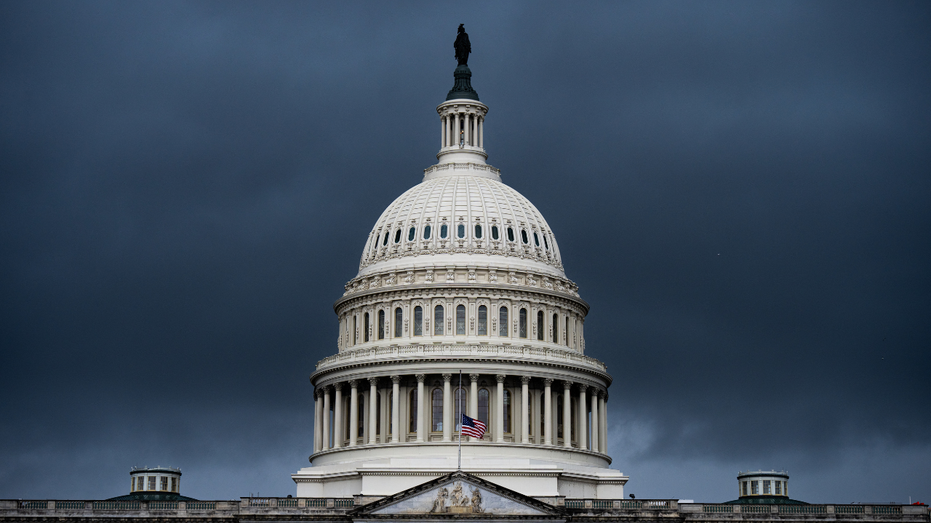
The insolvency of Social Security’s main trust fund would yield automatic benefit cuts unless Congress acts. (Bill Clark/CQ-Roll Call, Inc/Getty Images / Getty Images)
Projected expenses from mandatory programs are expected to total $4.5 trillion in 2026, comprising a significant portion of the federal government’s more than $7.4 trillion in spending this year. A decade from now, mandatory spending is projected to exceed $7 trillion of the anticipated $11.4 trillion federal budget.
Discretionary spending, which funds federal agencies through the annual appropriations process in Congress, is expected to reach nearly $1.9 trillion in 2026, rising to $2.2 trillion over the next decade.
GET FOX BUSINESS ON THE GO BY CLICKING HERE
Interest expenses from servicing the national debt are also projected to increase significantly, from $1 trillion in 2026 to over $2.1 trillion by 2036.
Sen. Rand Paul, R-Ky., joins Mornings with Maria to address the economic impact of the ongoing government shutdown ahead of another vote and shares his prediction on when the government will re-open.
A critical trust fund that helps finance Social Security benefits is on track to reach insolvency by 2032. This situation could lead to automatic benefit cuts unless Congress takes action, according to a new report.
The nonpartisan Congressional Budget Office (CBO) recently released its 10-year budget and economic outlook, projecting that Social Security’s Old-Age and Survivors Insurance (OASI) trust fund will be depleted by 2032. This depletion is attributed to spending outpacing the trust fund’s income, with the gap expected to widen over time.
According to the CBO, spending from the OASI trust fund is anticipated to rise from $1.5 trillion this fiscal year to over $2.5 trillion by 2036. When factoring in tax receipts and interest income, the projected deficit for the trust fund is expected to increase from $207 billion this year to $525 billion in 2032, continuing to rise to $691 billion in 2036, assuming full benefits are paid out.
Social Security benefits are primarily funded through payroll tax receipts and the OASI trust fund. Once the trust fund is exhausted, the federal government will only be able to pay out benefits based on what it collects from payroll taxes. This means that benefits would face cuts without Congressional intervention.
US DEBT SET TO CRUSH WORLD WAR II RECORD AS ANNUAL DEFICITS EXPLODE TO $3T WITHIN DECADE
Surging Social Security spending has contributed to the depletion of its key trust fund. (Getty Images/iStock)
The CBO clarified that while the government would continue to collect excise and payroll taxes designated for the funds, it would not have the legal authority to make payments exceeding its receipts. Consequently, it would be unable to pay the full amounts scheduled or projected under current law.
An illustrative scenario from the CBO indicates that benefits paid to beneficiaries could be cut by 7% in 2032, with an average reduction of 28% per year from 2033 to 2036. The process for implementing these cuts is not clearly defined in federal law, and various methods of adjusting Social Security benefits to align with incoming tax revenue could have different economic implications.
The Committee for a Responsible Federal Budget (CRFB), a nonpartisan think tank, previously estimated that a typical couple aged 60 today, retiring at the time of insolvency, could face an annual benefits cut of $18,400 due to a projected 24% reduction.
WHAT ARE THE BIGGEST BUDGET DEFICITS IN US HISTORY?
The looming threat of insolvency for Social Security’s key trust fund coincides with rising spending on the entitlement program, driven by the aging population in America. Social Security spending as a share of gross domestic product (GDP) has averaged 4.5% from 1976 to 2025 and is projected to increase from 5.2% of GDP this year to 5.9% by 2036. In dollar terms, Social Security spending is estimated to exceed $1.6 trillion in 2026 and is expected to surpass $2.7 trillion within a decade.
Mandatory spending programs, including Social Security and Medicare, are significant contributors to the rise in federal spending and budget deficits. For the period from 1976 to 2025, mandatory spending accounted for 11.2% of GDP, but it is projected to reach 14.2% of GDP this year and further increase to 15% by 2036.
NATIONAL DEBT SURPASSES $38 TRILLION MILESTONE FOR FIRST TIME IN US HISTORY AS SPENDING SURGES
The insolvency of Social Security’s main trust fund would yield automatic benefit cuts unless Congress acts. (Bill Clark/CQ-Roll Call, Inc/Getty Images / Getty Images)
Projected expenses from mandatory programs are expected to total $4.5 trillion in 2026, comprising a significant portion of the federal government’s more than $7.4 trillion in spending this year. A decade from now, mandatory spending is projected to exceed $7 trillion of the anticipated $11.4 trillion federal budget.
Discretionary spending, which funds federal agencies through the annual appropriations process in Congress, is expected to reach nearly $1.9 trillion in 2026, rising to $2.2 trillion over the next decade.
GET FOX BUSINESS ON THE GO BY CLICKING HERE
Interest expenses from servicing the national debt are also projected to increase significantly, from $1 trillion in 2026 to over $2.1 trillion by 2036.