Determining Art Prices: Can AI Provide Guidance?
Stephen Smith, a 56-year-old art collector based in the UK, has been utilizing MyArtBroker, a platform dedicated to the sales and management of secondary-market prints and editions, since 2024. His first purchase was Echo, a piece by British abstract artist Bridget Riley, which he acquired for £7,500 ($10,300). Smith finds the platform’s instant valuation tool particularly beneficial, especially after experiencing overpayment in previous gallery purchases. “It gives quite a good, accurate impression of the price for a specific print at that particular time,” he explains.
The art market is notoriously opaque when it comes to pricing. Many galleries do not disclose their prices, and sales data from galleries and dealers are seldom made public. The only accessible sales information typically comes from auction markets, leaving buyers frustrated and uncertain. According to the 2025 Deloitte Private and ArtTactic Art & Finance Report, over half of collectors cited the lack of transparent pricing as a significant barrier to their purchasing decisions.
In response to this challenge, several companies have developed AI-powered valuation tools that allow collectors to obtain price estimates for individual artworks. These tools are reportedly boosting the confidence of new buyers, especially at lower price points, while also enabling seasoned collectors to monitor their collections’ value. Additionally, some firms are leveraging these valuation models to provide loans backed by art or insurance for art collections.
Artscapy, a platform focused on collection management, sales, and art finance, offers free price estimates alongside paid appraisal services and access to art advisors. CEO Alessandro De Stasio notes, “We started using AI for valuation and appraisals with the very early models of ChatGPT, so we’ve been training the model for three and a half years.” The AI at Artscapy is trained on specific data sources, including auction sales, private sales, and data from Artscapy collectors, allowing members to track their collections’ value and access art loans and insurance.
When collectors upload information and images of their artwork, Artscapy’s £59.99 appraisal service generates a comprehensive report detailing the estimated value, liquidity, and volatility of the piece. Meanwhile, MyArtBroker employs predictive machine learning for its valuation tool, relying on data from 400 auction houses, private sales, and current collector demand. Managing director Charlotte Stewart emphasizes the importance of human oversight, stating, “In every part of the process, you’ve got a human being in the loop.”
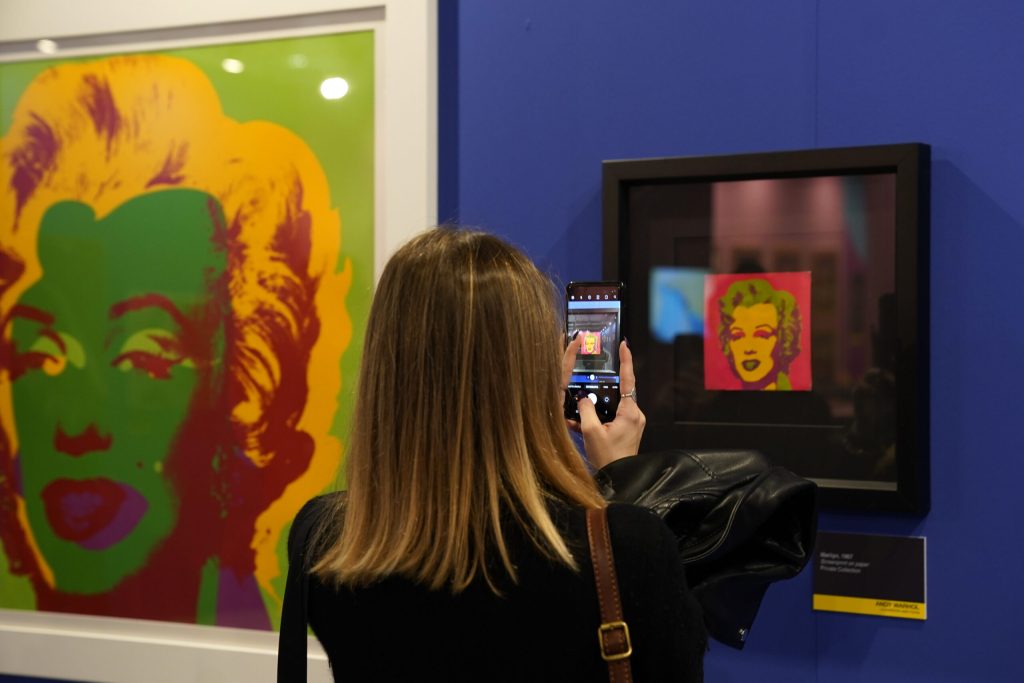
For instance, if a user selects an Andy Warhol Marilyn print, they receive a price range for its fair-market value. For a more precise valuation, collectors can request an expert assessment that incorporates algorithmic data along with variables like condition and provenance, which are better evaluated by humans.
A significant challenge in the art market is the lack of comprehensive data. Over 60% of art sales occur behind closed doors, making it difficult for tool providers to access private transaction data. De Stasio notes, “A big question for the market is how to access private art transactions at scale, and that’s very hard.”
Artnet, which owns the most influential auction price database, is also exploring this issue. Following its acquisition by Beowolff Capital in 2025, CEO Andrew Wolff aims to combine Artnet’s auction data with Artsy’s primary-market sales and user behavior to develop AI-enabled analytics. Wolff envisions various applications for these valuation tools, including art lending and insurance.
AI’s capabilities in image recognition and data analysis can significantly enhance the credibility of valuation models, particularly in the primary market. Wolff asserts that their new models will incorporate diverse inputs, such as exhibition histories and social media trends. However, experts caution that these tools cannot replace the expertise of art advisors and appraisers, who are essential for navigating the complexities of the market.
Art adviser Aileen Agopian emphasizes that while AI can analyze visible data and auction records, understanding the broader context of an artwork is crucial. “You need to understand how this particular work matters in an artist’s broader body of work, its exhibition history, provenance, and condition,” she explains.
Mike Profit, CEO of ArtLogic, highlights that while AI tools can enhance buyer confidence, they risk oversimplifying the art’s narrative and the relationships between galleries and collectors. “They negate the story behind the art and the gallery’s relationships with collectors and expertise,” he warns.
Despite the advancements in valuation tools, the art market’s inherent illiquidity remains a challenge. Instant valuations do not guarantee immediate buying or selling opportunities. Smith notes, “These are theoretical values,” emphasizing the importance of consulting specialists before making a purchase.
While these tools provide a valuable starting point for navigating the complex art market, they are just the first step in the buying process, particularly for unique and high-value works. The art world continues to be driven by human emotions, relationships, trust, and expertise. “Anyone who works in the art industry should be a humanist at their core,” De Stasio concludes.
Photograph: ‘Marilyn’ (1967) screenprint on wallpaper is displayed as part of the exhibition preview of “Andy Warhol. Advertising Of The Form” at the Fabbrica del Vapore on October 21, 2022 in Milan, Italy. Photographer: Pier Marco Tacca/Getty Images Europe
Stephen Smith, a 56-year-old art collector based in the UK, has been utilizing MyArtBroker, a platform dedicated to the sales and management of secondary-market prints and editions, since 2024. His first purchase was Echo, a piece by British abstract artist Bridget Riley, which he acquired for £7,500 ($10,300). Smith finds the platform’s instant valuation tool particularly beneficial, especially after experiencing overpayment in previous gallery purchases. “It gives quite a good, accurate impression of the price for a specific print at that particular time,” he explains.
The art market is notoriously opaque when it comes to pricing. Many galleries do not disclose their prices, and sales data from galleries and dealers are seldom made public. The only accessible sales information typically comes from auction markets, leaving buyers frustrated and uncertain. According to the 2025 Deloitte Private and ArtTactic Art & Finance Report, over half of collectors cited the lack of transparent pricing as a significant barrier to their purchasing decisions.
In response to this challenge, several companies have developed AI-powered valuation tools that allow collectors to obtain price estimates for individual artworks. These tools are reportedly boosting the confidence of new buyers, especially at lower price points, while also enabling seasoned collectors to monitor their collections’ value. Additionally, some firms are leveraging these valuation models to provide loans backed by art or insurance for art collections.
Artscapy, a platform focused on collection management, sales, and art finance, offers free price estimates alongside paid appraisal services and access to art advisors. CEO Alessandro De Stasio notes, “We started using AI for valuation and appraisals with the very early models of ChatGPT, so we’ve been training the model for three and a half years.” The AI at Artscapy is trained on specific data sources, including auction sales, private sales, and data from Artscapy collectors, allowing members to track their collections’ value and access art loans and insurance.
When collectors upload information and images of their artwork, Artscapy’s £59.99 appraisal service generates a comprehensive report detailing the estimated value, liquidity, and volatility of the piece. Meanwhile, MyArtBroker employs predictive machine learning for its valuation tool, relying on data from 400 auction houses, private sales, and current collector demand. Managing director Charlotte Stewart emphasizes the importance of human oversight, stating, “In every part of the process, you’ve got a human being in the loop.”
For instance, if a user selects an Andy Warhol Marilyn print, they receive a price range for its fair-market value. For a more precise valuation, collectors can request an expert assessment that incorporates algorithmic data along with variables like condition and provenance, which are better evaluated by humans.
A significant challenge in the art market is the lack of comprehensive data. Over 60% of art sales occur behind closed doors, making it difficult for tool providers to access private transaction data. De Stasio notes, “A big question for the market is how to access private art transactions at scale, and that’s very hard.”
Artnet, which owns the most influential auction price database, is also exploring this issue. Following its acquisition by Beowolff Capital in 2025, CEO Andrew Wolff aims to combine Artnet’s auction data with Artsy’s primary-market sales and user behavior to develop AI-enabled analytics. Wolff envisions various applications for these valuation tools, including art lending and insurance.
AI’s capabilities in image recognition and data analysis can significantly enhance the credibility of valuation models, particularly in the primary market. Wolff asserts that their new models will incorporate diverse inputs, such as exhibition histories and social media trends. However, experts caution that these tools cannot replace the expertise of art advisors and appraisers, who are essential for navigating the complexities of the market.
Art adviser Aileen Agopian emphasizes that while AI can analyze visible data and auction records, understanding the broader context of an artwork is crucial. “You need to understand how this particular work matters in an artist’s broader body of work, its exhibition history, provenance, and condition,” she explains.
Mike Profit, CEO of ArtLogic, highlights that while AI tools can enhance buyer confidence, they risk oversimplifying the art’s narrative and the relationships between galleries and collectors. “They negate the story behind the art and the gallery’s relationships with collectors and expertise,” he warns.
Despite the advancements in valuation tools, the art market’s inherent illiquidity remains a challenge. Instant valuations do not guarantee immediate buying or selling opportunities. Smith notes, “These are theoretical values,” emphasizing the importance of consulting specialists before making a purchase.
While these tools provide a valuable starting point for navigating the complex art market, they are just the first step in the buying process, particularly for unique and high-value works. The art world continues to be driven by human emotions, relationships, trust, and expertise. “Anyone who works in the art industry should be a humanist at their core,” De Stasio concludes.
Photograph: ‘Marilyn’ (1967) screenprint on wallpaper is displayed as part of the exhibition preview of “Andy Warhol. Advertising Of The Form” at the Fabbrica del Vapore on October 21, 2022 in Milan, Italy. Photographer: Pier Marco Tacca/Getty Images Europe