Tesla Sidesteps California Sales Suspension Amid Autopilot Advertising Concerns
Tesla Inc. has received the green light to continue its electric vehicle sales in California without interruption. This follows the company’s recent adjustments to address concerns raised by the state regarding misleading marketing of its driver-assistance technology.
The California Department of Motor Vehicles (DMV) announced that Tesla has taken “corrective action,” which includes discontinuing the use of the Autopilot branding within the state. Additionally, the company has refined its use of the term Full Self-Driving to better clarify when driver supervision is necessary.
Related: Tesla’s Austin Robotaxis Report 14 Crashes in First Eight Months
Initially, California was set to suspend Tesla’s sales license for 30 days following a December ruling from an administrative judge. This ruling stemmed from allegations that Tesla had exaggerated the capabilities of its driver-assistance systems. The state provided Tesla with a window to either appeal the decision or comply with the requirements.
This reprieve is a significant win for Tesla, especially as the company seeks to reverse a prolonged sales slump amid declining U.S. incentives that are impacting electric vehicle demand. As the largest car market in the U.S. and a leader in electric vehicle adoption, any disruption in California could prove costly for the automaker.
Related: ZEV Registrations in California Fell for the First Time Since 2020
Despite the positive news, Tesla did not respond to requests for comment. On the stock market, the company’s shares saw a slight increase of less than 1% before regular trading commenced on Wednesday in New York. However, the stock has experienced a decline of 8.7% this year, underperforming compared to the S&P 500 Index, which remained relatively stable.
Tesla has been under scrutiny for several years from federal prosecutors, securities regulators, and the National Highway Traffic Safety Administration. The company has also faced lawsuits from consumers and investors regarding the marketing, usage, and performance of its driver-assistance features. Both Autopilot and Full Self-Driving systems require active human supervision, which complicates the perception of Tesla vehicles as fully autonomous. This confusion is further exacerbated by the company’s ambitions to establish a robotaxi business.
In January, Tesla discontinued its Autopilot product and has increasingly adopted the term Full Self Driving (Supervised) in its advertising. This terminology emphasizes that the system is not fully autonomous and necessitates constant supervision from the driver.
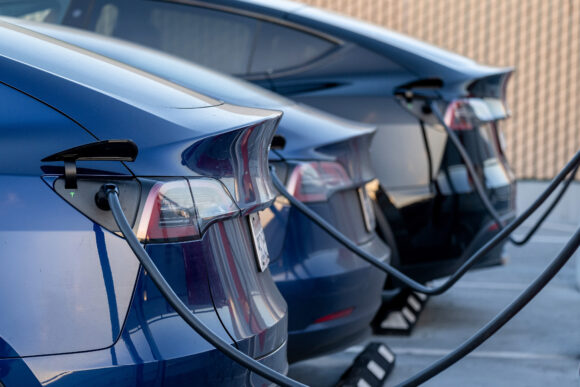
Top photo: Tesla Inc. electric vehicles (EV) at SuperCharger stations in San Francisco, California, on Friday, Jan. 23, 2026. Tesla Inc. is scheduled to release earnings figures on January 28. Photographer: David Paul Morris/Bloomberg.
Topics
California
Tesla
Interested in Agency Growth?
Get automatic alerts for this topic.
Tesla Inc. has received the green light to continue its electric vehicle sales in California without interruption. This follows the company’s recent adjustments to address concerns raised by the state regarding misleading marketing of its driver-assistance technology.
The California Department of Motor Vehicles (DMV) announced that Tesla has taken “corrective action,” which includes discontinuing the use of the Autopilot branding within the state. Additionally, the company has refined its use of the term Full Self-Driving to better clarify when driver supervision is necessary.
Related: Tesla’s Austin Robotaxis Report 14 Crashes in First Eight Months
Initially, California was set to suspend Tesla’s sales license for 30 days following a December ruling from an administrative judge. This ruling stemmed from allegations that Tesla had exaggerated the capabilities of its driver-assistance systems. The state provided Tesla with a window to either appeal the decision or comply with the requirements.
This reprieve is a significant win for Tesla, especially as the company seeks to reverse a prolonged sales slump amid declining U.S. incentives that are impacting electric vehicle demand. As the largest car market in the U.S. and a leader in electric vehicle adoption, any disruption in California could prove costly for the automaker.
Related: ZEV Registrations in California Fell for the First Time Since 2020
Despite the positive news, Tesla did not respond to requests for comment. On the stock market, the company’s shares saw a slight increase of less than 1% before regular trading commenced on Wednesday in New York. However, the stock has experienced a decline of 8.7% this year, underperforming compared to the S&P 500 Index, which remained relatively stable.
Tesla has been under scrutiny for several years from federal prosecutors, securities regulators, and the National Highway Traffic Safety Administration. The company has also faced lawsuits from consumers and investors regarding the marketing, usage, and performance of its driver-assistance features. Both Autopilot and Full Self-Driving systems require active human supervision, which complicates the perception of Tesla vehicles as fully autonomous. This confusion is further exacerbated by the company’s ambitions to establish a robotaxi business.
In January, Tesla discontinued its Autopilot product and has increasingly adopted the term Full Self Driving (Supervised) in its advertising. This terminology emphasizes that the system is not fully autonomous and necessitates constant supervision from the driver.
Top photo: Tesla Inc. electric vehicles (EV) at SuperCharger stations in San Francisco, California, on Friday, Jan. 23, 2026. Tesla Inc. is scheduled to release earnings figures on January 28. Photographer: David Paul Morris/Bloomberg.
Topics
California
Tesla
Interested in Agency Growth?
Get automatic alerts for this topic.