Intense Wildfires Ravage Oklahoma Panhandle and Kansas
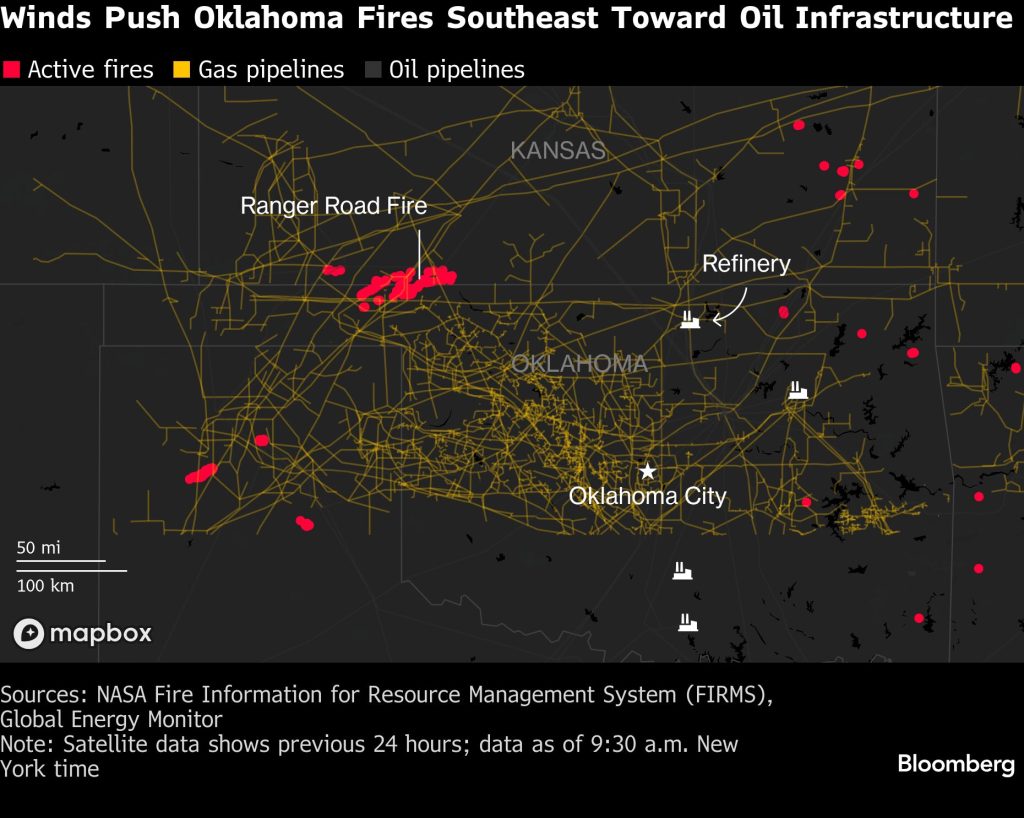
A fast-moving wildfire in Oklahoma’s panhandle has rapidly expanded, now doubling in size as it encroaches into Kansas. Firefighters are facing challenging conditions, including days of dry heat and gusting winds across the Great Plains.
The Ranger Road Fire has consumed over 280,000 acres as of Wednesday evening, which is nearly 20 times the size of Manhattan. In total, more than 300,000 acres have burned in Oklahoma this week, with temperatures soaring approximately 15°F (8°C) above average.
State officials have reported 33 incidents of fires and hotspots across nearly two dozen counties. The Oklahoma Department of Agriculture, Food & Forestry has cautioned that Thursday will present new challenges for fire crews, as shifting winds could lead to new flare-ups.
“Established wildfires today will have the potential to exhibit very rapid rates of spread and problematic fire behavior,” the department stated in an update. They warned that fires could easily spread from the ground to tree canopies, increasing the risk of embers being carried away by the wind, potentially igniting new fires.
While emergency shelters in Oklahoma were closed on Thursday, officials indicated they could reopen if new evacuations become necessary.
Oklahoma is a crucial hub for U.S. oil infrastructure, with a dense network of pipelines converging in the state. Approximately 25 million barrels of crude oil are stored in Cushing, located in north-central Oklahoma, which serves as the nation’s largest onshore storage facility and the delivery point for benchmark U.S. crude futures.
Initial reports from companies, regulators, and trade groups indicate that the wildfires have not significantly impacted oil and gas production in the state. The Oklahoma Corporation Commission, responsible for regulating oil and gas drilling, reported on Thursday that it has not received any notifications regarding impacts to energy assets. The Petroleum Alliance of Oklahoma also stated they have not received any calls from members concerning fire-related issues.
Major energy companies, including Kinder Morgan, Enbridge, Energy Transfer, and TC Energy, which store and transport oil and gas throughout the state, reported on Wednesday that they are operating normally. They noted only minor issues related to power outages and above-ground damage, which have not significantly affected operations.
Oklahoma is home to several refineries operated by Valero Energy Corp., Phillips 66, HF Sinclair, and CVR Energy. Notably, none of these fuel-making plants, which collectively refine 550,000 barrels of oil daily, are situated in the Oklahoma panhandle, where the wildfires have been primarily concentrated.
Red flag fire weather warnings extend from Colorado and New Mexico to eastern Missouri, encompassing nearly all of Oklahoma. Humidity levels are expected to drop to single digits in some areas, with winds gusting up to 40 miles (64 kilometers) per hour near active fires.
In the Texas panhandle, three fires have burned over 21,000 acres, while Kansas has also battled multiple blazes this week due to dry weather and strong winds. Emergency officials have urged the public to refrain from any outdoor burning until conditions improve.
“The slightest ember could become tomorrow’s inferno,” the Kansas Division of Emergency Management warned in a Facebook post on Wednesday.
Copyright 2026 Bloomberg.
Topics
Catastrophe
Natural Disasters
Wildfire
Oklahoma
Kansas
Interested in Catastrophe?
Get automatic alerts for this topic.
A fast-moving wildfire in Oklahoma’s panhandle has rapidly expanded, now doubling in size as it encroaches into Kansas. Firefighters are facing challenging conditions, including days of dry heat and gusting winds across the Great Plains.
The Ranger Road Fire has consumed over 280,000 acres as of Wednesday evening, which is nearly 20 times the size of Manhattan. In total, more than 300,000 acres have burned in Oklahoma this week, with temperatures soaring approximately 15°F (8°C) above average.
State officials have reported 33 incidents of fires and hotspots across nearly two dozen counties. The Oklahoma Department of Agriculture, Food & Forestry has cautioned that Thursday will present new challenges for fire crews, as shifting winds could lead to new flare-ups.
“Established wildfires today will have the potential to exhibit very rapid rates of spread and problematic fire behavior,” the department stated in an update. They warned that fires could easily spread from the ground to tree canopies, increasing the risk of embers being carried away by the wind, potentially igniting new fires.
While emergency shelters in Oklahoma were closed on Thursday, officials indicated they could reopen if new evacuations become necessary.
Oklahoma is a crucial hub for U.S. oil infrastructure, with a dense network of pipelines converging in the state. Approximately 25 million barrels of crude oil are stored in Cushing, located in north-central Oklahoma, which serves as the nation’s largest onshore storage facility and the delivery point for benchmark U.S. crude futures.
Initial reports from companies, regulators, and trade groups indicate that the wildfires have not significantly impacted oil and gas production in the state. The Oklahoma Corporation Commission, responsible for regulating oil and gas drilling, reported on Thursday that it has not received any notifications regarding impacts to energy assets. The Petroleum Alliance of Oklahoma also stated they have not received any calls from members concerning fire-related issues.
Major energy companies, including Kinder Morgan, Enbridge, Energy Transfer, and TC Energy, which store and transport oil and gas throughout the state, reported on Wednesday that they are operating normally. They noted only minor issues related to power outages and above-ground damage, which have not significantly affected operations.
Oklahoma is home to several refineries operated by Valero Energy Corp., Phillips 66, HF Sinclair, and CVR Energy. Notably, none of these fuel-making plants, which collectively refine 550,000 barrels of oil daily, are situated in the Oklahoma panhandle, where the wildfires have been primarily concentrated.
Red flag fire weather warnings extend from Colorado and New Mexico to eastern Missouri, encompassing nearly all of Oklahoma. Humidity levels are expected to drop to single digits in some areas, with winds gusting up to 40 miles (64 kilometers) per hour near active fires.
In the Texas panhandle, three fires have burned over 21,000 acres, while Kansas has also battled multiple blazes this week due to dry weather and strong winds. Emergency officials have urged the public to refrain from any outdoor burning until conditions improve.
“The slightest ember could become tomorrow’s inferno,” the Kansas Division of Emergency Management warned in a Facebook post on Wednesday.
Copyright 2026 Bloomberg.
Topics
Catastrophe
Natural Disasters
Wildfire
Oklahoma
Kansas
Interested in Catastrophe?
Get automatic alerts for this topic.