Carmakers Advance ‘Eyes-Off’ Driving Technology, Sparking Safety and Liability Concerns
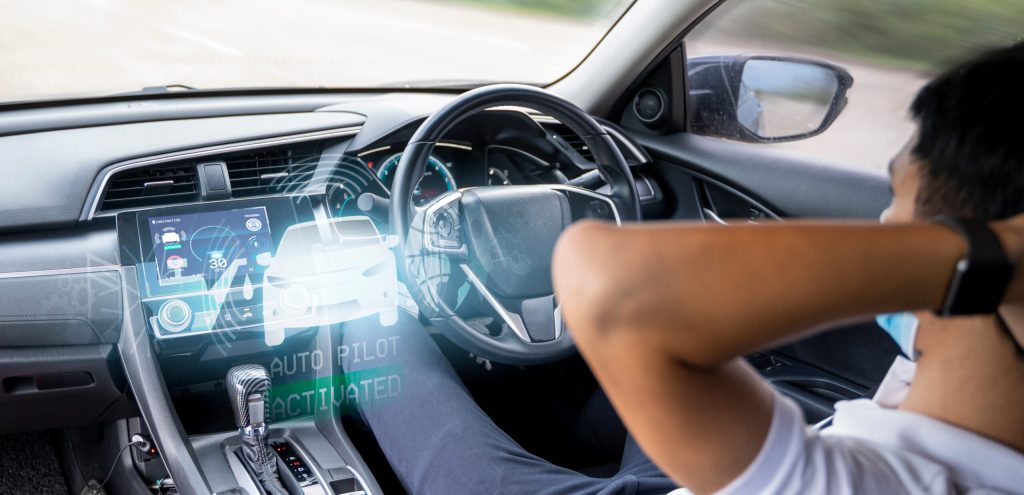
Automakers are racing toward a key milestone on the long road to fully driverless cars: systems that allow drivers to take their eyes off the road—whether to send a text or work on a laptop—unless the vehicle prompts them to regain control.
For years, car manufacturers have been enhancing driver-assistance systems that automatically manage speed and steering. The next step—allowing drivers to focus on other tasks while behind the wheel—could help automakers monetize their significant investments in autonomous technology.
“We can start saving them time immediately, and do it in a very affordable way,” stated Doug Field, Ford Motor’s chief electric vehicle, digital, and design officer. Ford plans to introduce an eyes-off system in its affordable electric models starting in 2028.
Read more: Driverless Taxis Are Heading to UK, but Who’s Liable When Something Goes Wrong?
However, a growing debate within the industry questions whether the eyes-off technology—known as Level 3 autonomous driving—is worth pursuing. Some executives and experts argue that the back-and-forth control between the car and the driver is impractical and unsafe, raising complex liability issues.
Additionally, there are concerns about whether enough consumers will adopt this technology to justify its hefty development costs. “We don’t know if Level 3 ever makes financial sense,” remarked Paul Thomas, president of the North America business at automotive supplier Bosch, during the CES consumer-technology show in January.
Backtracking on Level 3 Development
A decade ago, industry leaders predicted that autonomous vehicles would be commonplace by now. However, technological hurdles, cost overruns, and regulatory uncertainties have delayed widespread deployment. In the interim, automakers have been integrating the foundational elements of fully driverless cars into increasingly sophisticated driver-assistance features that still require constant human oversight.
Eyes-off Level 3 systems represent a midpoint on the automated-driving scale, which ranges from basic features like cruise control at Level 1 to fully autonomous capabilities under all conditions at Level 5. Currently, nearly all assisted-driving systems available, including Tesla’s Full Self-Driving, are classified as Level 2, necessitating driver vigilance.
Beyond Ford, companies like General Motors and Honda Motor have announced plans for eyes-off Level 3 technology. However, the cost to develop such a system for highway use can reach up to $1.5 billion—approximately double the expense for Level 2 systems that can operate in urban environments, according to a recent McKinsey survey.
“Those carmakers who have attempted an L3 system, and the consumers who have tried it, are finding that the juice isn’t worth the squeeze,” said John Krafcik, former CEO of Waymo and current board member of EV maker Rivian.
Some companies have even scaled back their Level 3 ambitions due to cost concerns, refocusing on enhancing their more affordable Level 2 systems. Mercedes-Benz, the only automaker to have introduced Level 3 technology in the U.S., recently paused its program due to limited demand stemming from speed restrictions and geographic limitations. The company plans to roll out an upgraded Level 3 system in the coming years.
In August, it was reported that Stellantis had shelved its Level 3 development efforts due to high costs and consumer demand uncertainties. While Tesla’s Full Self-Driving feature can operate in urban areas, it still requires driver attention and has not yet launched an eyes-off Level 3 option for personal vehicles.
A significant challenge with Level 3 technology is creating a system that can accurately detect when human intervention is necessary, issue a warning, and maintain control until the driver takes over. “That’s going football fields down a road, minimum 6 seconds, probably much more,” explained Bryant Walker Smith, a law professor at the University of South Carolina specializing in autonomous-driving regulation.
“What makes more sense from a regulatory perspective is being able to provide Level 4 under a significant enough set of operating conditions that people will actually find it useful to use.”
Joel Johnson, a strategist who has collaborated with GM on autonomous programs, noted that eyes-off systems pose cost and liability challenges for automakers. “Automakers only have a reason to deploy autonomy strategically to fight Waymo and keep them at bay, or to be able to charge more money,” he stated.
Liability Changes With Eyes-Off Technology
Analysts suggest that transitioning to eyes-off technology increases the likelihood that vehicle manufacturers would be held liable in the event of an accident. The question of liability—whether it falls on the driver or the carmaker—remains ambiguous, as highlighted in a Fordham Intellectual Property, Media and Entertainment Law Journal article.
“If a publicly acceptable regulatory solution is not quickly implemented, this technology may never reach the market,” the article cautioned.
Adding to the pressure on automakers to introduce advanced assisted-driving features is the rapid progress of Chinese manufacturers. In December, China’s government approved a vehicle with Level 3 capability for the first time, and brands like Leapmotor and BYD are already incorporating advanced Level 2 features into their pricing. This could spark a global price competition if U.S. and European consumers expect similar features without additional subscription fees.
“This is a war of global business models,” Johnson concluded.
Related:
Topics
Personal Auto
Liability
Automakers are racing toward a key milestone on the long road to fully driverless cars: systems that allow drivers to take their eyes off the road—whether to send a text or work on a laptop—unless the vehicle prompts them to regain control.
For years, car manufacturers have been enhancing driver-assistance systems that automatically manage speed and steering. The next step—allowing drivers to focus on other tasks while behind the wheel—could help automakers monetize their significant investments in autonomous technology.
“We can start saving them time immediately, and do it in a very affordable way,” stated Doug Field, Ford Motor’s chief electric vehicle, digital, and design officer. Ford plans to introduce an eyes-off system in its affordable electric models starting in 2028.
Read more: Driverless Taxis Are Heading to UK, but Who’s Liable When Something Goes Wrong?
However, a growing debate within the industry questions whether the eyes-off technology—known as Level 3 autonomous driving—is worth pursuing. Some executives and experts argue that the back-and-forth control between the car and the driver is impractical and unsafe, raising complex liability issues.
Additionally, there are concerns about whether enough consumers will adopt this technology to justify its hefty development costs. “We don’t know if Level 3 ever makes financial sense,” remarked Paul Thomas, president of the North America business at automotive supplier Bosch, during the CES consumer-technology show in January.
Backtracking on Level 3 Development
A decade ago, industry leaders predicted that autonomous vehicles would be commonplace by now. However, technological hurdles, cost overruns, and regulatory uncertainties have delayed widespread deployment. In the interim, automakers have been integrating the foundational elements of fully driverless cars into increasingly sophisticated driver-assistance features that still require constant human oversight.
Eyes-off Level 3 systems represent a midpoint on the automated-driving scale, which ranges from basic features like cruise control at Level 1 to fully autonomous capabilities under all conditions at Level 5. Currently, nearly all assisted-driving systems available, including Tesla’s Full Self-Driving, are classified as Level 2, necessitating driver vigilance.
Beyond Ford, companies like General Motors and Honda Motor have announced plans for eyes-off Level 3 technology. However, the cost to develop such a system for highway use can reach up to $1.5 billion—approximately double the expense for Level 2 systems that can operate in urban environments, according to a recent McKinsey survey.
“Those carmakers who have attempted an L3 system, and the consumers who have tried it, are finding that the juice isn’t worth the squeeze,” said John Krafcik, former CEO of Waymo and current board member of EV maker Rivian.
Some companies have even scaled back their Level 3 ambitions due to cost concerns, refocusing on enhancing their more affordable Level 2 systems. Mercedes-Benz, the only automaker to have introduced Level 3 technology in the U.S., recently paused its program due to limited demand stemming from speed restrictions and geographic limitations. The company plans to roll out an upgraded Level 3 system in the coming years.
In August, it was reported that Stellantis had shelved its Level 3 development efforts due to high costs and consumer demand uncertainties. While Tesla’s Full Self-Driving feature can operate in urban areas, it still requires driver attention and has not yet launched an eyes-off Level 3 option for personal vehicles.
A significant challenge with Level 3 technology is creating a system that can accurately detect when human intervention is necessary, issue a warning, and maintain control until the driver takes over. “That’s going football fields down a road, minimum 6 seconds, probably much more,” explained Bryant Walker Smith, a law professor at the University of South Carolina specializing in autonomous-driving regulation.
“What makes more sense from a regulatory perspective is being able to provide Level 4 under a significant enough set of operating conditions that people will actually find it useful to use.”
Joel Johnson, a strategist who has collaborated with GM on autonomous programs, noted that eyes-off systems pose cost and liability challenges for automakers. “Automakers only have a reason to deploy autonomy strategically to fight Waymo and keep them at bay, or to be able to charge more money,” he stated.
Liability Changes With Eyes-Off Technology
Analysts suggest that transitioning to eyes-off technology increases the likelihood that vehicle manufacturers would be held liable in the event of an accident. The question of liability—whether it falls on the driver or the carmaker—remains ambiguous, as highlighted in a Fordham Intellectual Property, Media and Entertainment Law Journal article.
“If a publicly acceptable regulatory solution is not quickly implemented, this technology may never reach the market,” the article cautioned.
Adding to the pressure on automakers to introduce advanced assisted-driving features is the rapid progress of Chinese manufacturers. In December, China’s government approved a vehicle with Level 3 capability for the first time, and brands like Leapmotor and BYD are already incorporating advanced Level 2 features into their pricing. This could spark a global price competition if U.S. and European consumers expect similar features without additional subscription fees.
“This is a war of global business models,” Johnson concluded.
Related:
Topics
Personal Auto
Liability