UK Imposes Major Sanctions on Russian Oil Fleet, Marking Significant Action in Years
The UK government has unveiled new sanctions targeting Russia’s shadow oil fleet, intensifying efforts to cut off energy revenues that support the Kremlin’s ongoing war in Ukraine.
In a statement released on Tuesday, coinciding with the fourth anniversary of Russia’s full-scale invasion, Britain announced sanctions against 175 companies within the 2Rivers network. This network is linked to key players in the oil trade, including PJSC Transneft, one of the world’s largest oil pipeline companies, responsible for transporting over 80% of Russia’s oil exports.
“The UK has today taken decisive action to disrupt the critical financing, military equipment, and revenue streams that sustain Russia’s aggression,” stated Foreign Secretary Yvette Cooper. She described this package as “our largest raft of measures since the early months of the invasion.”
Read more: EU Commission Proposes Further Sanctions on Russian Oil Trade and Financial Services
Bloomberg reported in October that the 2Rivers network, associated with Azeri traders Etibar Eyyub and Tahir Garayev, has played a crucial role in maintaining the flow of hundreds of millions of barrels of Russian crude, despite international sanctions imposed due to the war.
This network of offshore companies, previously known as Coral, saw rapid growth before sanctions from the European Union and the UK in 2024 hindered its operations. At that time, Garayev’s legal representatives denied any ties to Rosneft or Eyyub, asserting that he had not engaged in petroleum-related activities since late 2022. Eyyub’s companies did not respond to requests for comment.
The impact of these sanctions has led to increased trading costs, prompting Western banks, insurers, and professional services firms to largely avoid dealings with the network to evade scrutiny from authorities. This has forced the network to incur higher insurance premiums, adopt longer and more opaque shipping routes, and reduce its price per barrel as brokers, refiners, storage operators, and ports either refused to engage with them or raised costs to safeguard their own interests.
The foreign office noted that international sanctions have deprived Russia of approximately $450 billion in revenue, equivalent to two additional years of funding for its military operations.
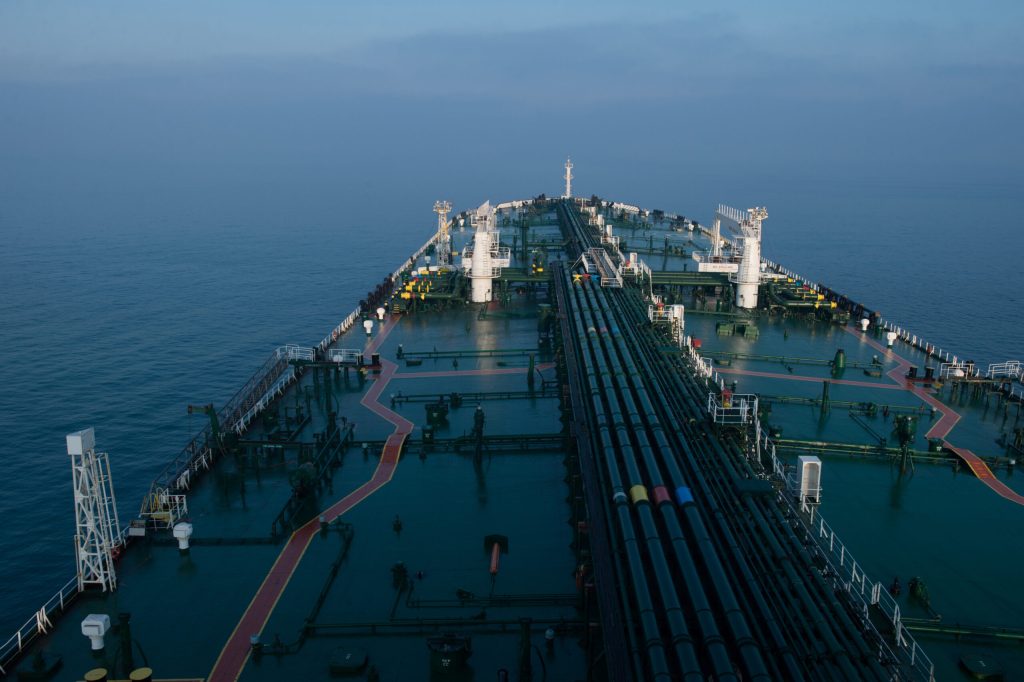
Photograph: An oil tanker; photo credit: Ali Mohammadi/Bloomberg
Related:
Copyright 2026 Bloomberg.
Interested in Energy?
Get automatic alerts for this topic.
The UK government has unveiled new sanctions targeting Russia’s shadow oil fleet, intensifying efforts to cut off energy revenues that support the Kremlin’s ongoing war in Ukraine.
In a statement released on Tuesday, coinciding with the fourth anniversary of Russia’s full-scale invasion, Britain announced sanctions against 175 companies within the 2Rivers network. This network is linked to key players in the oil trade, including PJSC Transneft, one of the world’s largest oil pipeline companies, responsible for transporting over 80% of Russia’s oil exports.
“The UK has today taken decisive action to disrupt the critical financing, military equipment, and revenue streams that sustain Russia’s aggression,” stated Foreign Secretary Yvette Cooper. She described this package as “our largest raft of measures since the early months of the invasion.”
Read more: EU Commission Proposes Further Sanctions on Russian Oil Trade and Financial Services
Bloomberg reported in October that the 2Rivers network, associated with Azeri traders Etibar Eyyub and Tahir Garayev, has played a crucial role in maintaining the flow of hundreds of millions of barrels of Russian crude, despite international sanctions imposed due to the war.
This network of offshore companies, previously known as Coral, saw rapid growth before sanctions from the European Union and the UK in 2024 hindered its operations. At that time, Garayev’s legal representatives denied any ties to Rosneft or Eyyub, asserting that he had not engaged in petroleum-related activities since late 2022. Eyyub’s companies did not respond to requests for comment.
The impact of these sanctions has led to increased trading costs, prompting Western banks, insurers, and professional services firms to largely avoid dealings with the network to evade scrutiny from authorities. This has forced the network to incur higher insurance premiums, adopt longer and more opaque shipping routes, and reduce its price per barrel as brokers, refiners, storage operators, and ports either refused to engage with them or raised costs to safeguard their own interests.
The foreign office noted that international sanctions have deprived Russia of approximately $450 billion in revenue, equivalent to two additional years of funding for its military operations.
Photograph: An oil tanker; photo credit: Ali Mohammadi/Bloomberg
Related:
Copyright 2026 Bloomberg.
Interested in Energy?
Get automatic alerts for this topic.