EU’s Russia Sanctions Face Obstacles from Hungary and Slovakia
The European Union has encountered significant challenges in its efforts to impose a new round of sanctions against Russia, as Hungary and Slovakia have blocked the measures. This situation highlights the ongoing divisions within the bloc as the war in Ukraine approaches its fifth year.
During a meeting in Brussels on Monday, EU foreign ministers aimed to finalize the 20th package of sanctions. However, the two member states halted progress, citing Ukraine’s alleged disruption of oil deliveries from Russia. This dispute is also jeopardizing a €90 billion ($106 billion) loan intended for Ukraine.
“This is a setback and a message we didn’t want to send today,” stated Kaja Kallas, the EU’s top foreign policy official, to reporters following the meeting. She acknowledged that “we have seen this scenario already before,” and emphasized that negotiations to advance the sanctions package are ongoing.
This setback is particularly disheartening for the EU, which has aimed to present a united front in support of Ukraine since the Kremlin’s full-scale invasion four years ago. Slovakia has taken a more pronounced stance against new sanctions, arguing that they could undermine US-led peace efforts.
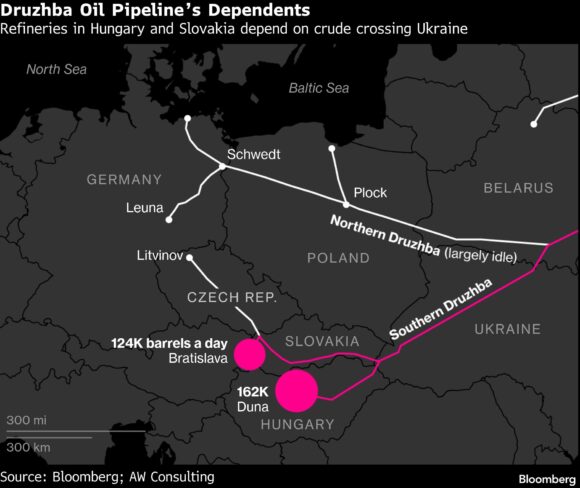
In late January, Russia intensified its attacks on Ukraine’s energy infrastructure, affecting the Druzhba pipeline that transports Russian oil to Hungary and Slovakia. Both nations have accused Ukraine of delaying necessary repairs, while Kyiv contends it requires additional time to complete the work. Notably, Budapest and Bratislava have refrained from blaming Moscow for the damage.
Slovak Prime Minister Robert Fico announced that his government would cease providing emergency electricity supplies to Ukraine and is contemplating further actions, including a review of Kyiv’s EU membership aspirations. “As of today, if the Ukrainian side turns to Slovakia for assistance in stabilizing its energy grid, such assistance will not be provided,” Fico stated in an email.
Hungary’s recent announcement to establish a roadblock against the Ukrainian financing package agreed upon in December has already drawn criticism from other EU members. German Foreign Minister Johann Wadephul expressed his astonishment at Hungary’s position, while Lithuania’s top diplomat questioned Budapest’s commitment to EU measures supporting Ukraine.
“In the long term, we should address whether we really need 27” members, remarked Lithuanian Foreign Minister Kestutis Budrys, emphasizing that Hungary must cease its “manipulations.”
In a letter to European Council President Antonio Costa dated February 23, Hungarian Prime Minister Viktor Orban described the halted shipments as “an unprovoked act of hostility that undermines the energy security of Hungary.” He indicated he would block the loan until oil deliveries resume, according to the letter reviewed by Bloomberg News.
Costa responded by urging Orban to adhere to the agreement reached by EU leaders regarding the loan, stating he would discuss the Druzhba pipeline situation with Ukrainian President Zelenskiy.
Orban’s foreign minister, Peter Szijjarto, reinforced Hungary’s position in Brussels, asserting, “We’re going to stand firm on this. No one can mess with Hungary, no one can threaten our energy security.”
As the April 12 parliamentary election approaches, Orban has made his opposition to Ukrainian aid a central theme of his campaign. His ruling Fidesz party is currently trailing a pro-EU opposition alliance, raising the possibility of his ousting after 16 years in power.
Kallas noted the political implications of the situation ahead of the election, stating, “I find it very hard that it would bring you any bonus points in the election, but I don’t know the Hungarian political climate.”
Orban has cultivated a close relationship with former US President Donald Trump, who recently endorsed him in the election. Hungary was granted a waiver from US sanctions on Russian oil imports due to Orban’s ties with Trump, as noted by Secretary of State Marco Rubio during his visit to Budapest last week.
While Hungary is not required to underwrite the EU loan for Kyiv following an exemption received in December, it still holds significant leverage over the process, as unanimous agreement is necessary to amend the bloc’s budget.
Polish Foreign Minister Radoslaw Sikorski expressed his expectation for greater solidarity from Hungary towards Ukraine, stating, “Hungarians used to understand what it’s like — Budapest was invaded, actually twice. The ruling party managed to create a climate of hostility toward the victim of aggression and now is trying to exploit that in the general election. It’s quite shocking.”
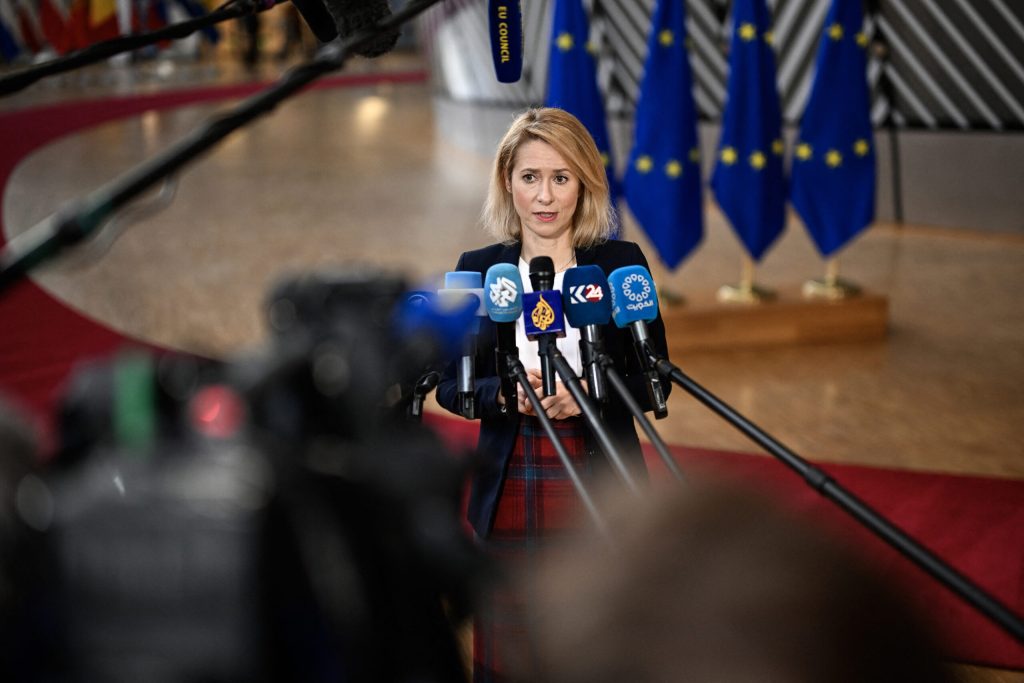
Photograph: Kaja Kallas arrives for the EU Foreign Affairs Council in Brussels, on Feb. 23, 2026; photo credit: John Thys/AFP/Getty
Related:
Copyright 2026 Bloomberg.
The most important insurance news, in your inbox every business day.
Get the insurance industry’s trusted newsletter
The European Union has encountered significant challenges in its efforts to impose a new round of sanctions against Russia, as Hungary and Slovakia have blocked the measures. This situation highlights the ongoing divisions within the bloc as the war in Ukraine approaches its fifth year.
During a meeting in Brussels on Monday, EU foreign ministers aimed to finalize the 20th package of sanctions. However, the two member states halted progress, citing Ukraine’s alleged disruption of oil deliveries from Russia. This dispute is also jeopardizing a €90 billion ($106 billion) loan intended for Ukraine.
“This is a setback and a message we didn’t want to send today,” stated Kaja Kallas, the EU’s top foreign policy official, to reporters following the meeting. She acknowledged that “we have seen this scenario already before,” and emphasized that negotiations to advance the sanctions package are ongoing.
This setback is particularly disheartening for the EU, which has aimed to present a united front in support of Ukraine since the Kremlin’s full-scale invasion four years ago. Slovakia has taken a more pronounced stance against new sanctions, arguing that they could undermine US-led peace efforts.
In late January, Russia intensified its attacks on Ukraine’s energy infrastructure, affecting the Druzhba pipeline that transports Russian oil to Hungary and Slovakia. Both nations have accused Ukraine of delaying necessary repairs, while Kyiv contends it requires additional time to complete the work. Notably, Budapest and Bratislava have refrained from blaming Moscow for the damage.
Slovak Prime Minister Robert Fico announced that his government would cease providing emergency electricity supplies to Ukraine and is contemplating further actions, including a review of Kyiv’s EU membership aspirations. “As of today, if the Ukrainian side turns to Slovakia for assistance in stabilizing its energy grid, such assistance will not be provided,” Fico stated in an email.
Hungary’s recent announcement to establish a roadblock against the Ukrainian financing package agreed upon in December has already drawn criticism from other EU members. German Foreign Minister Johann Wadephul expressed his astonishment at Hungary’s position, while Lithuania’s top diplomat questioned Budapest’s commitment to EU measures supporting Ukraine.
“In the long term, we should address whether we really need 27” members, remarked Lithuanian Foreign Minister Kestutis Budrys, emphasizing that Hungary must cease its “manipulations.”
In a letter to European Council President Antonio Costa dated February 23, Hungarian Prime Minister Viktor Orban described the halted shipments as “an unprovoked act of hostility that undermines the energy security of Hungary.” He indicated he would block the loan until oil deliveries resume, according to the letter reviewed by Bloomberg News.
Costa responded by urging Orban to adhere to the agreement reached by EU leaders regarding the loan, stating he would discuss the Druzhba pipeline situation with Ukrainian President Zelenskiy.
Orban’s foreign minister, Peter Szijjarto, reinforced Hungary’s position in Brussels, asserting, “We’re going to stand firm on this. No one can mess with Hungary, no one can threaten our energy security.”
As the April 12 parliamentary election approaches, Orban has made his opposition to Ukrainian aid a central theme of his campaign. His ruling Fidesz party is currently trailing a pro-EU opposition alliance, raising the possibility of his ousting after 16 years in power.
Kallas noted the political implications of the situation ahead of the election, stating, “I find it very hard that it would bring you any bonus points in the election, but I don’t know the Hungarian political climate.”
Orban has cultivated a close relationship with former US President Donald Trump, who recently endorsed him in the election. Hungary was granted a waiver from US sanctions on Russian oil imports due to Orban’s ties with Trump, as noted by Secretary of State Marco Rubio during his visit to Budapest last week.
While Hungary is not required to underwrite the EU loan for Kyiv following an exemption received in December, it still holds significant leverage over the process, as unanimous agreement is necessary to amend the bloc’s budget.
Polish Foreign Minister Radoslaw Sikorski expressed his expectation for greater solidarity from Hungary towards Ukraine, stating, “Hungarians used to understand what it’s like — Budapest was invaded, actually twice. The ruling party managed to create a climate of hostility toward the victim of aggression and now is trying to exploit that in the general election. It’s quite shocking.”
Photograph: Kaja Kallas arrives for the EU Foreign Affairs Council in Brussels, on Feb. 23, 2026; photo credit: John Thys/AFP/Getty
Related:
Copyright 2026 Bloomberg.
The most important insurance news, in your inbox every business day.
Get the insurance industry’s trusted newsletter