FedEx Files Lawsuit Against US Seeking Refund for Trump’s Emergency Tariffs
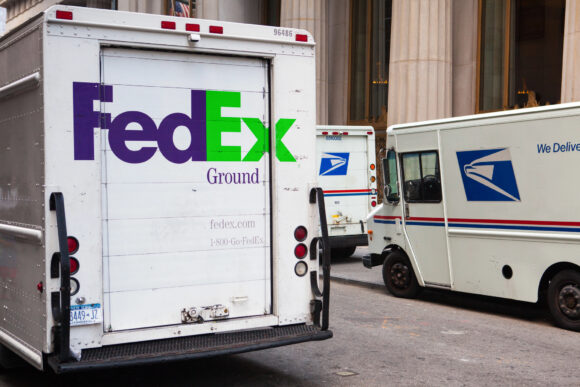
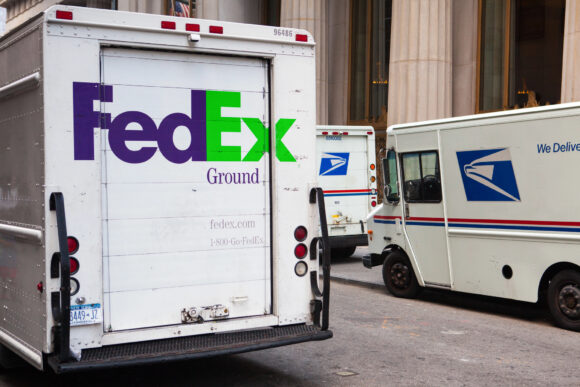
Global transportation giant FedEx has initiated a lawsuit in the U.S. Court of International Trade, aiming to reclaim funds lost due to President Donald Trump’s emergency tariffs. This legal action marks one of the most significant attempts to recover funds following the recent U.S. Supreme Court ruling that deemed these tariffs illegal.
In the wake of this landmark decision, trade attorneys anticipate a surge of lawsuits seeking to recover billions of dollars. However, the process for obtaining these refunds is still pending clarification from a lower court, adding complexity to the situation.
According to economists from the Penn-Wharton Budget Model, over $175 billion in U.S. tariff collections could be eligible for refunds following the Supreme Court’s ruling, which concluded that Trump had overstepped his authority by utilizing the International Emergency Economic Powers Act (IEEPA) to impose tariffs on imported goods.
In its lawsuit filed on February 23, FedEx stated, “Plaintiffs seek for themselves a full refund from Defendants of all IEEPA duties Plaintiffs have paid to the United States,” referring specifically to the tariffs imposed by Trump.
As the importer of record for goods affected by IEEPA tariffs, FedEx has not disclosed the specific dollar amount it is seeking in refunds. The company has named U.S. Customs and Border Protection (CBP), its commissioner Rodney Scott, and the United States as defendants in the case. As of now, CBP and the White House have not responded to requests for comments.
Representing FedEx in this lawsuit is the Washington, D.C.-based law firm Crowell & Moring, which has also been involved in similar cases for other companies, including Costco, Revlon, and EssilorLuxottica.
Experts suggest that importers, distributors, and suppliers are in the best position to secure IEEPA tariff refunds. This is largely because their documentation typically includes customs records or invoices that detail tariff costs associated with specific goods. Ron Ciotti, a partner at the law firm Hinckley Allen in Boston, noted, “If there was a tariff escalation in your contract or a price adjustment clause based on tariffs, and that’s why the price went up, if you had a contract that stated that, then you might be able to get a refund.”
In a related development, California Governor Gavin Newsom, who is viewed as a potential Democratic presidential candidate for 2028, has called for tariff refund checks for Americans following the Supreme Court’s decision. He remarked, “I’ve heard some (people) saying this is such a win for the consumer, because they should get refunds back on certain products that would have been under tariffs.”
However, Ciotti expressed skepticism about the feasibility of consumers receiving refunds, stating that many businesses and consumers paid inflated prices for goods without clear documentation linking those price increases to tariffs. This lack of proof may hinder their ability to successfully claim refunds.
Interested in Lawsuits?
Get automatic alerts for this topic.
Global transportation giant FedEx has initiated a lawsuit in the U.S. Court of International Trade, aiming to reclaim funds lost due to President Donald Trump’s emergency tariffs. This legal action marks one of the most significant attempts to recover funds following the recent U.S. Supreme Court ruling that deemed these tariffs illegal.
In the wake of this landmark decision, trade attorneys anticipate a surge of lawsuits seeking to recover billions of dollars. However, the process for obtaining these refunds is still pending clarification from a lower court, adding complexity to the situation.
According to economists from the Penn-Wharton Budget Model, over $175 billion in U.S. tariff collections could be eligible for refunds following the Supreme Court’s ruling, which concluded that Trump had overstepped his authority by utilizing the International Emergency Economic Powers Act (IEEPA) to impose tariffs on imported goods.
In its lawsuit filed on February 23, FedEx stated, “Plaintiffs seek for themselves a full refund from Defendants of all IEEPA duties Plaintiffs have paid to the United States,” referring specifically to the tariffs imposed by Trump.
As the importer of record for goods affected by IEEPA tariffs, FedEx has not disclosed the specific dollar amount it is seeking in refunds. The company has named U.S. Customs and Border Protection (CBP), its commissioner Rodney Scott, and the United States as defendants in the case. As of now, CBP and the White House have not responded to requests for comments.
Representing FedEx in this lawsuit is the Washington, D.C.-based law firm Crowell & Moring, which has also been involved in similar cases for other companies, including Costco, Revlon, and EssilorLuxottica.
Experts suggest that importers, distributors, and suppliers are in the best position to secure IEEPA tariff refunds. This is largely because their documentation typically includes customs records or invoices that detail tariff costs associated with specific goods. Ron Ciotti, a partner at the law firm Hinckley Allen in Boston, noted, “If there was a tariff escalation in your contract or a price adjustment clause based on tariffs, and that’s why the price went up, if you had a contract that stated that, then you might be able to get a refund.”
In a related development, California Governor Gavin Newsom, who is viewed as a potential Democratic presidential candidate for 2028, has called for tariff refund checks for Americans following the Supreme Court’s decision. He remarked, “I’ve heard some (people) saying this is such a win for the consumer, because they should get refunds back on certain products that would have been under tariffs.”
However, Ciotti expressed skepticism about the feasibility of consumers receiving refunds, stating that many businesses and consumers paid inflated prices for goods without clear documentation linking those price increases to tariffs. This lack of proof may hinder their ability to successfully claim refunds.
Interested in Lawsuits?
Get automatic alerts for this topic.