Florida Lawmakers Push to Eliminate Penalty on Private Flood Insurance with New Congressional Bill
Mortgagees who are required to purchase flood insurance now have the option to utilize private flood policies, thanks to federal regulations that came into effect in 2019. However, opting for private insurance can lead to a significant drawback: property owners risk losing their lower, grandfathered premiums if they later decide to switch back to coverage under the National Flood Insurance Program (NFIP).
In response to this issue, two Florida Congress members have re-introduced legislation aimed at addressing this quirk in the rules. The Continuous Coverage for Flood Insurance Act (HR 6620) seeks to lower federal disaster costs by providing consumers with more options to maintain flood coverage. U.S. Rep. Kathy Castor, D-Tampa, and Rep. Maria Salazar, R-Miami, emphasized the importance of this legislation in a recent statement.
“Our bipartisan legislation empowers consumers with more options by allowing access to private flood insurance, without penalty,” Castor stated. “For coastal communities like Tampa Bay, healthy competition can lower costs, expand the insurance pool, and help bring down flood insurance rates.”
The existing rate rule originates from a 2012 federal law that mandated federal lending institutions to accept certain non-NFIP policies to meet flood insurance requirements. The regulations were finalized in 2019, as explained by Castor and Salazar.
However, property owners discovered that switching to a private policy and then attempting to return to NFIP coverage resulted in significantly higher premiums. “Currently, the NFIP requires continuous coverage to be eligible for grandfathered rates, but only counts the time in an NFIP policy,” the Congress members noted in their press release. “If a policyholder chooses to leave the program and return later, the NFIP will charge the full, non-grandfathered rate even if the policyholder decides to obtain a non-NFIP insurance policy that complies with the new rule.”
This rule acts as a deterrent for some consumers who may be considering private flood insurance coverage for their properties. In an era marked by predictions of stronger storms, increased rainfall, and heightened flooding risks in Florida and other Southeastern states, this situation is particularly concerning.
HR 6620 has been assigned to the U.S. House Financial Services Committee for further consideration. The representatives’ legislative action comes at a time when research indicates that federal flood maps may be less accurate than previously thought, potentially leaving millions more properties vulnerable to flooding. Neptune Flood, a private flood insurance provider based in St. Petersburg, Florida, reported that its research group found that 84% of Federal Emergency Management Agency (FEMA) flood maps are outdated.
Official maps have identified about 8 million properties as high-risk, but research from the First Street Foundation suggests the actual number exceeds 17 million, as reported by Neptune.
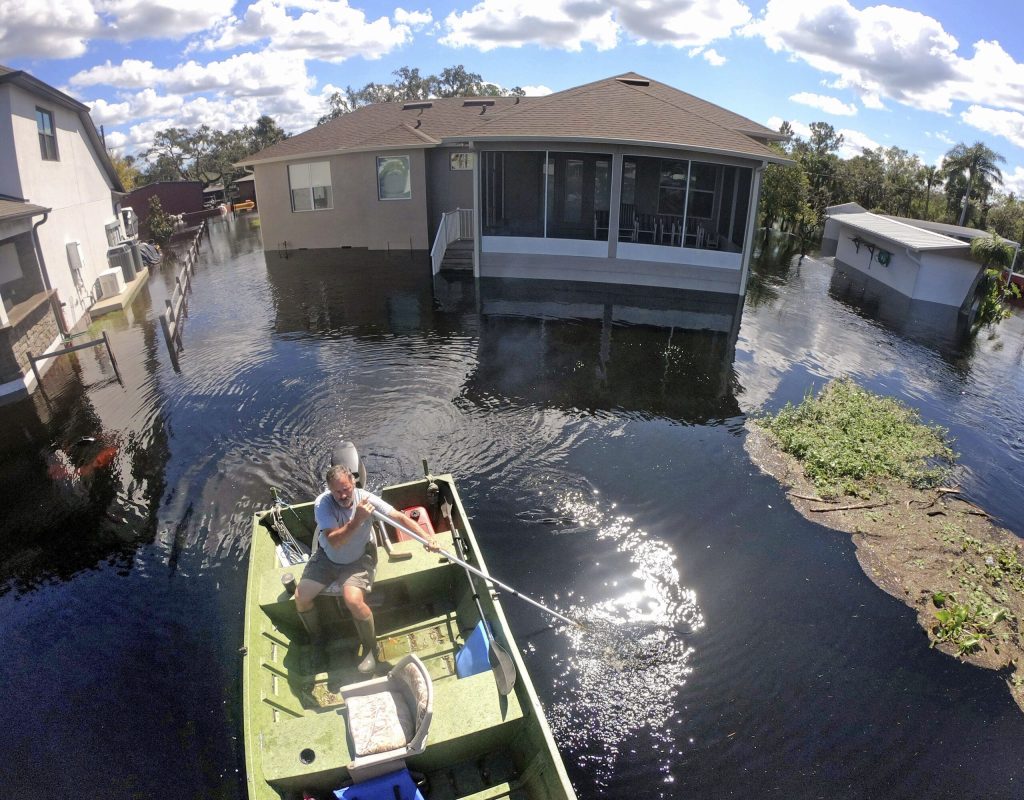
Photo: Resident Mike Kelley navigates flooded streets in Geneva, Florida, as floodwaters rise after Hurricane Ian in 2022. (Joe Burbank/Orlando Sentinel/AP)
Interested in Flood?
Get automatic alerts for this topic.
Mortgagees who are required to purchase flood insurance now have the option to utilize private flood policies, thanks to federal regulations that came into effect in 2019. However, opting for private insurance can lead to a significant drawback: property owners risk losing their lower, grandfathered premiums if they later decide to switch back to coverage under the National Flood Insurance Program (NFIP).
In response to this issue, two Florida Congress members have re-introduced legislation aimed at addressing this quirk in the rules. The Continuous Coverage for Flood Insurance Act (HR 6620) seeks to lower federal disaster costs by providing consumers with more options to maintain flood coverage. U.S. Rep. Kathy Castor, D-Tampa, and Rep. Maria Salazar, R-Miami, emphasized the importance of this legislation in a recent statement.
“Our bipartisan legislation empowers consumers with more options by allowing access to private flood insurance, without penalty,” Castor stated. “For coastal communities like Tampa Bay, healthy competition can lower costs, expand the insurance pool, and help bring down flood insurance rates.”
The existing rate rule originates from a 2012 federal law that mandated federal lending institutions to accept certain non-NFIP policies to meet flood insurance requirements. The regulations were finalized in 2019, as explained by Castor and Salazar.
However, property owners discovered that switching to a private policy and then attempting to return to NFIP coverage resulted in significantly higher premiums. “Currently, the NFIP requires continuous coverage to be eligible for grandfathered rates, but only counts the time in an NFIP policy,” the Congress members noted in their press release. “If a policyholder chooses to leave the program and return later, the NFIP will charge the full, non-grandfathered rate even if the policyholder decides to obtain a non-NFIP insurance policy that complies with the new rule.”
This rule acts as a deterrent for some consumers who may be considering private flood insurance coverage for their properties. In an era marked by predictions of stronger storms, increased rainfall, and heightened flooding risks in Florida and other Southeastern states, this situation is particularly concerning.
HR 6620 has been assigned to the U.S. House Financial Services Committee for further consideration. The representatives’ legislative action comes at a time when research indicates that federal flood maps may be less accurate than previously thought, potentially leaving millions more properties vulnerable to flooding. Neptune Flood, a private flood insurance provider based in St. Petersburg, Florida, reported that its research group found that 84% of Federal Emergency Management Agency (FEMA) flood maps are outdated.
Official maps have identified about 8 million properties as high-risk, but research from the First Street Foundation suggests the actual number exceeds 17 million, as reported by Neptune.
Photo: Resident Mike Kelley navigates flooded streets in Geneva, Florida, as floodwaters rise after Hurricane Ian in 2022. (Joe Burbank/Orlando Sentinel/AP)
Interested in Flood?
Get automatic alerts for this topic.