EU Reverses Combustion Engine Ban, Securing Victory for Automakers
The European Union is poised to propose a significant softening of emissions regulations for new cars, effectively reversing a ban on combustion engines that has been in place. This shift comes after months of pressure from the automotive industry, which has been grappling with the transition to electric vehicles (EVs).
This new proposal will enable car manufacturers to slow down the rollout of electric vehicles across Europe, aligning the region more closely with the United States. Under the Trump administration, the U.S. has been rolling back efficiency standards for vehicles, creating a contrasting approach to emissions regulations. Globally, automakers are facing challenges in making the transition to electric vehicles profitable, with Ford Motor Co. recently announcing a staggering $19.5 billion in charges related to a comprehensive overhaul of its EV business.
The EU’s retreat from stringent green policies is set to be unveiled on Tuesday and reflects a broader global trend as economic realities of major transformations become apparent. Heightened trade tensions with both the U.S. and China are prompting Europe to prioritize the stability of its own automotive industry. While the bloc is legally committed to achieving climate neutrality by 2050, there is increasing pressure from governments and companies for more flexibility, as rigid targets could threaten economic stability.
According to sources familiar with the matter, the European Commission’s new proposal will lower the emissions requirements that would have effectively halted sales of new gasoline and diesel-fueled cars by 2035. Instead, it will permit a range of plug-in hybrids and electric vehicles equipped with fuel-powered range extenders.
Under the revised plan, tailpipe emissions must be reduced by 90% by the middle of the next decade, a significant change from the current goal of a complete 100% reduction. The Commission will require carmakers to offset any additional pollution by utilizing low-carbon or renewable fuels, or by employing locally produced green steel.
The European Commission has refrained from commenting on the proposal. It is expected to be adopted by EU commissioners on Tuesday, followed by discussions in the European Parliament and among member states in the EU Council. Each institution will have the opportunity to propose amendments, with the final details to be negotiated in trilogue talks involving the parliament, council, and commission.
With automakers now granted more time to transition to fully electric vehicles, environmental advocates express concern that these changes may create loopholes that undermine Europe’s climate goals. This could leave key car manufacturers lagging behind China in the race toward battery-powered transportation.
China’s car market continues to electrify at a rapid pace, pushing foreign brands to the sidelines in what was once a lucrative market for Western automakers. Even within Europe, car manufacturers are facing increasing competition from Chinese brands, with new import tariffs providing only limited protection.
This situation has led to intense lobbying from major automotive players like Stellantis NV and Mercedes-Benz Group AG. Germany, home to several leading car manufacturers, has been particularly vocal in advocating for changes to ease political tensions and safeguard jobs.
Earlier this month, six prime ministers, including Italy’s Giorgia Meloni and Poland’s Donald Tusk, urged the commission to permit plug-in hybrids, range extenders, and fuel-cell technology beyond 2035. Germany has also sought to dilute the impending ban to protect its automotive sector amid challenges from U.S. trade tariffs and declining demand in Europe.
Purchase Incentives
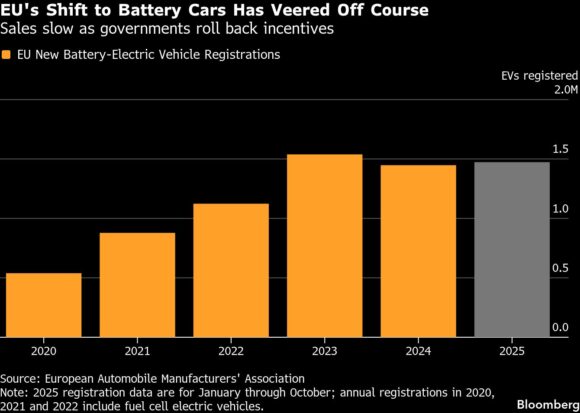
Sales of new battery-electric vehicles saw a slowdown last year after countries like Germany withdrew purchase incentives. While growth is beginning to recover, aided by the reintroduction of some subsidies, the pace remains insufficient to meet EU targets.
The uptake of electric vehicles across the region is uneven. For instance, pure EV registrations accounted for 35% of sales in the Netherlands this year, while Spain lagged behind at just 8%, hindered by limited charging infrastructure and relatively high prices.
The upcoming package will also include measures to boost the adoption of small electric vehicles manufactured in Europe. This includes a 10-year exemption from certain safety and emissions requirements, alongside incentives such as designated parking spaces and subsidies.
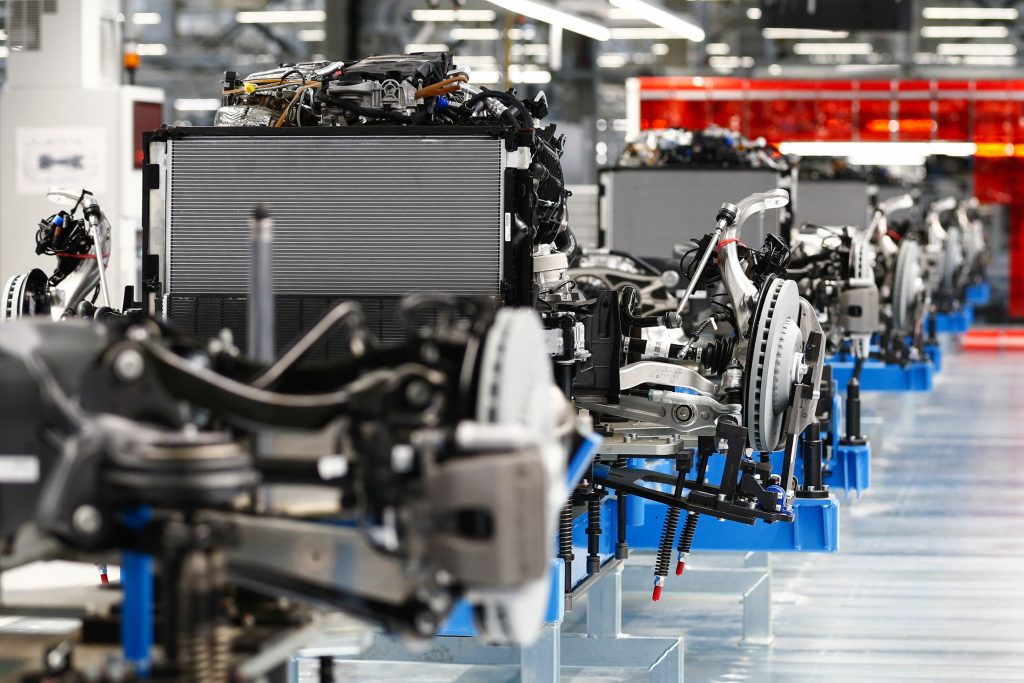
Photograph: Combustion engines on a Mercedes-Benz assembly line in Germany. Photo credit: Michaela Handrek-Rehle/Bloomberg
Copyright 2025 Bloomberg.
Topics
Europe
The most important insurance news, in your inbox every business day.
Get the insurance industry’s trusted newsletter
The European Union is poised to propose a significant softening of emissions regulations for new cars, effectively reversing a ban on combustion engines that has been in place. This shift comes after months of pressure from the automotive industry, which has been grappling with the transition to electric vehicles (EVs).
This new proposal will enable car manufacturers to slow down the rollout of electric vehicles across Europe, aligning the region more closely with the United States. Under the Trump administration, the U.S. has been rolling back efficiency standards for vehicles, creating a contrasting approach to emissions regulations. Globally, automakers are facing challenges in making the transition to electric vehicles profitable, with Ford Motor Co. recently announcing a staggering $19.5 billion in charges related to a comprehensive overhaul of its EV business.
The EU’s retreat from stringent green policies is set to be unveiled on Tuesday and reflects a broader global trend as economic realities of major transformations become apparent. Heightened trade tensions with both the U.S. and China are prompting Europe to prioritize the stability of its own automotive industry. While the bloc is legally committed to achieving climate neutrality by 2050, there is increasing pressure from governments and companies for more flexibility, as rigid targets could threaten economic stability.
According to sources familiar with the matter, the European Commission’s new proposal will lower the emissions requirements that would have effectively halted sales of new gasoline and diesel-fueled cars by 2035. Instead, it will permit a range of plug-in hybrids and electric vehicles equipped with fuel-powered range extenders.
Under the revised plan, tailpipe emissions must be reduced by 90% by the middle of the next decade, a significant change from the current goal of a complete 100% reduction. The Commission will require carmakers to offset any additional pollution by utilizing low-carbon or renewable fuels, or by employing locally produced green steel.
The European Commission has refrained from commenting on the proposal. It is expected to be adopted by EU commissioners on Tuesday, followed by discussions in the European Parliament and among member states in the EU Council. Each institution will have the opportunity to propose amendments, with the final details to be negotiated in trilogue talks involving the parliament, council, and commission.
With automakers now granted more time to transition to fully electric vehicles, environmental advocates express concern that these changes may create loopholes that undermine Europe’s climate goals. This could leave key car manufacturers lagging behind China in the race toward battery-powered transportation.
China’s car market continues to electrify at a rapid pace, pushing foreign brands to the sidelines in what was once a lucrative market for Western automakers. Even within Europe, car manufacturers are facing increasing competition from Chinese brands, with new import tariffs providing only limited protection.
This situation has led to intense lobbying from major automotive players like Stellantis NV and Mercedes-Benz Group AG. Germany, home to several leading car manufacturers, has been particularly vocal in advocating for changes to ease political tensions and safeguard jobs.
Earlier this month, six prime ministers, including Italy’s Giorgia Meloni and Poland’s Donald Tusk, urged the commission to permit plug-in hybrids, range extenders, and fuel-cell technology beyond 2035. Germany has also sought to dilute the impending ban to protect its automotive sector amid challenges from U.S. trade tariffs and declining demand in Europe.
Purchase Incentives
Sales of new battery-electric vehicles saw a slowdown last year after countries like Germany withdrew purchase incentives. While growth is beginning to recover, aided by the reintroduction of some subsidies, the pace remains insufficient to meet EU targets.
The uptake of electric vehicles across the region is uneven. For instance, pure EV registrations accounted for 35% of sales in the Netherlands this year, while Spain lagged behind at just 8%, hindered by limited charging infrastructure and relatively high prices.
The upcoming package will also include measures to boost the adoption of small electric vehicles manufactured in Europe. This includes a 10-year exemption from certain safety and emissions requirements, alongside incentives such as designated parking spaces and subsidies.
Photograph: Combustion engines on a Mercedes-Benz assembly line in Germany. Photo credit: Michaela Handrek-Rehle/Bloomberg
Copyright 2025 Bloomberg.
Topics
Europe
The most important insurance news, in your inbox every business day.
Get the insurance industry’s trusted newsletter