KFF Health News: The Role of AI in Medicare Treatment Approval and Denial Decisions

September 25, 2025
KFF Health News: AI Will Soon Have a Say in Approving or Denying Medicare Treatments
In a significant shift, the Trump administration is set to launch a pilot program next year aimed at assessing how much money an artificial intelligence (AI) algorithm could potentially save the federal government by denying certain Medicare treatments. This initiative mirrors practices in the private insurance sector and is designed to eliminate wasteful or “low-value” services.
The pilot program will introduce a federal expansion of the controversial prior authorization process, which mandates that patients or their medical teams obtain insurance approval before undergoing specific procedures, tests, or prescriptions. Starting January 1, 2026, this program will impact Medicare patients and their healthcare providers in states including Arizona, Ohio, Oklahoma, New Jersey, Texas, and Washington, continuing through 2031.
This move has sparked concern among politicians and healthcare experts. Traditionally, Medicare, which serves adults aged 65 and older and some individuals with disabilities, has largely avoided prior authorization, a practice prevalent among private insurers, particularly in the Medicare Advantage market.
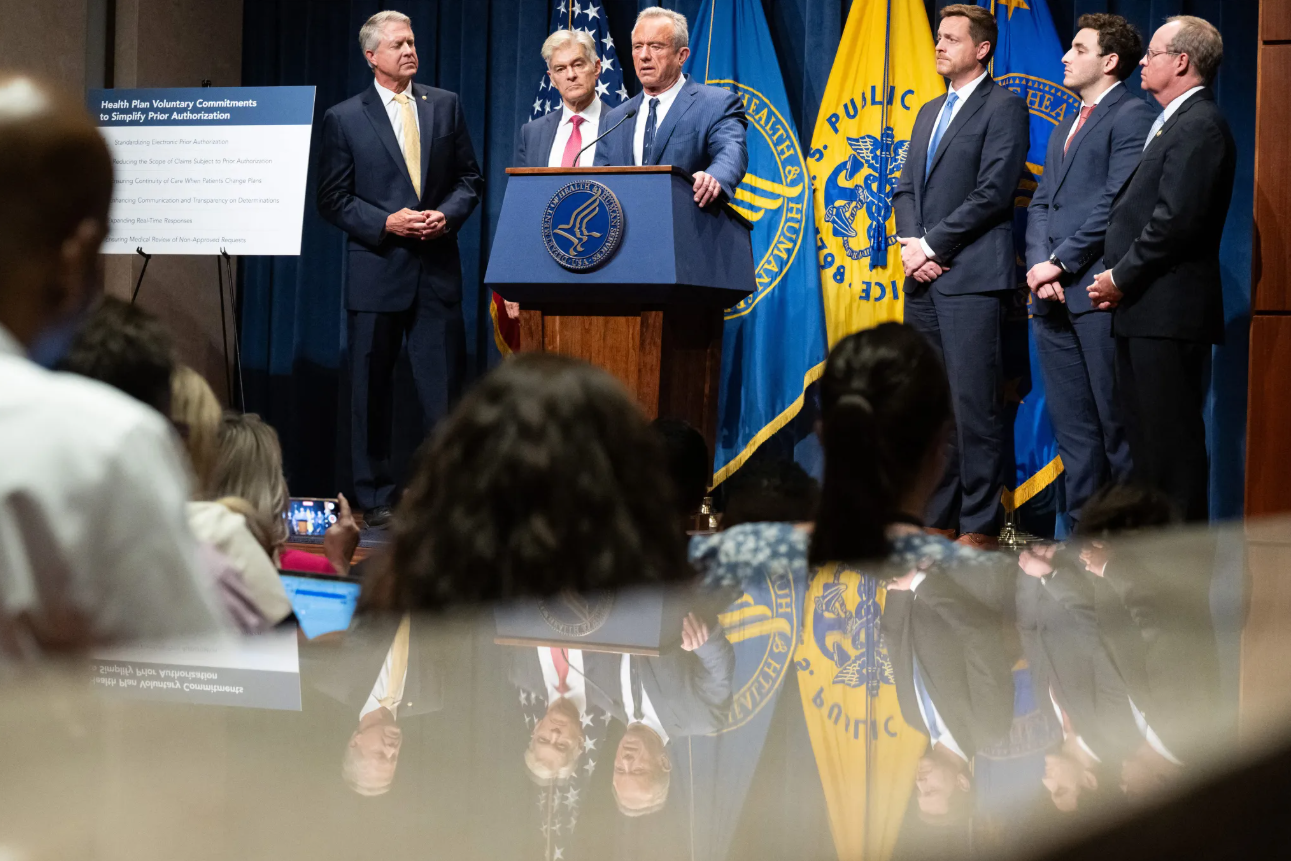
The announcement of the pilot program came shortly after the Trump administration revealed a voluntary initiative for private health insurers to reform their own prior authorization practices, which have been criticized for causing significant delays in patient care. Mehmet Oz, the administrator of the Centers for Medicare & Medicaid Services, emphasized the need for reform, stating, “It erodes public trust in the health care system.”
Critics, including Vinay Rathi, a doctor and policy researcher at Ohio State University, argue that the administration is sending mixed signals. While it seeks to adopt cost-saving measures from private insurance, it simultaneously criticizes them. Representative Suzan DelBene expressed her concerns, stating, “It’s hugely concerning.”
Patients, healthcare providers, and lawmakers have voiced their apprehensions regarding what they perceive as “delay-or-deny tactics.” Such practices can hinder timely access to care, potentially leading to severe consequences, including irreparable harm or even death.
“Insurance companies have made it their mission to collect patients’ premiums and then do everything possible to deny care,” remarked Representative Greg Murphy, a North Carolina Republican and urologist. “This is a pervasive issue across all insurance companies.”
Proponents of prior authorization argue that it helps reduce fraud and unnecessary spending while safeguarding patients from potential harm. However, public sentiment is largely against the practice; a recent KFF poll revealed that nearly 75% of respondents view prior authorization as a significant problem.
The pilot program, known as WISeR (Wasteful and Inappropriate Service Reduction), will utilize an AI algorithm to make prior authorization decisions for select Medicare services, including skin and tissue substitutes and knee arthroscopy. The federal government claims these procedures are particularly susceptible to fraud and waste, justifying the need for prior authorization.
While AI is not a novel concept in health insurance, Medicare has been slow to integrate such technologies. Historically, Medicare has employed prior authorization in a limited capacity, relying on contractors who lack incentives to deny services. Experts believe this pilot could alter that dynamic.
CMS spokesperson Alexx Pons assured that no Medicare request would be denied without a review by a qualified human clinician, and vendors would not be compensated based on denial rates. However, concerns remain that shared savings arrangements could incentivize vendors to deny necessary care.
Critics like Rathi argue that the plan lacks clarity and relies on subjective measures. He expressed skepticism about the administration’s ability to evaluate the program’s impact on patient care effectively.
Despite the potential benefits of AI in streamlining the prior authorization process, doubts linger regarding its implementation. A 2023 ProPublica report highlighted that doctors at Cigna spent an average of only 1.2 seconds reviewing payment requests, raising questions about the quality of human oversight.
As AI continues to permeate healthcare, the WISeR pilot program raises critical questions about its efficacy and the potential for increased care denial. While some lawmakers support the initiative, others are advocating for measures to block its funding in the upcoming fiscal budget.
“This is a pilot, and I’m open to see what’s going to happen with this,” Murphy stated. “But I will always err on the side that doctors know what’s best for their patients.”
By Lauren Sausser and Darius Tahir
KFF Health News is a national newsroom that produces in-depth journalism about health issues and is one of the core operating programs at KFF—an independent source of health policy research, polling, and journalism. Learn more about KFF.
September 25, 2025
KFF Health News: AI Will Soon Have a Say in Approving or Denying Medicare Treatments
In a significant shift, the Trump administration is set to launch a pilot program next year aimed at assessing how much money an artificial intelligence (AI) algorithm could potentially save the federal government by denying certain Medicare treatments. This initiative mirrors practices in the private insurance sector and is designed to eliminate wasteful or “low-value” services.
The pilot program will introduce a federal expansion of the controversial prior authorization process, which mandates that patients or their medical teams obtain insurance approval before undergoing specific procedures, tests, or prescriptions. Starting January 1, 2026, this program will impact Medicare patients and their healthcare providers in states including Arizona, Ohio, Oklahoma, New Jersey, Texas, and Washington, continuing through 2031.
This move has sparked concern among politicians and healthcare experts. Traditionally, Medicare, which serves adults aged 65 and older and some individuals with disabilities, has largely avoided prior authorization, a practice prevalent among private insurers, particularly in the Medicare Advantage market.
The announcement of the pilot program came shortly after the Trump administration revealed a voluntary initiative for private health insurers to reform their own prior authorization practices, which have been criticized for causing significant delays in patient care. Mehmet Oz, the administrator of the Centers for Medicare & Medicaid Services, emphasized the need for reform, stating, “It erodes public trust in the health care system.”
Critics, including Vinay Rathi, a doctor and policy researcher at Ohio State University, argue that the administration is sending mixed signals. While it seeks to adopt cost-saving measures from private insurance, it simultaneously criticizes them. Representative Suzan DelBene expressed her concerns, stating, “It’s hugely concerning.”
Patients, healthcare providers, and lawmakers have voiced their apprehensions regarding what they perceive as “delay-or-deny tactics.” Such practices can hinder timely access to care, potentially leading to severe consequences, including irreparable harm or even death.
“Insurance companies have made it their mission to collect patients’ premiums and then do everything possible to deny care,” remarked Representative Greg Murphy, a North Carolina Republican and urologist. “This is a pervasive issue across all insurance companies.”
Proponents of prior authorization argue that it helps reduce fraud and unnecessary spending while safeguarding patients from potential harm. However, public sentiment is largely against the practice; a recent KFF poll revealed that nearly 75% of respondents view prior authorization as a significant problem.
The pilot program, known as WISeR (Wasteful and Inappropriate Service Reduction), will utilize an AI algorithm to make prior authorization decisions for select Medicare services, including skin and tissue substitutes and knee arthroscopy. The federal government claims these procedures are particularly susceptible to fraud and waste, justifying the need for prior authorization.
While AI is not a novel concept in health insurance, Medicare has been slow to integrate such technologies. Historically, Medicare has employed prior authorization in a limited capacity, relying on contractors who lack incentives to deny services. Experts believe this pilot could alter that dynamic.
CMS spokesperson Alexx Pons assured that no Medicare request would be denied without a review by a qualified human clinician, and vendors would not be compensated based on denial rates. However, concerns remain that shared savings arrangements could incentivize vendors to deny necessary care.
Critics like Rathi argue that the plan lacks clarity and relies on subjective measures. He expressed skepticism about the administration’s ability to evaluate the program’s impact on patient care effectively.
Despite the potential benefits of AI in streamlining the prior authorization process, doubts linger regarding its implementation. A 2023 ProPublica report highlighted that doctors at Cigna spent an average of only 1.2 seconds reviewing payment requests, raising questions about the quality of human oversight.
As AI continues to permeate healthcare, the WISeR pilot program raises critical questions about its efficacy and the potential for increased care denial. While some lawmakers support the initiative, others are advocating for measures to block its funding in the upcoming fiscal budget.
“This is a pilot, and I’m open to see what’s going to happen with this,” Murphy stated. “But I will always err on the side that doctors know what’s best for their patients.”
By Lauren Sausser and Darius Tahir
KFF Health News is a national newsroom that produces in-depth journalism about health issues and is one of the core operating programs at KFF—an independent source of health policy research, polling, and journalism. Learn more about KFF.